
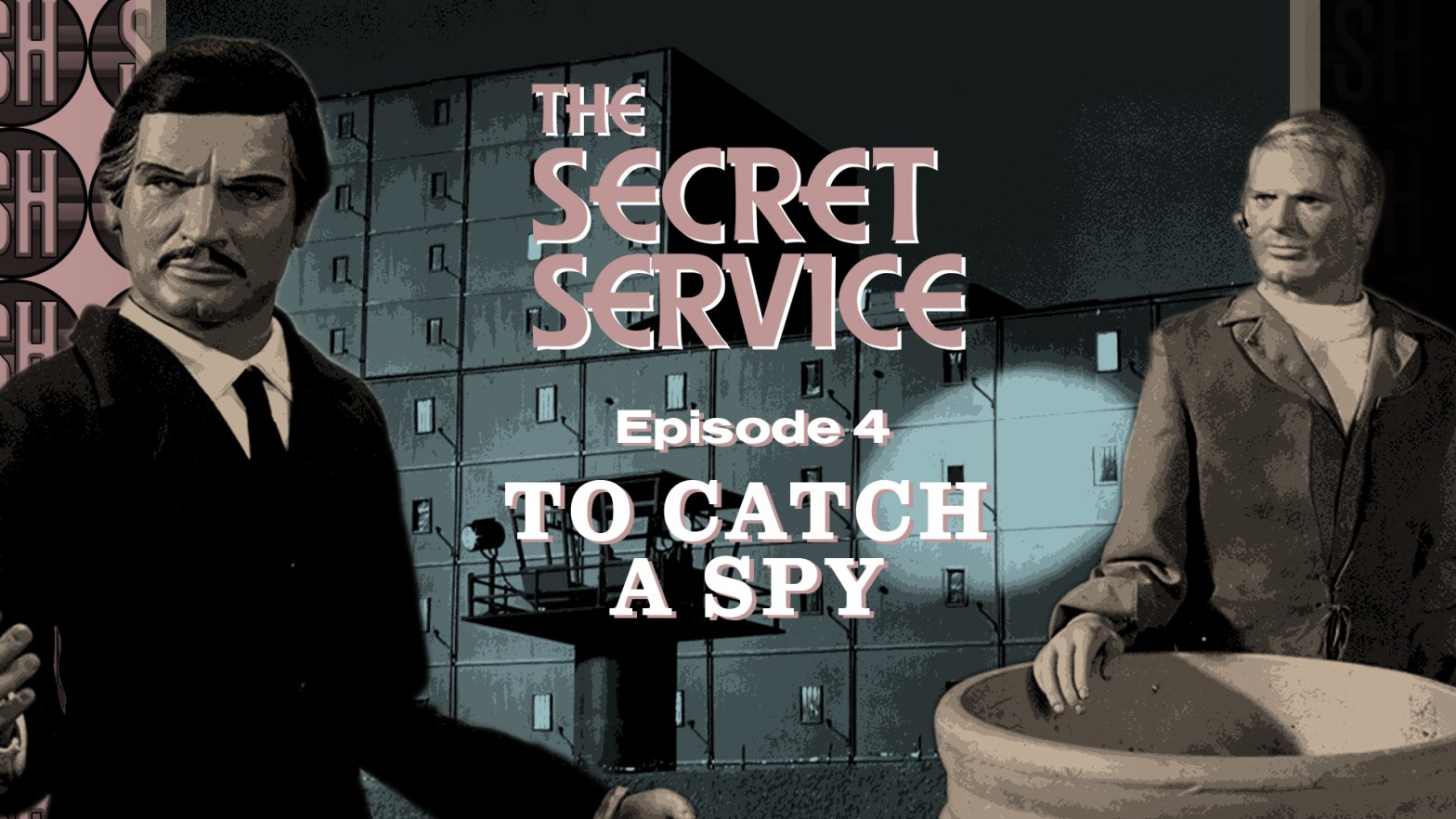
To be completely honest, To Catch A Spy has always struck me as a pretty standard-issue episode of The Secret Service. Not outstanding, not poor, just okay. I can sense that there was great ambition behind some of the ideas it brought forward, but for one reason or another they weren’t delivered to the screen with much flare. The action-packed opening is vastly more interesting than the somewhat aimless and unsatisfying climax. For this week’s review, Pat Dunlop’s original script for the episode really will prove to be an invaluable asset towards unpacking how the episode was supposed to turn out, compared with what we actually got.
Dunlop was an experienced writer for television with prior credits as a writer and script editor for series including Dr. Finlay’s Casebook, Z-Cars and Dixon of Dock Green, as well as contributing the episode Mission X-41 to Joe 90. I would imagine that his experience of writing several police dramas set him up nicely to write this particular episode. The original script carried the working title of “JAILBREAK”.
Meanwhile, To Catch A Spy‘s director, Brian Heard, had started his television career at Century 21 as an assistant director and had one prior directorial credit to his name with the Joe 90 episode, Trial At Sea. Following Century 21’s closure, he became a location and production manager for a number of films and television series including The Protectors, Return of the Saint, and quite impressively, IMDB reports around a hundred episodes of The Bill between 1988 and 2001.
So we are, once again, in the hands of some hard-workers in the television industry. Not necessarily noteworthy for their contributions to other Anderson productions, but people who made their living in television for several decades.
Original UK TX:
Sunday, October 5th 1969
5.30pm (ATV Midlands)
Directed by
Brian Heard

Teleplay by
Pat Dunlop
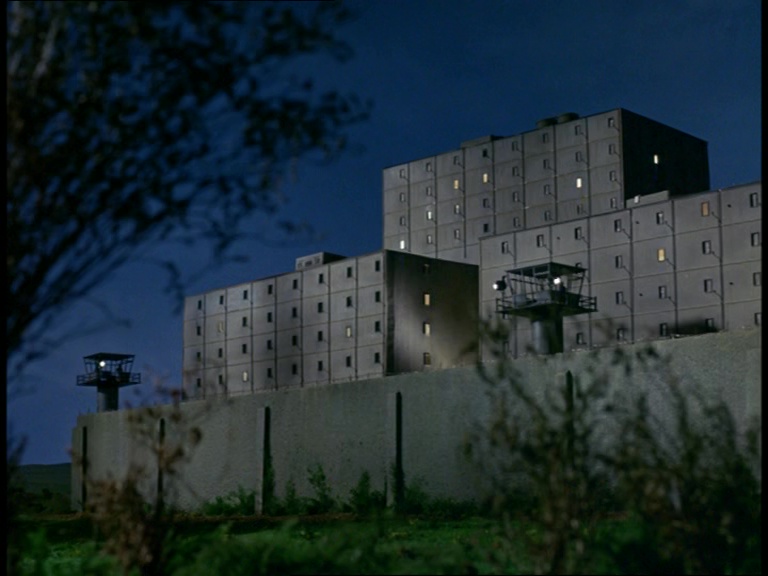

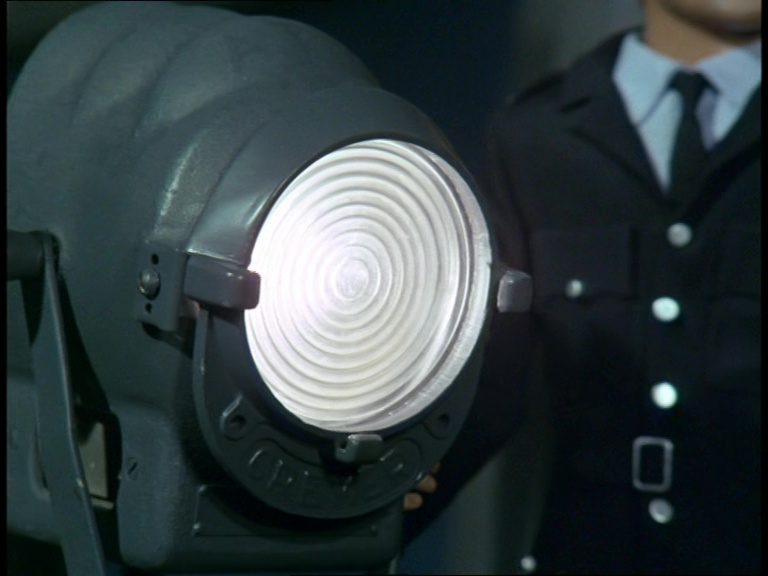
The pre-titles sequence plays out more or less as it was scripted. We’re looking at a prison in Southern England. The Captain Ochre puppet makes yet another appearance in the series, this time as a guard. The uniform he’s wearing is borrowed from the police officer seen in A Case For The Bishop. The searchlight prop is the same type which can be spotted as far back as the Stingray episode, Stand By For Action.
The prison itself, I have to say, looks great. I’ve been a tad critical of the output from the special effects department in earlier episodes but I have nothing bad to say about this establishing shot. The foliage in the foreground, the little lights dotted about in the windows and guard towers, and the structure itself are all thoroughly detailed and shot from an imposing low angle.
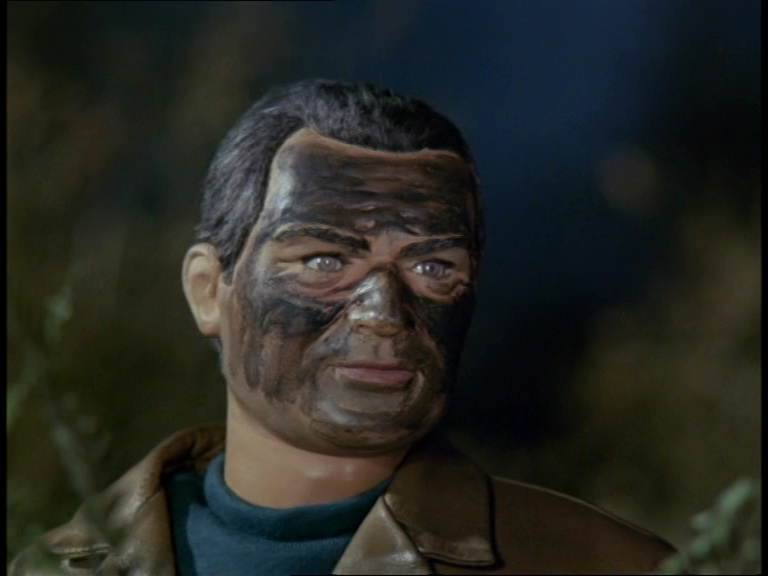
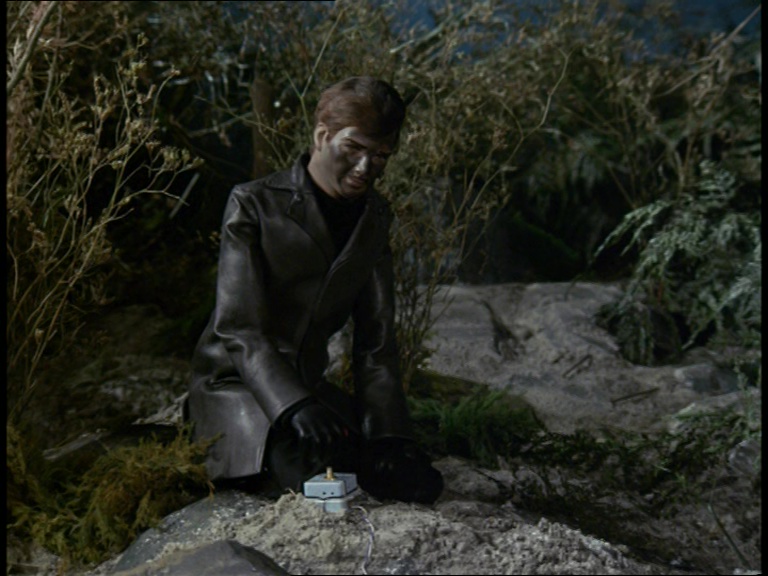
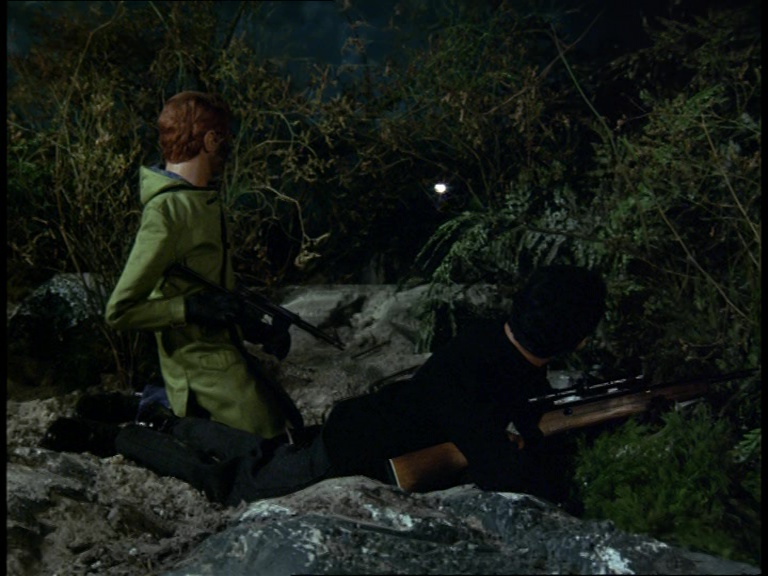
Out in the bushes, a bunch of wrong’uns. You can tell they’re wrong’uns because three out of four of them have leather trench coats on. Apparently the leather trench coat is a fashion staple of The Secret Service villains. In order to blend in with the darkness of the night, the gang have also blacked up… the less said about that, the better.
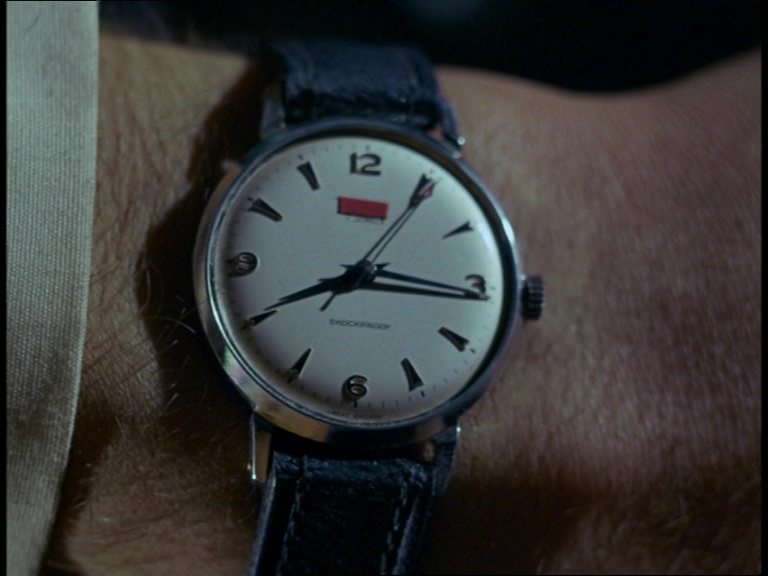
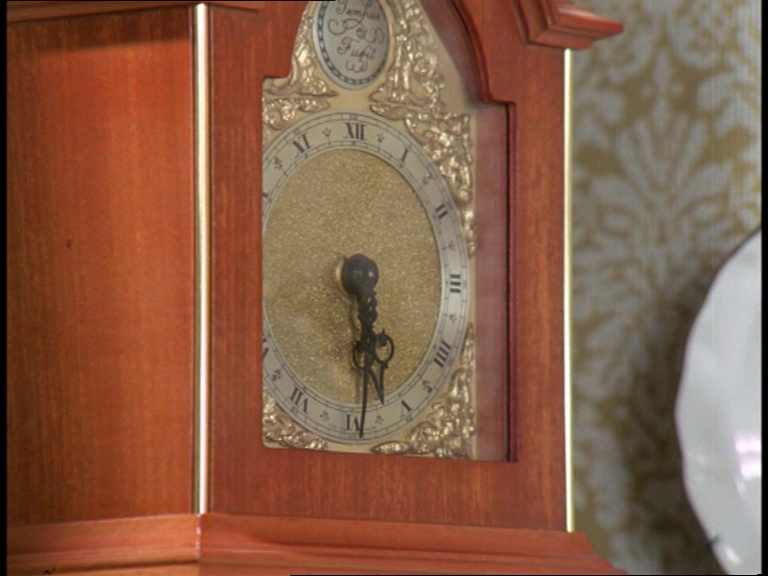
In-keeping with Supermarionation tradition, the only live-action seen in this sequence is a close-up of a wristwatch. The script specified that the scene take place at 2 am. The watch on-screen says 8:15 pm. I guess these criminals don’t like working late.
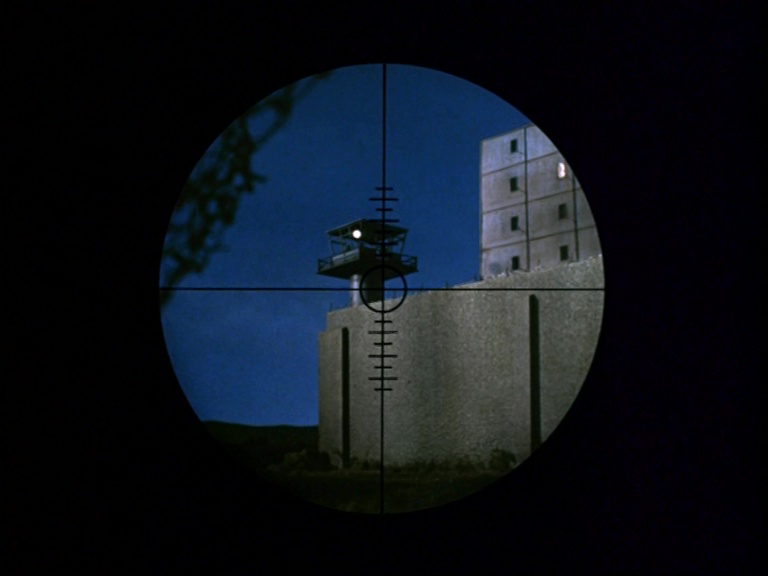
I adore the slow build of tension in these opening moments. We know something’s about to happen, but it doesn’t fully prepare us for the chaos that’s about to kick off.
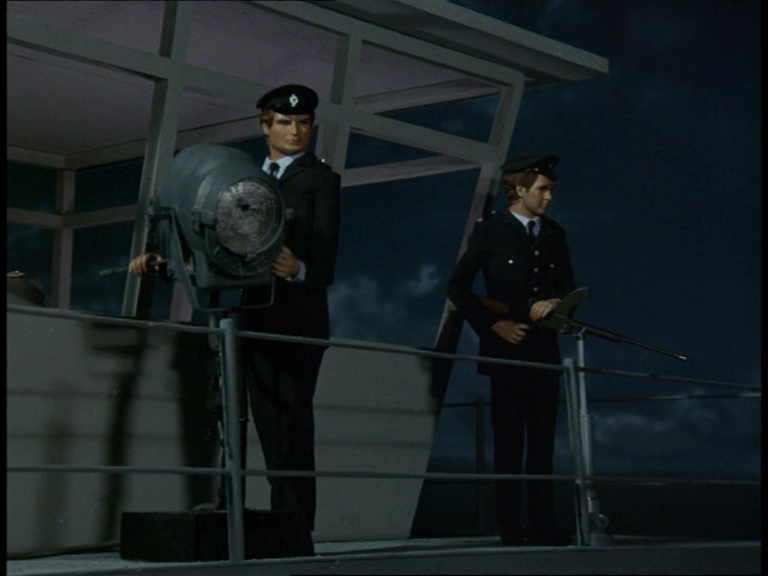
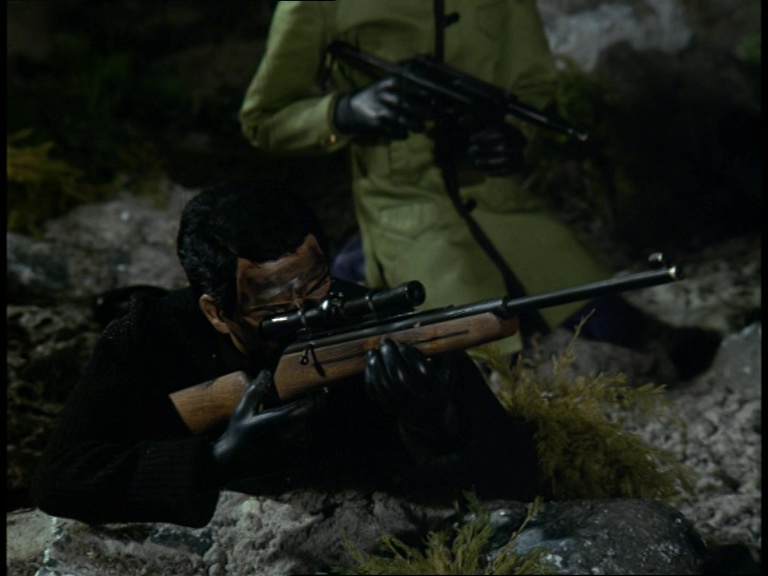
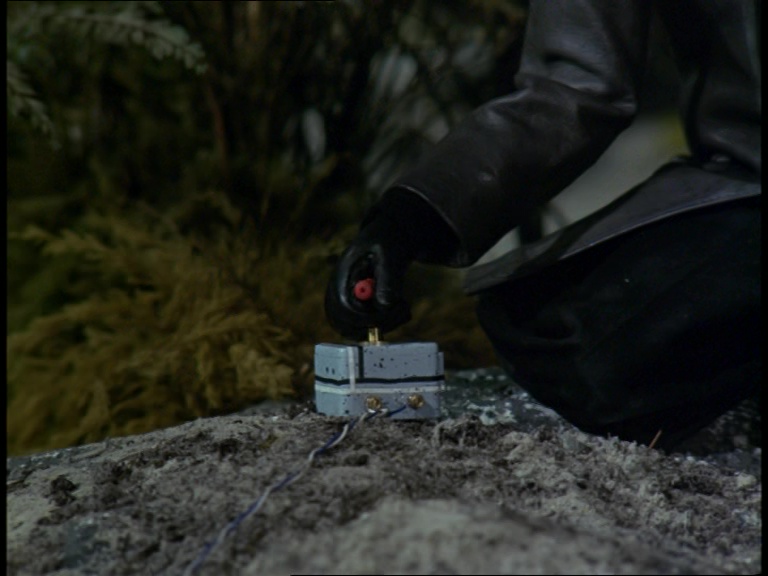
The searchlight is positively punctured by the gun shot, just to get those security guards ready for action and suitably distracted. The puppet-sized watch tower set can be spotted in multiple Supermarionation episodes including the likes of Captain Scarlet‘s The Heart of New York.
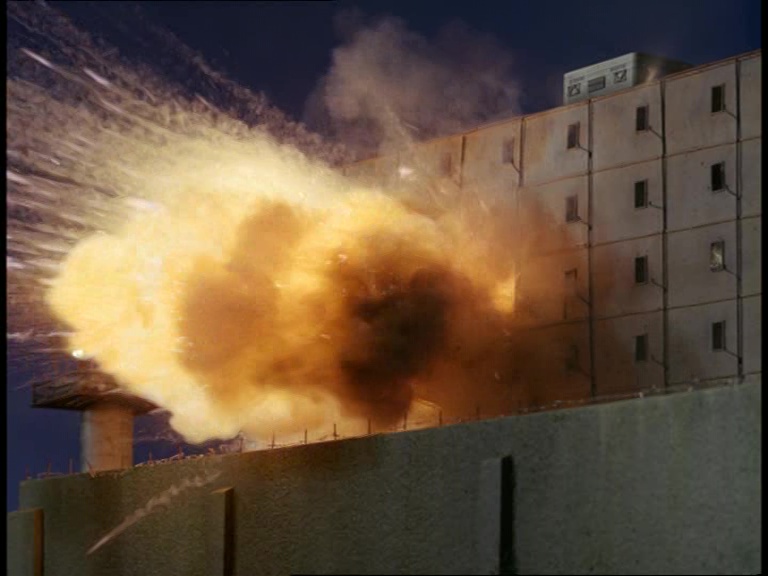
Wallop! A nice, big, gutsy, up-close-and-personal explosion from the special effects department. That’s what we like to see.
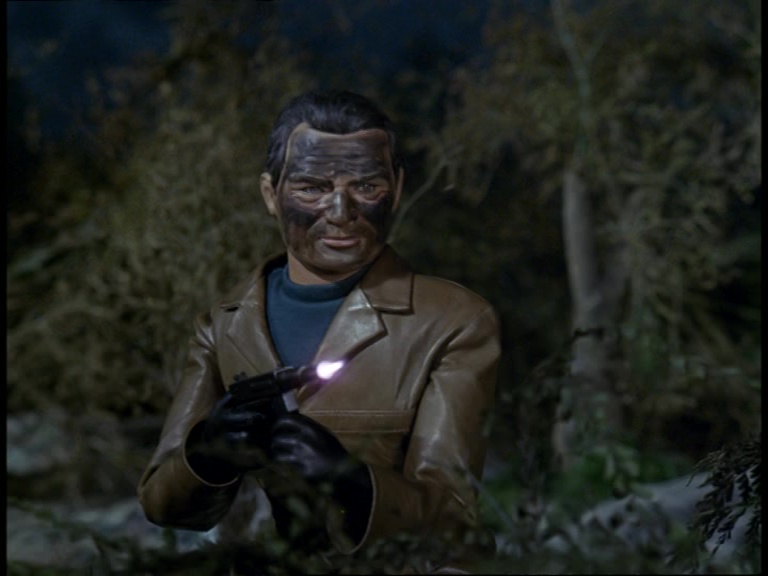
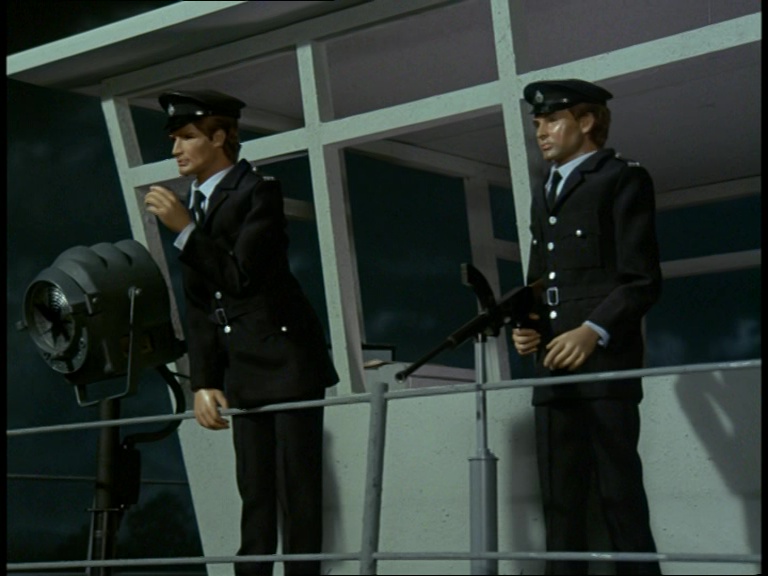
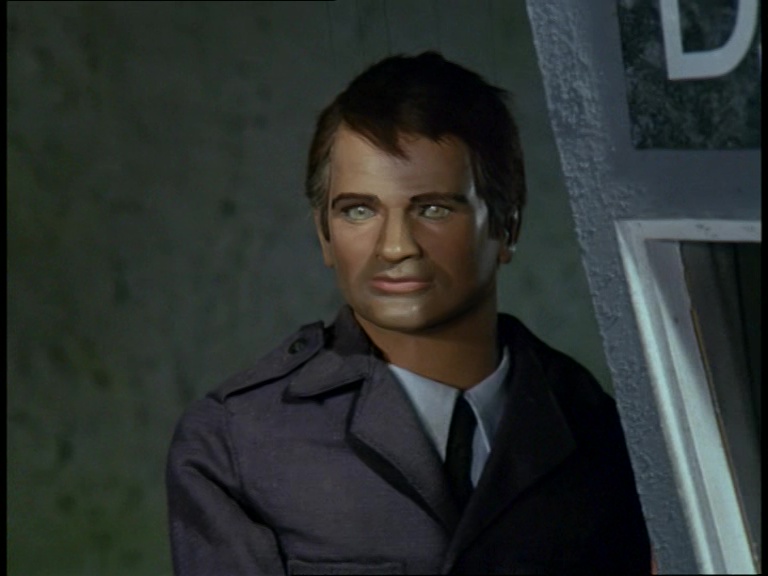
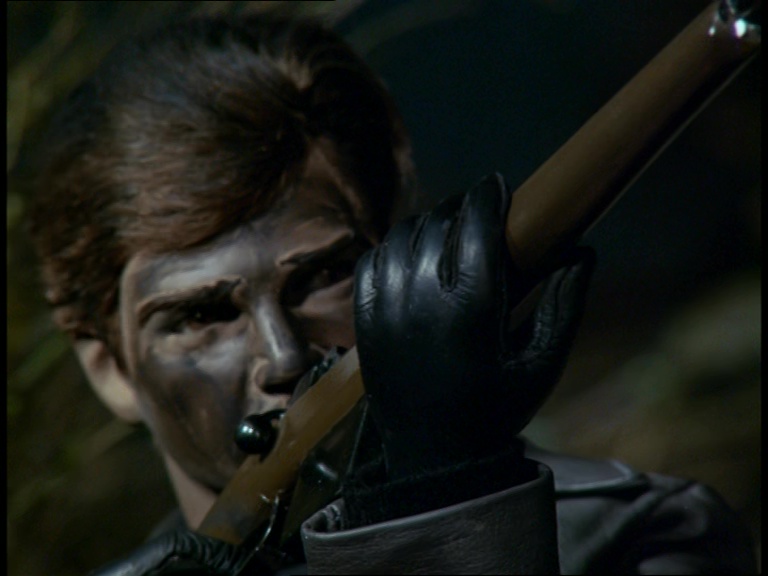
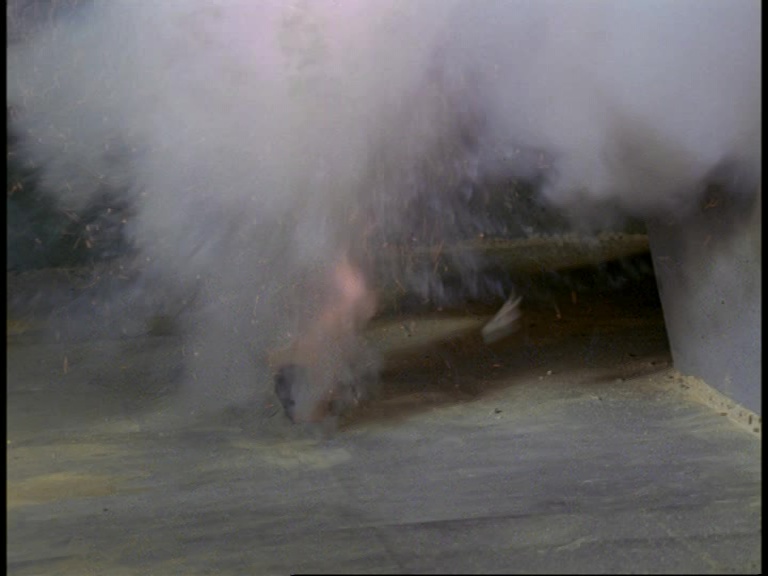
Fast cutting, and a sporadic range of shot compositions now get across the madness that is unfolding as the crooks open fire, the guards struggle to keep up, and a prisoner, Grey, attempts to escape. It’s very slick and engaging and there’s a sense that all involved with the production are enjoying themselves.
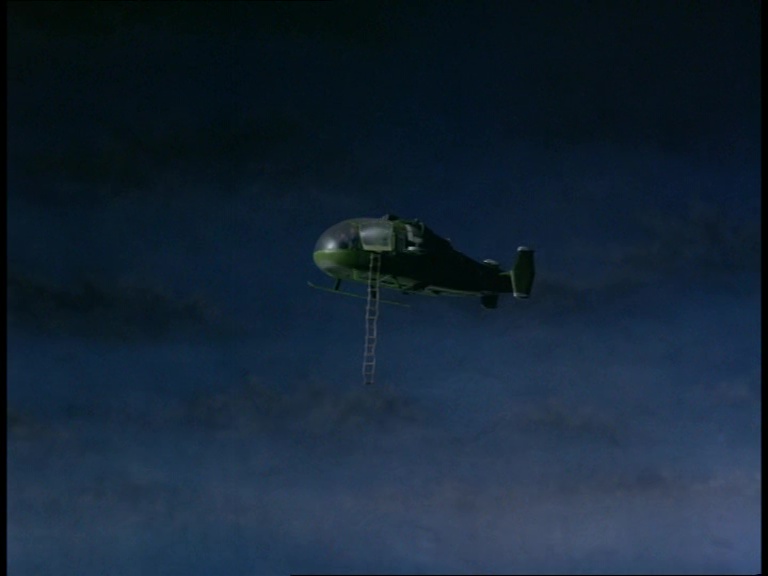
Here’s where things get interesting. This helijet is very definitely described as a helicopter in the script, which makes sense seeing as the series is supposed to take place around 1969 and helijets are a design from a fictitious far future. But, in the early days of Thunderbirds, the effects team switched from using helicopters with spinning rotors to helijets without rotors so that the models were easier to operate, and also to look more futuristic than a standard chopper. There were a few exceptions for larger models such as Captain Scarlet‘s Spectrum Helicopter and Magnacopter. But any small and light models with spinning rotors would wobble on their wires, so these elements were removed to create the very futuristic helijet concept. This particular helijet model seen here was last used in the Joe 90 episode Viva Cordova and, really, shouldn’t have been given a role in The Secret Service because it’s just quite an anachronism. However, the effects department, for one reason or another, went ahead and used the helijet model anyway. I had a sense in the earlier episodes A Question of Miracles and The Feathered Spies that unlike the puppet and location units, Century 21’s effects unit wasn’t terribly concerned about avoiding their penchant for futuristic craft, despite the contemporary setting of The Secret Service. After all, practically every model and set they had in storage from all the productions prior were designed for series set 100 years in the future, so why waste all of that material?
An interesting aside to all this is the fact that Century 21 actually did have to film with a model helicopter in the Autumn of 1968 while The Secret Service was in production, but not for the series itself. Century 21 contributed a very short effects shot to the Roger Moore film, Crossplot featuring a contemporary helicopter colliding with some power lines and exploding spectacularly. It’s an impressive moment which blends reasonably well with the live-action material, but blink and you’ll miss it. So why could a similar helicopter not have been used for To Catch A Spy? Well, it’s worth noting that the model of the Crossplot helicopter doesn’t actually fly around very much, and is basically static when it blows up, whereas the helijet seen in To Catch A Spy is required to swoop about and do all sorts of things. Alternatively, perhaps The Secret Service didn’t have the budget to stretch to a new helicopter model being built for it, but Crossplot‘s producers were willing to foot the bill. Or, quite possibly, the effects team simply didn’t want to use a helicopter for To Catch A Spy, or care much about any anachronisms in the series, and just thought a helijet would be better for the episode.
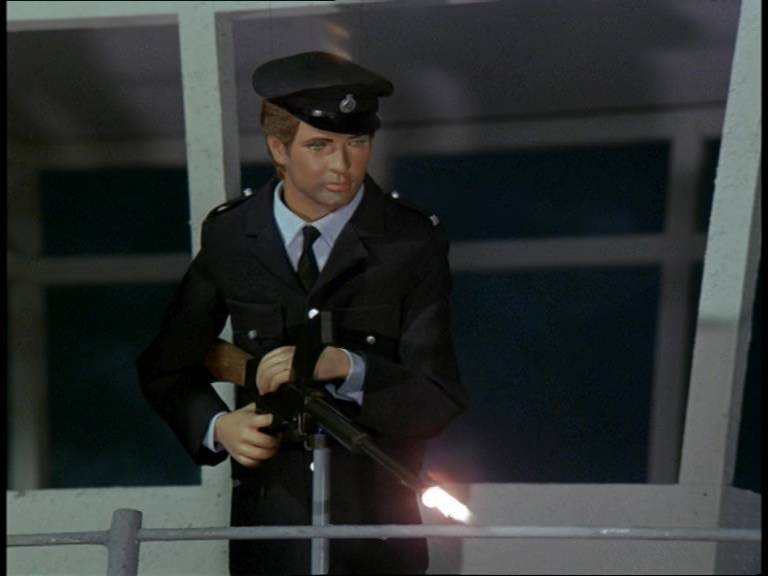
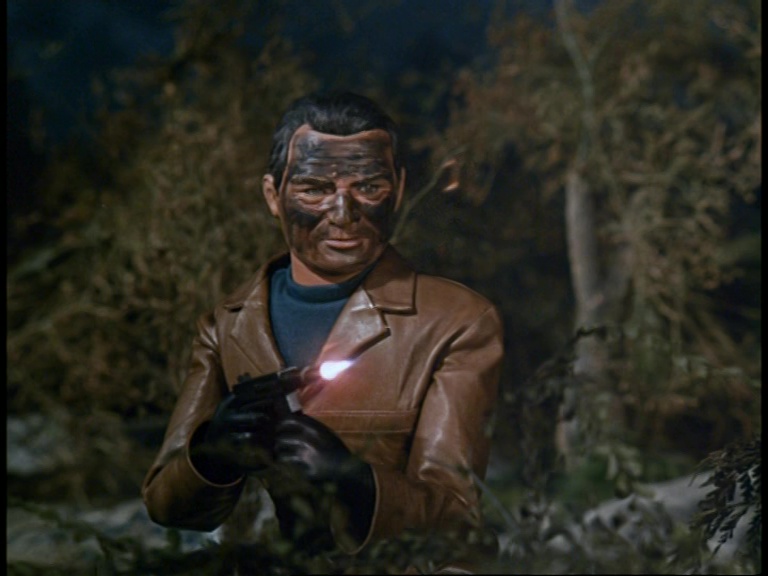
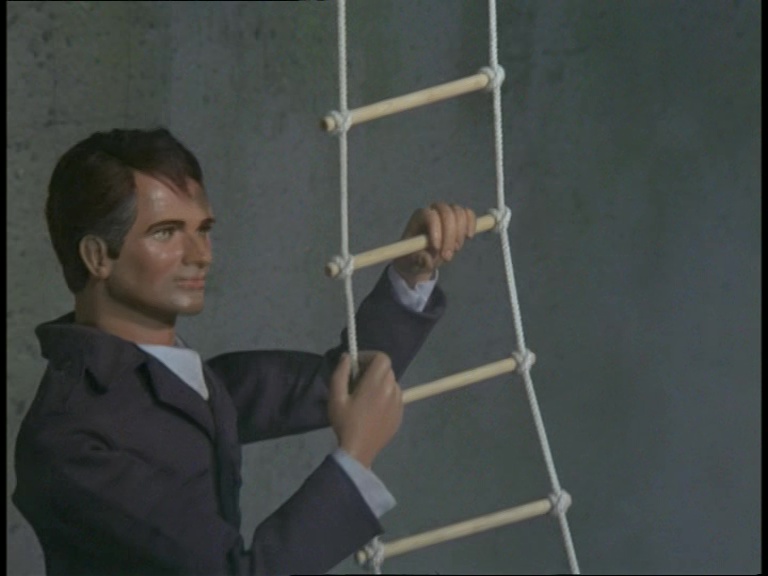

Shrouded by the fumes of the smoke bomb, Grey is able to make good his escape by grabbing on to the helijet’s rope ladder and gets carried away to safety while the guards and the crooks shoot at each other. Terrific action!
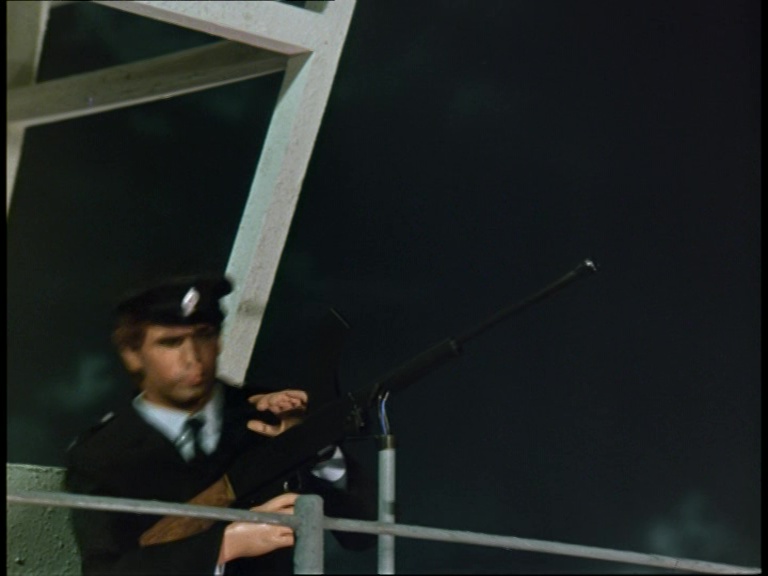
One of the guards is brutally murdered to death. Either that or he’s really, really tired.
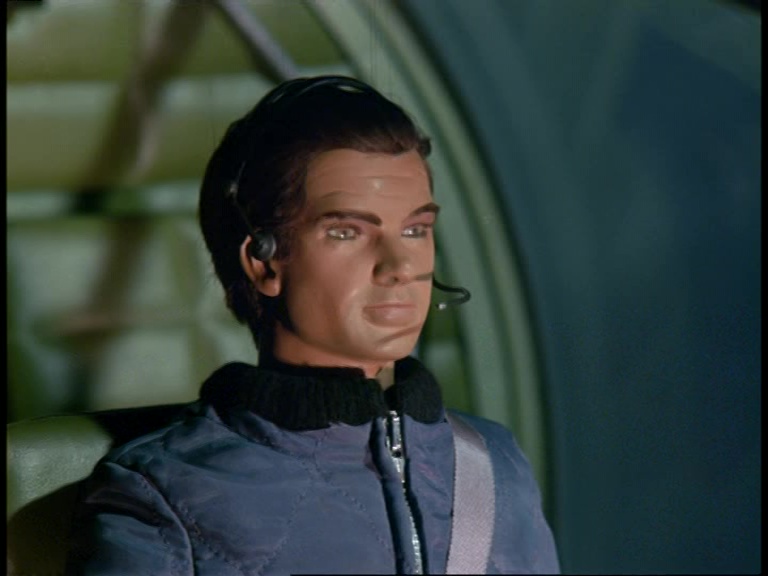
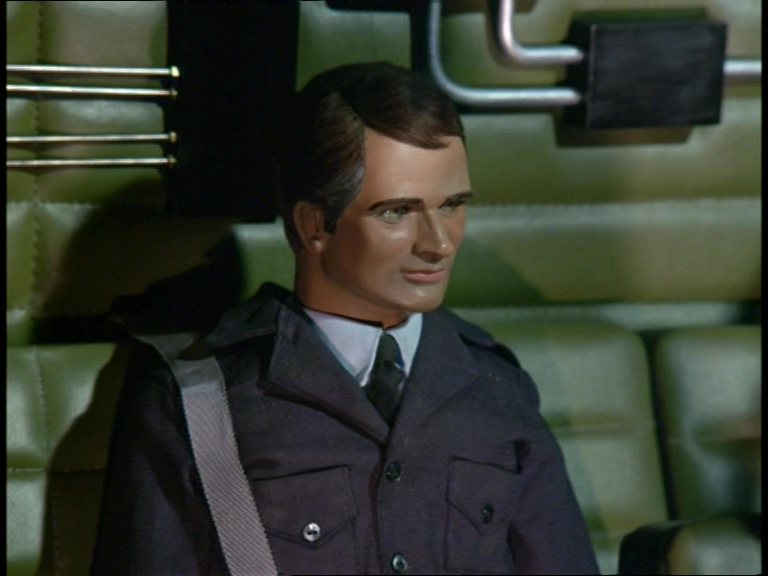

It’s another sort-of Spectrum reunion with Captain Indigo from Spectrum Strikes Back as the helijet pilot, Captain Brown from The Mysterons as Grey, and Colonel White appearing as the episode’s main guest character, Sir Humphrey Burton. Now, to be fair, Indigo and Brown barely qualify as Spectrum agents since they were revamp puppets like any other for Captain Scarlet and played multiple roles, but I do find it interesting just how prominently and how often we’ve seen main characters from Captain Scarlet turn up in The Secret Service in leading guest roles. It could simply be a coincidence, or that the directors and puppeteers had a preference for the Scarlet stars when casting. But I think it’s also reasonable to suppose that the Scarlet regulars, having been used so frequently in the past, were better maintained or of a higher quality than the stock of revamp puppets. There would also have been additional variants of the Scarlet regulars available with different facial expressions, blinker eye mechanisms, and even a few under-control options, all making them fundamentally more useful to the production than the standard revamp puppets.
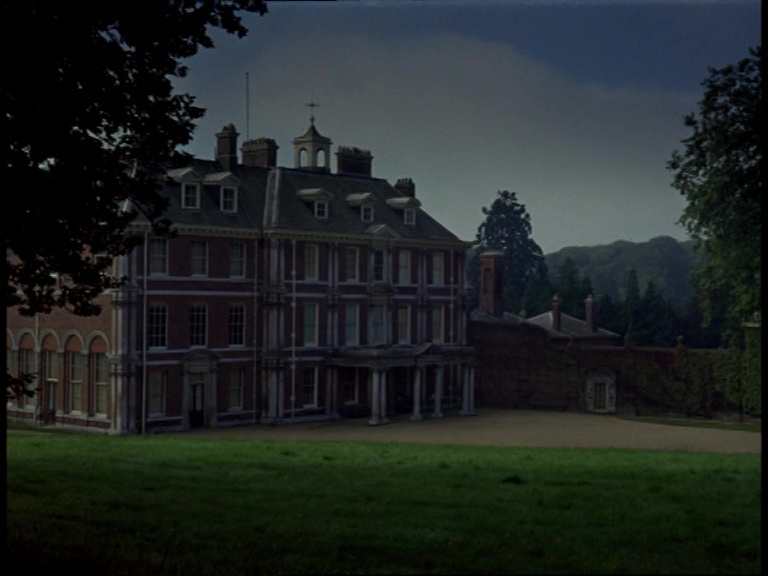
Our first location of the episode is shown in a day-for-night shot which quite clearly features a lot of blue sky in glorious sunshine. This is Sir Humphrey’s home, represented by Hall Barn in Beaconsfield, built in the late-17th century by the Waller family. The house is a very popular filming location, also seen in the likes of Downton Abbey, Midsommer Murders, and Chariots of Fire.
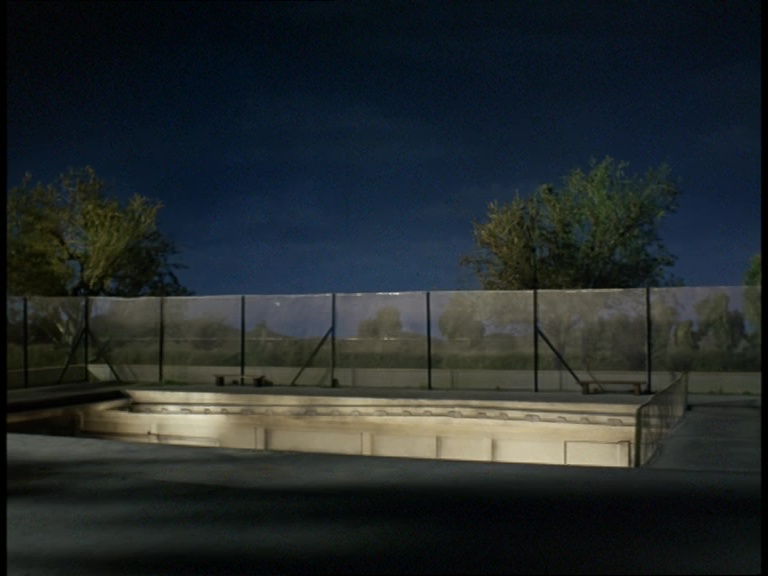
Back on the model stage, the tennis court opens up to reveal an underground hangar. How very, very, very Thunderbirds. Rather than the ground opening up, the script originally specified that “the surface of the court starts to descend like an aircraft carrier lift.” Ultimately, I think the tennis court sliding back as it does in the finished episode is a cooler look.
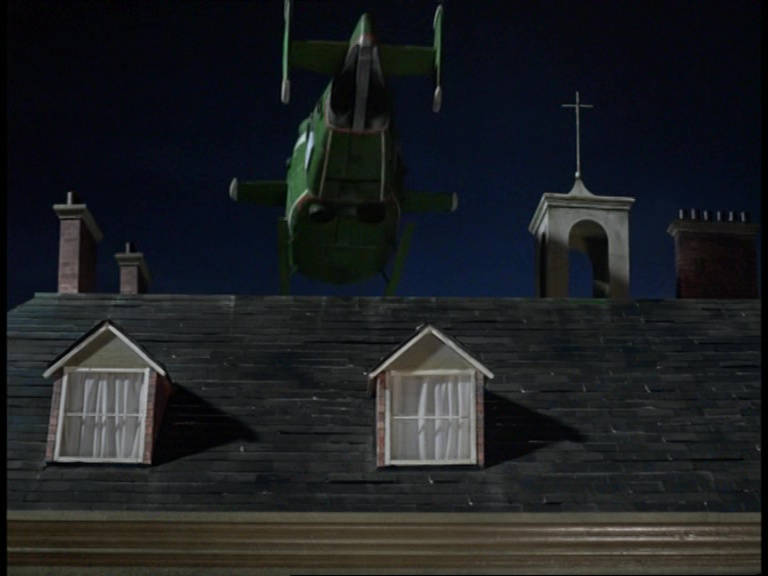
Another truly excellent effects shot here shows the helijet flying low over the roof of the house, demonstrating the immense size of the craft. A top notch effort has been made to produce a faithful model of Hall Barn’s roof to match the location footage.
It’s worth noting that the Visual Effects Director credited for To Catch A Spy is Alan Berry, who had started as a technician on Thunderbirds Are Go (1966), and graduated to take over Peter Wragg’s role as the 2nd unit effects director halfway through Joe 90. To Catch A Spy is Berry’s only credit on The Secret Service, presumably stepping into the shoes of Shaun Whittaker-Cook who otherwise served as the effects director for all the other even-numbered episodes of the series. Who knows why the substitution might have been made for this particular episode, but it’s pretty clear that Alan Berry has, so far, produced some of The Secret Service‘s most ambitious and exciting effects shots and it’s a shame he didn’t direct a few more scenes for the series.
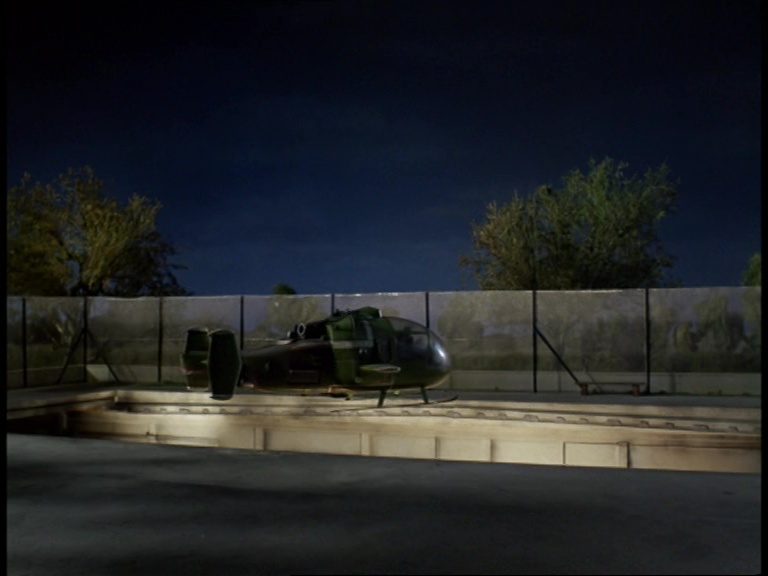
The helijet descends down into the hangar. Maybe landing a helicopter in such a tight space with its blades spinning was considered too ridiculous and that’s why the switch was made to a helijet…
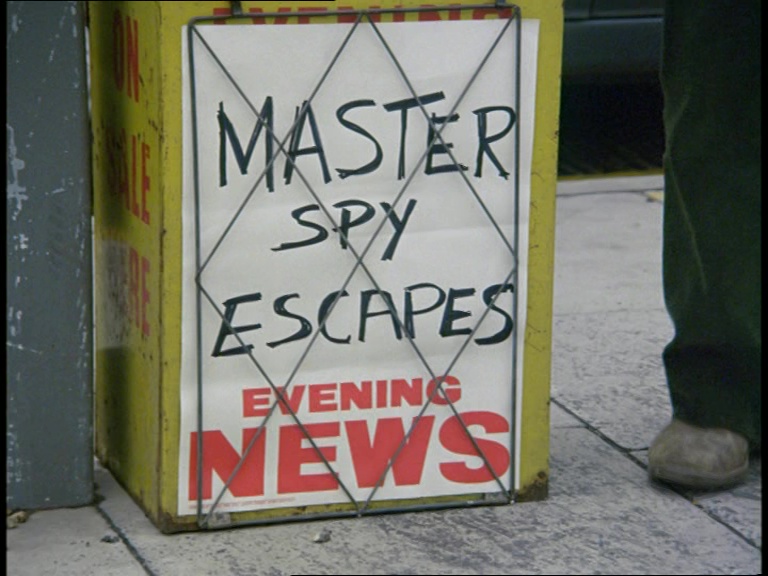
One for the Supercar fans. Pat Dunlop’s script originally suggested the headline “Daring escape of Master Spy Grey” which, frankly, isn’t as snappy. Cue titles!
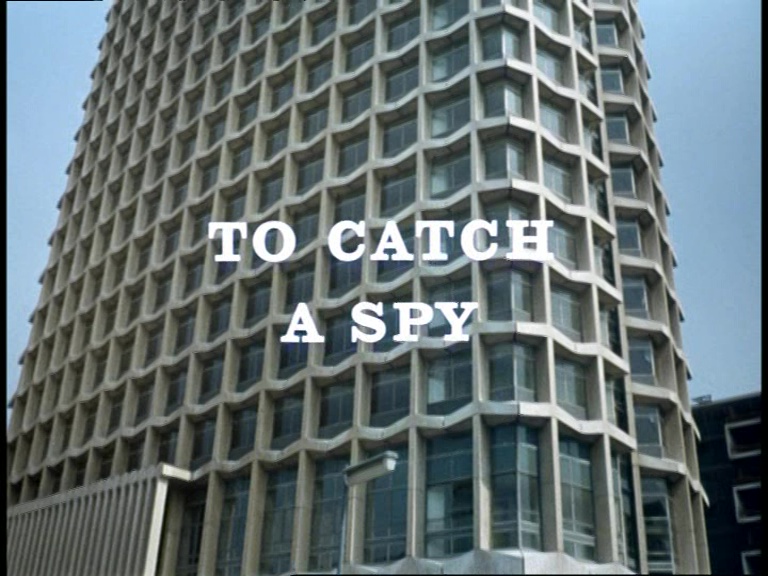
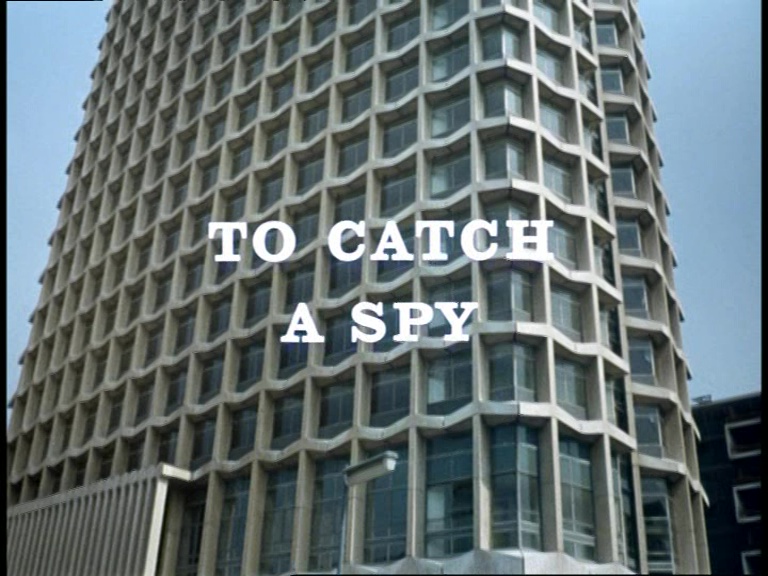
After the opening titles, we’re back in London with establishing shots lifted from A Case For The Bishop showing off Parliament Square and Centre Point next to Tottenham Court Road Station.
The episode title, To Catch A Spy, was a replacement for the working title of “Jailbreak”. It’s presumably an adaptation of the phrase “a sprat to catch a mackerel” to mean, “a small outlay or risk ventured in the hope or expectation of a significant return.” It carries a nice double meaning for the episode if we consider Matthew to be the small sprat in the implied analogy. Certainly makes me feel smart anyway.

Here’s a familiar newspaper for long-time Security Hazard readers. It’s a prop which can be spotted in productions as far back as far as the Thunderbirds episodes, Operation Crash-Dive, Edge of Impact, The Impostors, and many more due to its distinctive “LYONS RESTAURANT” and “WINDSOR” advertisements in either corner. Over the years, various headlines, photographs, and articles have been cut and pasted onto the page but certain details have remained the same. The review starting “SLOUGH Centre Plays one-night stand, J. King’s of Burnett Road, Windsor, farce Pools Paradise,” is almost always visible in the second column. The date on the paper started out as “Friday, December 24, 1964” in several episodes (to the annoyance of Thunderbirds fans) but was subsequently updated for later appearances such as the Joe 90 episode Operation McClaine which instead shows the date as “Friday, February 3rd, 1967.” We know it’s the same paper underneath because it carries the same adverts, the same review of Pools Paradise, the same issue number “No. 2934 Vol. CLIII”, and the same addition of an American price of “5 Cents”.
Although we don’t have a high definition shot to be certain, it would appear that only minimal changes have been made to the paper as it is seen in To Catch A Spy since its Joe 90 appearance except that the headline has obviously been revised to suit the plot. It even carries the same opening paragraph concerning the events of the Joe 90 episode, Splashdown which begins “Captain William Barry…” – although curiously, the paper was read aloud but not actually seen on-screen in the final scene of Splashdown… but it DID turn up in the following episode, Operation McClaine, carrying the same opening paragraph.
Basically, this prop has the power to cause more continuity headaches, dating controversies, and shared universe nonsense across the Supermarionation series than anything else we’ve ever seen. That’s a powerful weapon for one prop to wield.


Some familiar faces from A Case For The Bishop, Saunders and Patterson, are here to explain the plot to us. The set of the office is also pretty much identical to how it appeared in that opening episode, although what gives Patterson the right and the audacity to sit at Saunders’ desk escapes me. Pat Dunlop presumably had it in mind that, having read the Andersons’ pilot script, that these two were semi-regular characters for the series – although the cast list at the front of the script puts them firmly in the “New” rather than “Permanent” list. Alas, To Catch A Spy marks their final appearance.
Some deleted dialogue from this scene indicates a missed opportunity for something of a comedy double act:
PATTERSON: Just how important is Grey?
SAUNDERS: Important enough to put you and I out of a job if we don’t get him back.
PATTERSON: Out of a job – after all we’ve done for the country?
SAUNDERS: If Grey gets away there won’t be any country. He knows the secret of our entire anti-missile defence system and the exact location of all our reprisal bases. We’ve got to get him back Patterson, and quickly.
The outrage from Patterson at the prospect of being swept aside by the civil service is absent from the finished episode. I get the impression that both Dunlop and the Andersons scripted the characters of Patterson and Saunders as something of a parody of typical, stuffy, entitled civil servant figures. The deleted piece of dialogue above indicates that maintaining their position is of the upmost importance to Patterson, and that his prior service (whatever that actually involved) should be viewed more favourably than the absolute blunder of Grey’s escape, which they’ve allowed to happen under their noses. It’s a moment which wouldn’t look out of place in an episode of Yes Minister, a series I have referenced before in relation to the The Secret Service.
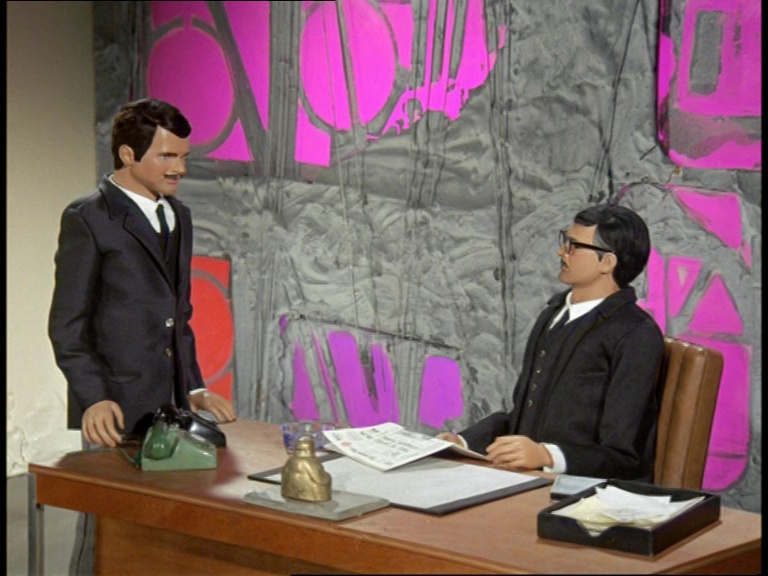
With a little more exposition, we learn that Grey and the helicopter (yes, the dialogue in the script and the finished episode say “helicopter”) were tracked for fifty miles using the device in Grey’s prison uniform before the signal just sort of stopped. Patterson, again demonstrating his immense intelligence, points out that Grey either changed clothes or entered a radio screen. He says this as if either idea is a baffling possibility. To be fair, Patterson has probably been wearing the same suit for the past 30 years so the concept of a change of clothes might be totally beyond his imagining. I think the implication with this line is more that Grey clearly had his escape well-planned and received significant help from the outside. That nuance is lost though because these two are adorable idiots.
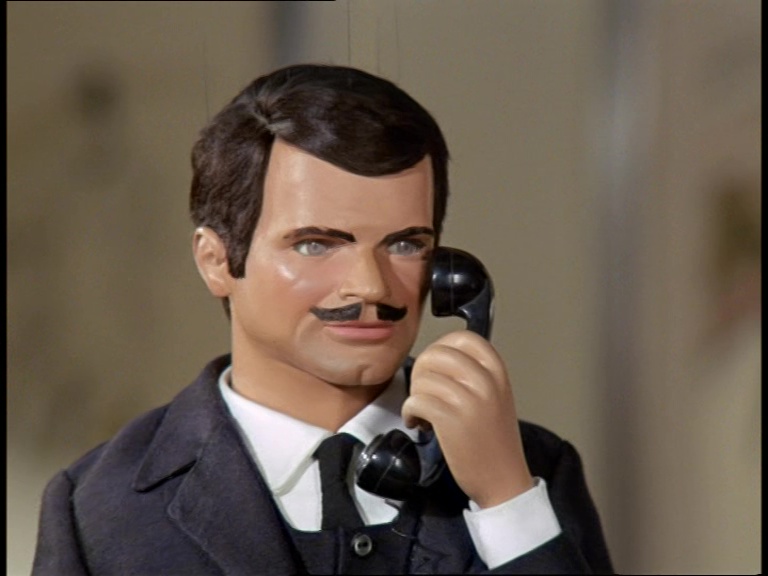
For the sake of national security, and definitely not to keep their own jobs safe, Saunders calls upon a higher power for help…
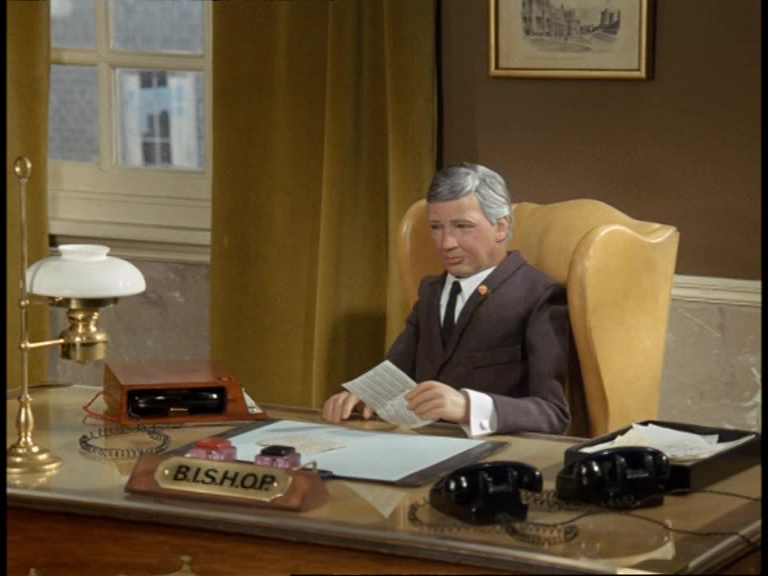
Yes, it’s the only man who coordinates his boutonniere to match his office decor – the Bishop.
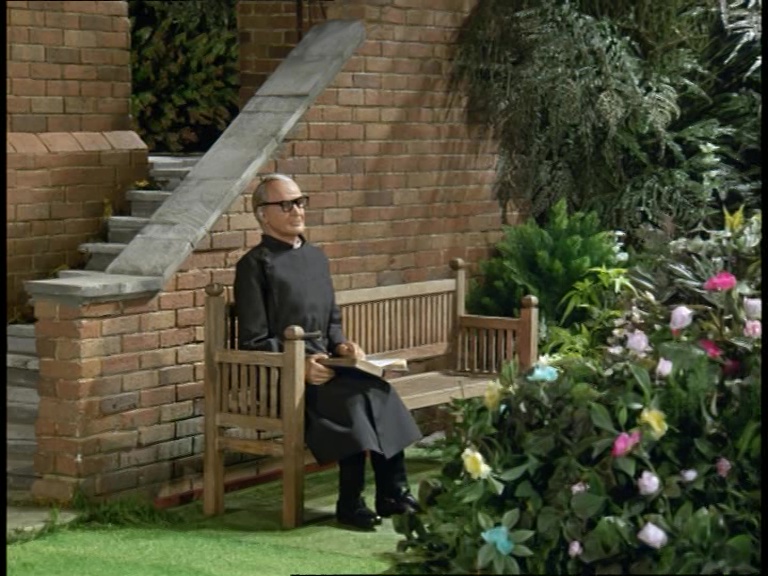
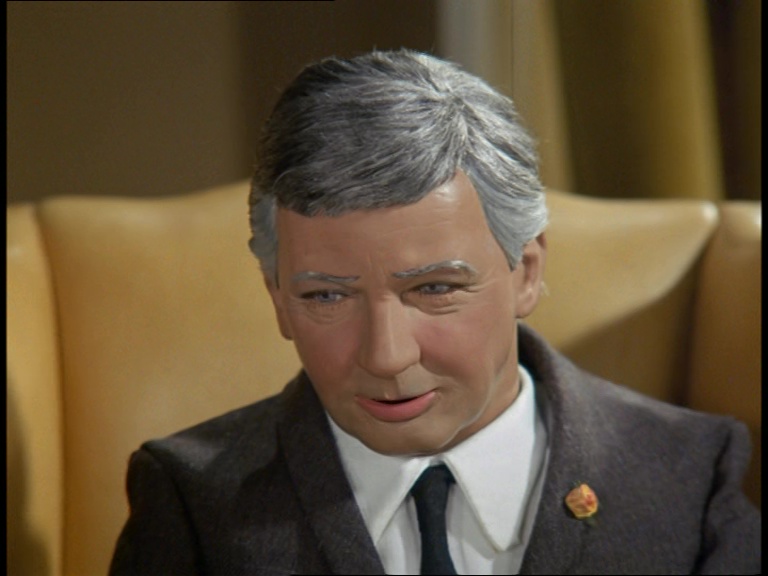
Again taking clear direction from the script for A Case For The Bishop, Pat Dunlop once again sets the briefing scene in the garden of the Vicarage where Father Unwin is admiring a gorgeous variety of plants and reading his bible. The bench is in a totally different part of the garden this time around… or he has two benches… but can the diocese stretch to providing two benches?
Anyway, Unwin is informed that the helicopter (again helicopter, not helijet) was last plotted directly over the estate of Sir Humphrey Burton, a seemingly well-known figure based on the vicar’s reaction. We don’t actually learn what kind of position in society Sir Humphrey holds to have earned him a knighthood and an enormous country house, but one can imagine he’s quite an important fellow.
Curiously, Sir Humphrey Burton is also the name of a television presenter in the field of classical music and one of the founders of London Weekend Television, which launched when The Secret Service was in pre-production in August 1968. Was that link intentional or just a coincidence? Well, it’s a little bit of a stretch, but I have some historical context to share which could give us a clue. While To Catch A Spy was in production (after the script had been written) ATV’s managing director, Lew Grade was chairing a meeting of the Network Programme Committee of September 9, 1968 and was less than flattering about LWT’s disastrous debut. ATV, the primary broadcaster of so many Anderson series including The Secret Service, was managed by Grade and had recently lost it’s franchise to broadcast in London on weekends to LWT. At this particular NPC meeting the union disputes and poor viewing figures for LWT were a matter of discussion. Grade, from the chair, boldly said of LWT’s most prominent founding member, David Frost, “I’ve succeeded in business by knowing exactly what I hate, and I know I hate David Frost.” David Frost was in the room at the time. So, we know that Lew Grade wasn’t crazy about LWT, so anyone associated with it probably wasn’t having nice things said about them either. Would that have lead to a Supermarionation guest villain being named after one of LWT’s founding members, Humphrey Burton? Maybe there was a bizarre and undocumented sequence of events which made it happen, or maybe it’s all a coincidence. Thanks for going down that rabbit hole with me.
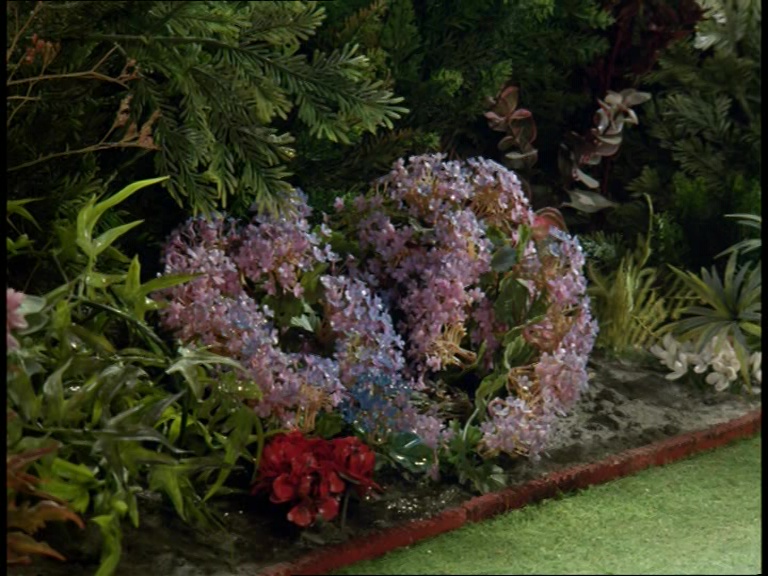
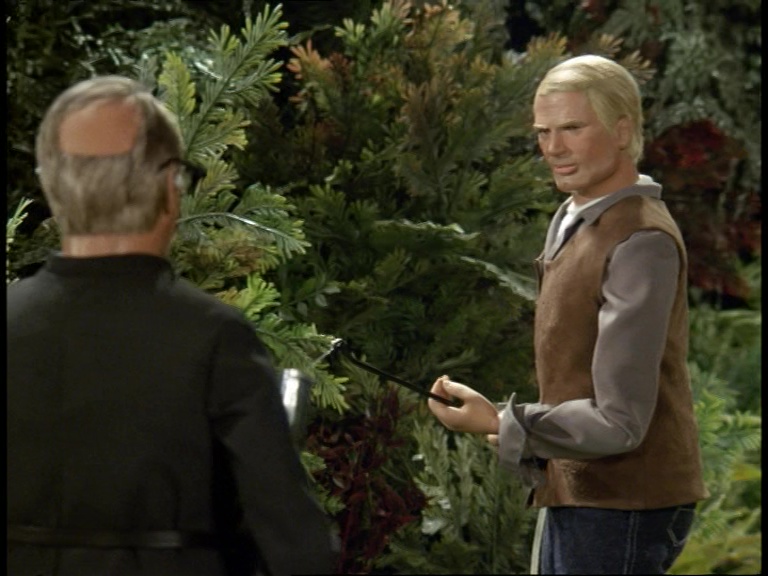
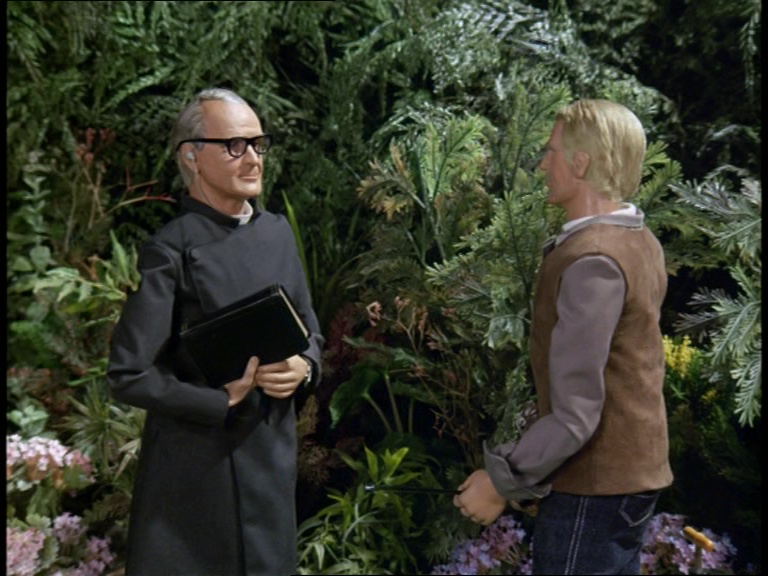
Down at the bottom of the garden… among the birds and the bees… a little lot of little people… they call the Poddington Peas…
No wait, let me start again. Down at the bottom of the garden, Matthew is spraying for slugs. In both A Question of Miracles and The Feathered Spies, short scenes featuring Matthew in his country gardener persona from A Case For The Bishop were cut out of the scripts for those episodes, so one wonders whether there was any particular reasoning behind another such scene being retained in the finished version of To Catch A Spy. It’s just interesting to consider, as we observed earlier with Patterson and Saunders, what maybe was and was not considered by the script editor and directors to be an integral part of The Secret Service‘s format as set out in that first episode. Clearly, writers initially felt it important to establish Matthew’s cover in every episode, but those editing the stories down to fit a 25-minute running time must have usually felt otherwise.
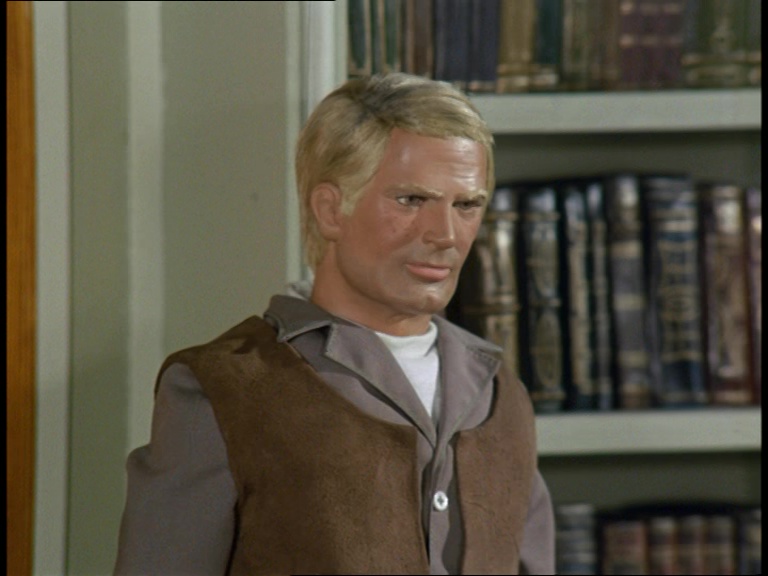
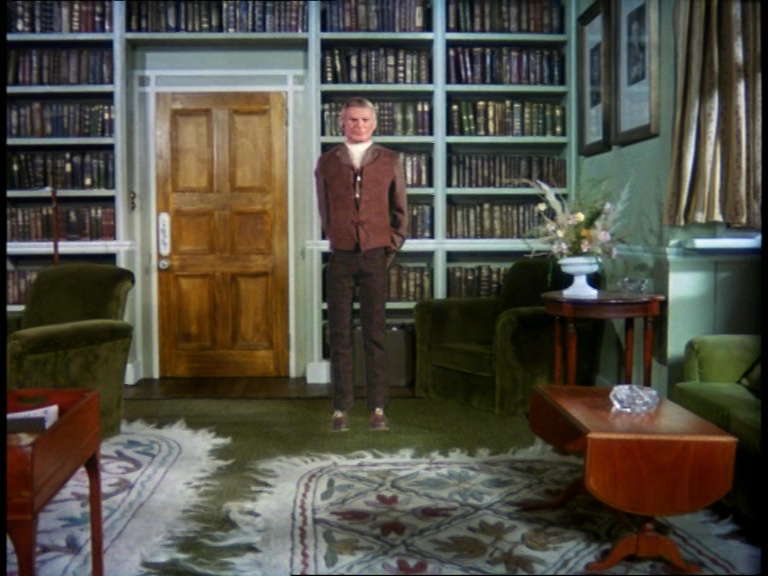
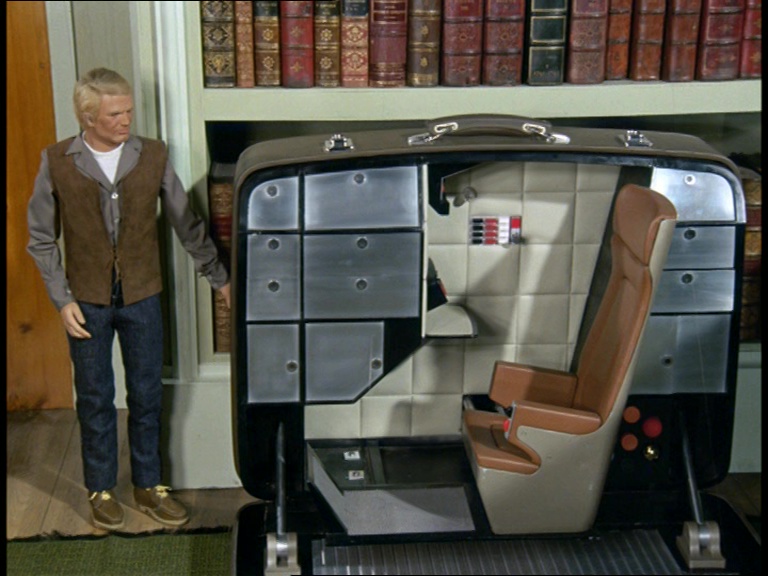
The shrinking of Matthew in the library is another new variant of the familiar shot because Matthew’s wearing a slightly different outfit compared to prior episodes. It’s just a darker shirt compared to the one he wore in A Question of Miracles and The Feathered Spies, so I’m honestly quite surprised that any bothered remounting the shrinking effect to account for such a minute costume change. It suggests that, despite Gerry Anderson’s claims in his DVD commentary for A Case For The Bishop, the shrinking effect might not have been so groundbreaking and difficult to achieve as he might have had us believe.
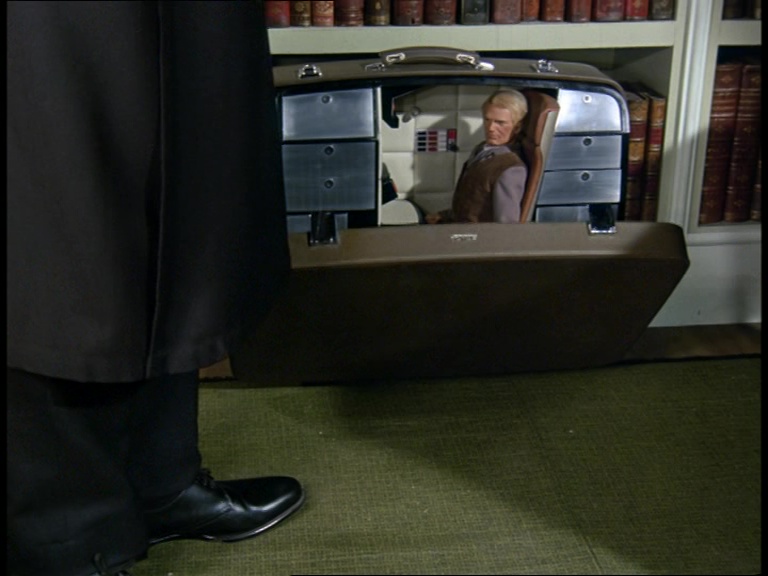
Father Unwin’s legs step into shot as Matthew closes himself inside the case. Once again, I have to say that I think putting a human next to a puppet in the same shot does little to help the illusion that Matthew is anything other than a fibreglass doll.
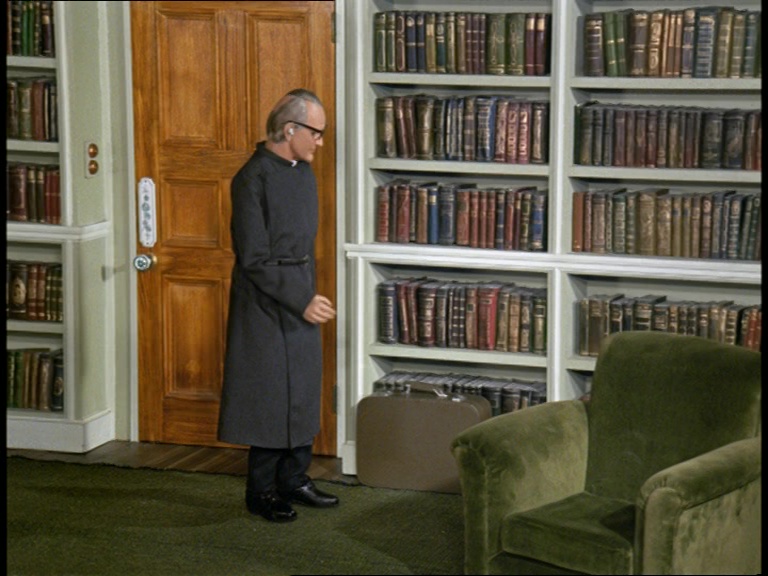
As Unwin stands in the library, seemingly chatting to his inanimate suitcase, I’m surprised we haven’t had another side-splitting observation from Mrs Appleby shoved into this scene. Instead, Unwin simply tells Matthew that this is an important assignment, “so we must do our best.” Yes, apparently they’ve been half-arsing it recently and are actually going to put some effort in this time around. After a quick radio check (likely inspired again by the pilot script), it’s time for some action!
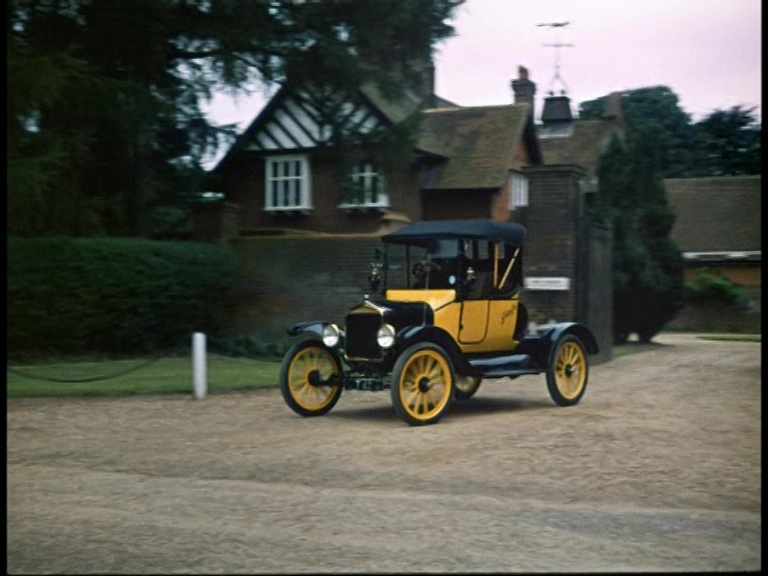
Gabriel is GO! This particular launch sequence – turning right out of the driveway with the roof up – was seen last week in The Feathered Spies and is the first time that such a shot has been re-used in the series. I’m sure you can sense my disappointment. The script had specified showing Gabriel emerging from the garage as the engine came to life, suggesting perhaps that it wasn’t quite clear when this episode was written whether the Vicarage did or didn’t have a garage.
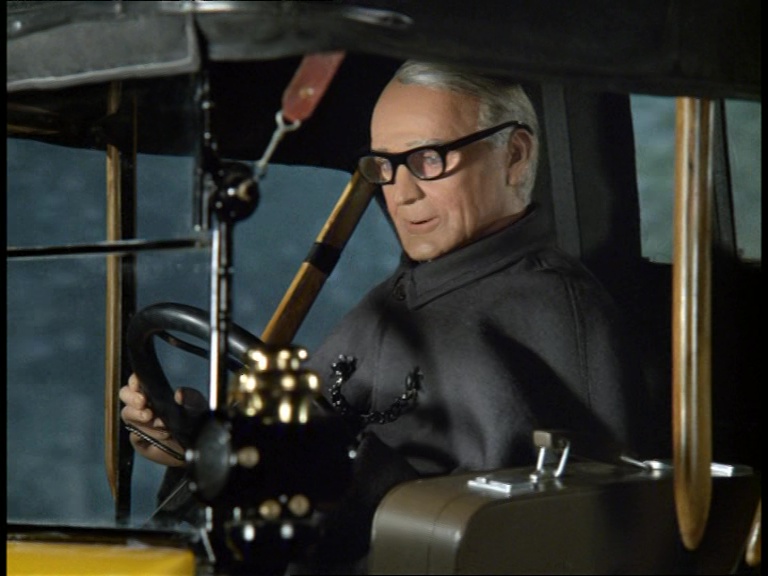
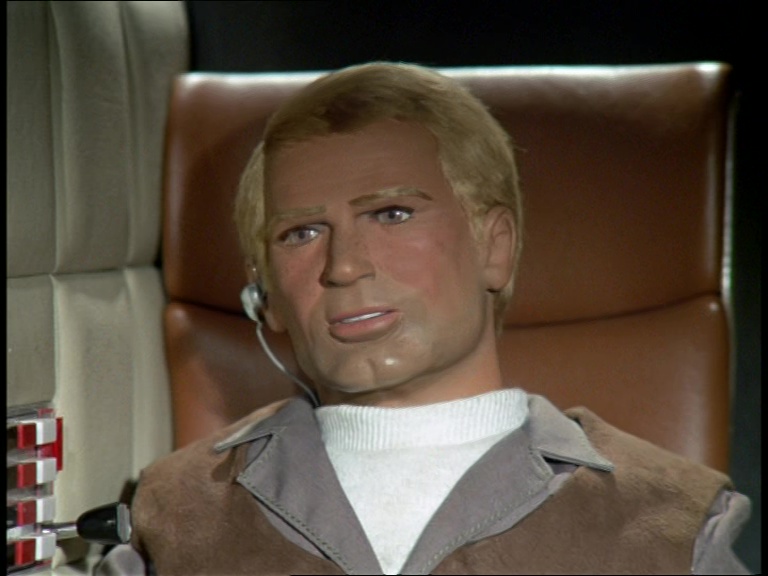
Matthew is terribly puzzled by Sir Humphrey Burton’s involvement in Grey’s escape from prison, but the older and wiser Father Unwin is keeping an open mind. I enjoy Unwin’s underlying attitude throughout the series towards avoiding prejudice, and analysing every person or situation based on the facts. There’s a suggestion that, as a priest, he has a greater understanding than most of the good and bad in the world and the capacity that people from all walks of life might have for either. It’s rarely an aspect of the character that is signposted directly, but rather it acts as a guiding principle for Father Unwin in each assignment. It serves as an understated and sophisticated bit of writing and characterisation.

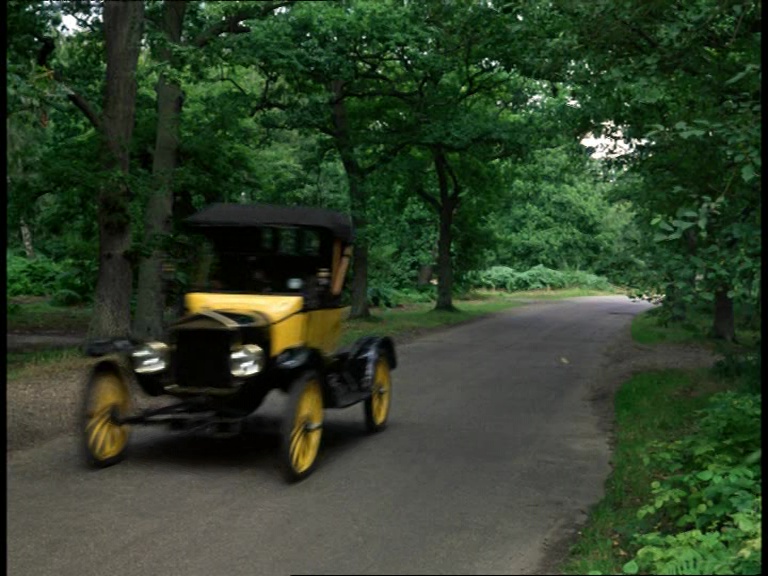
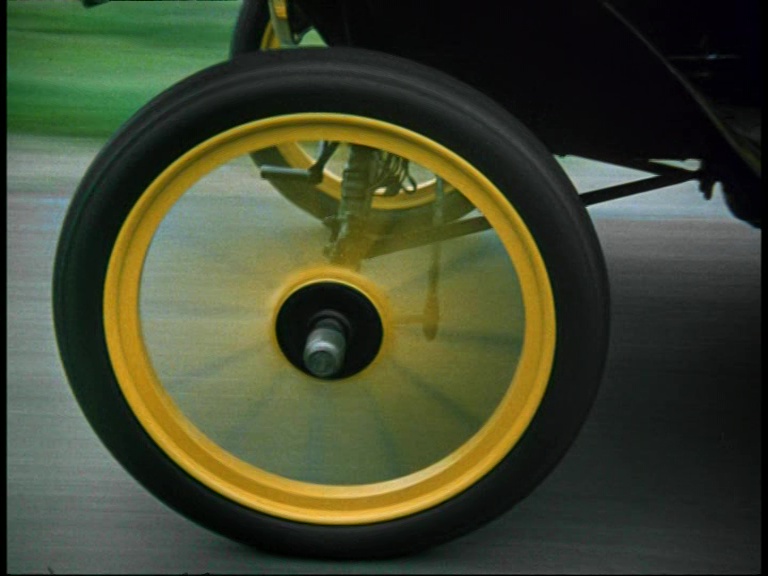
A rare close-up glimpse from the cab of someone, presumably Stanley Unwin, actually operating the Model T. This is accompanied by stock shots of the car thundering down the road in the middle of, say it with me now, Burnham Beeches. All of this material is starting to feel very familiar and comfortable as the series has gone on. There’s a sense of “business as usual” about it. A sense of “this is The Secret Service so deal with it.”
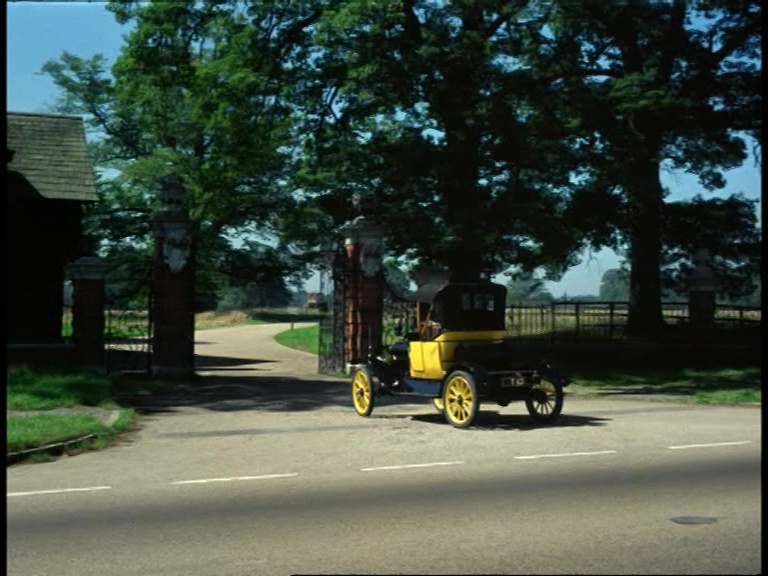
Unwin and Matthew arrive at Sir Humphrey’s estate, which is represented by the Hall Barn estate’s gate and gatehouse, Hall Barn Oak Lodge, now a grade II listed building in its own right in addition to the house itself.
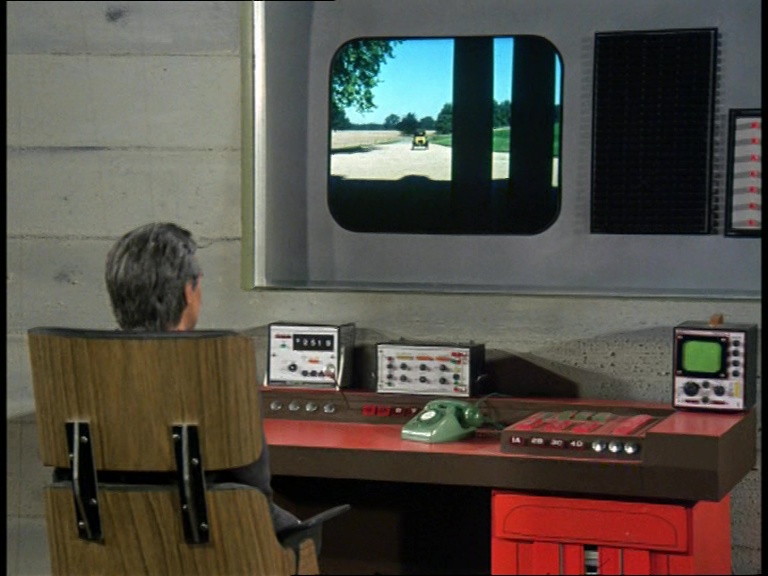
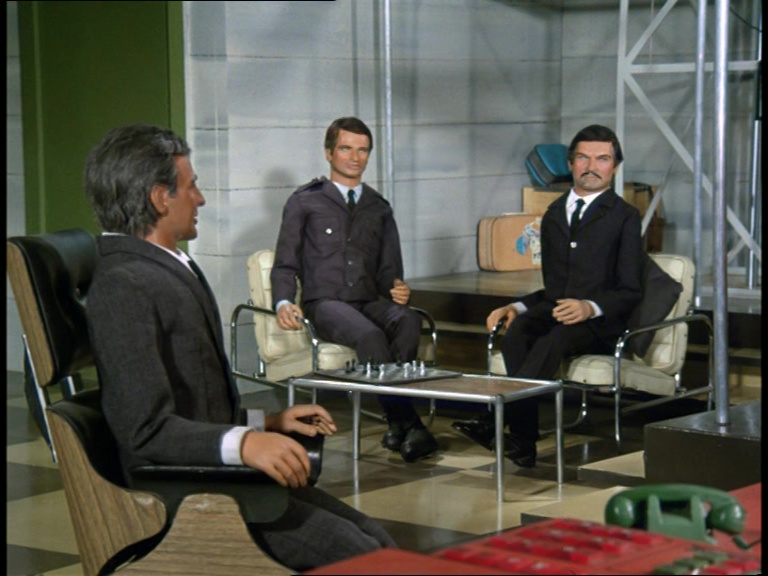
From the comfort of an advanced, but not too advanced, security monitor, Sir Humphrey, Grey, and an associate, watch the Model T approach the house. In the script, Sir Humphrey describes Gabriel as a “ridiculous looking vehicle,” but this line was cut from the episode because it probably made the character come across as too hot-headed.
Now, I could be clutching at straws here, but Keith Alexander’s voice for Sir Humphrey is not a million miles away from sounding like the real Humphrey Burton. Make of that what you will.
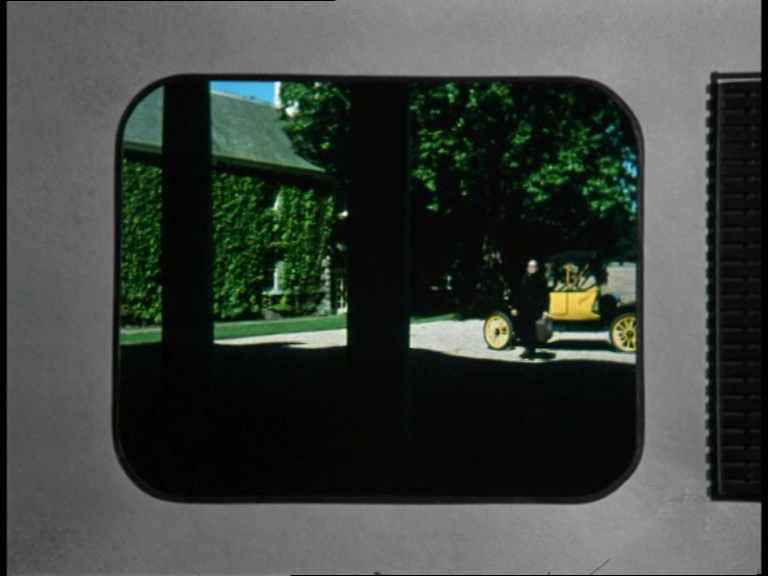
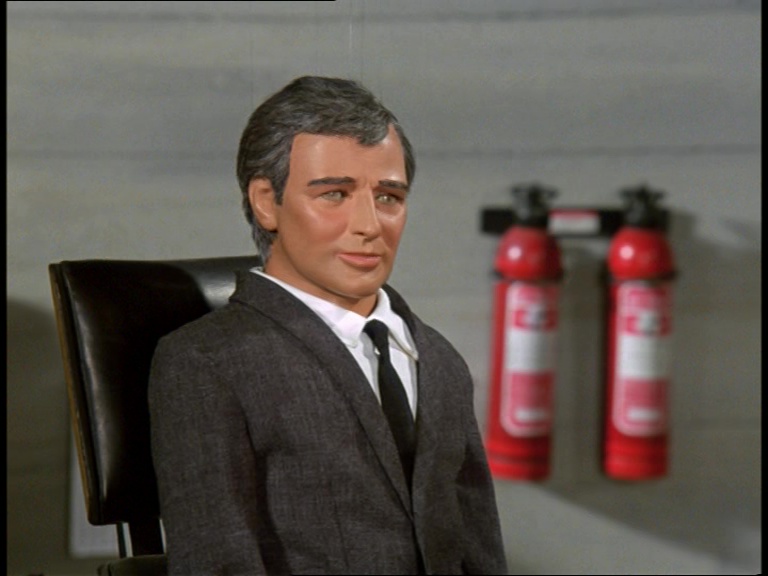

The puppets watch as the real Stanley Unwin walks towards the front door. Not sure I’m buying that the live-action and Supermarionation elements are taking place in the same universe but… well, we just sort of have to accept that sort of thing now. Instead of sending one of the staff, Sir Humphrey decides that he’s going to head to the front door himself… something he probably only does when a pizza delivery kid forgets the garlic bread.
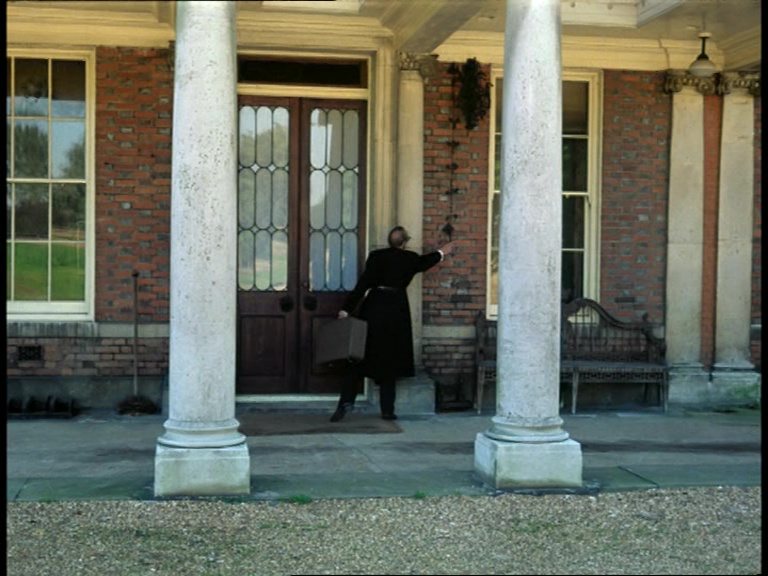
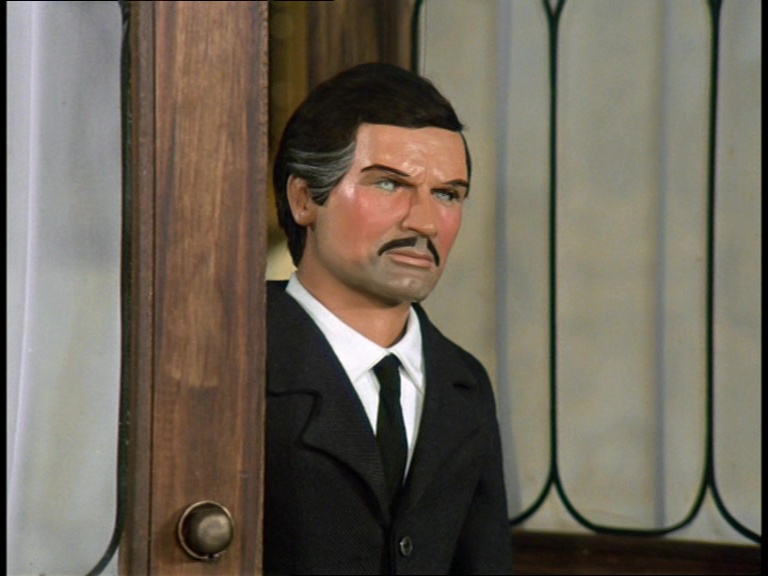

As with the Andersons’ house in The Feathered Spies, an admirable attempt has been made by the art department to replicate the front door of Hall Barn back on the puppet stage at the Stirling Road studios. Unfortunately, the drastic change in lighting among other issues makes for another jarring cut between live-action and puppets which again, to a certain degree we just have to accept. The funny thing is, in a regular television story made exclusively with people or with puppets, something as ordinary as a man walking up to a house and ringing the doorbell wouldn’t be anywhere near as laboured. It would just happen as a natural part of the scene. But here, the script and the finished episode almost present this moment as a spectacle. “Look! Our characters can walk up to a door and ring a bell and then have a chat,” seems to be the underlying message of this sequence as opposed to anything that contributes to the actual plot. It’s an attempt at showing off… except what gets shown off is how poorly Supermarionation and live-action marry together, rather than how seamlessly they work alongside each other. Alternatively, Century 21 might have just realised the inherent issue with the technique and decided to play to its oddness and comedy by making it stick out like a sore thumb.
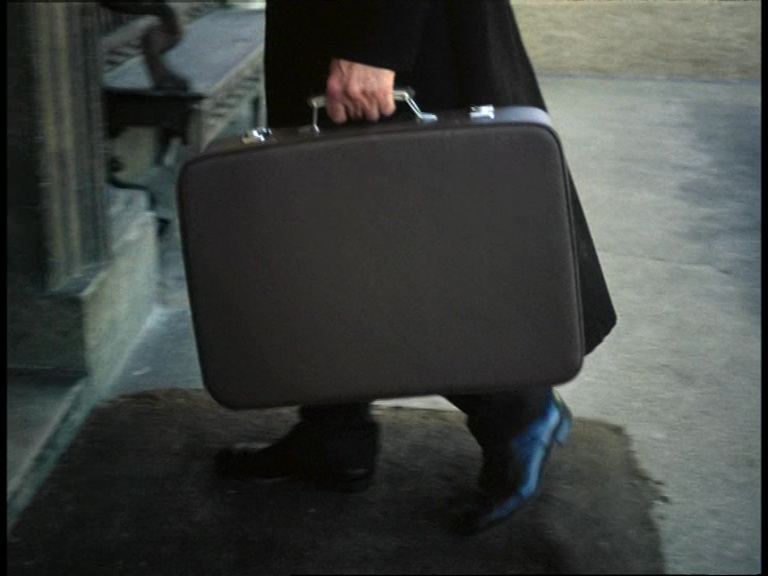
Sir Humphrey, keen to avoid arousing suspicion, invites Unwin into the house. It doesn’t matter that he’s a complete stranger – if a priest came to your door in 1968, you invited them in whether you knew them or not for fear of excommunication. All the while, Father Unwin keeps a tight hold on the case so that Matthew can get a free ride into the house.
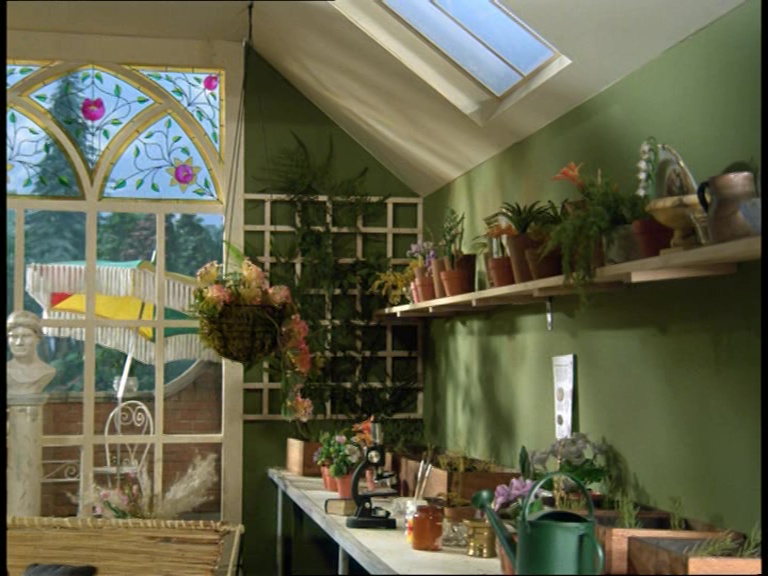
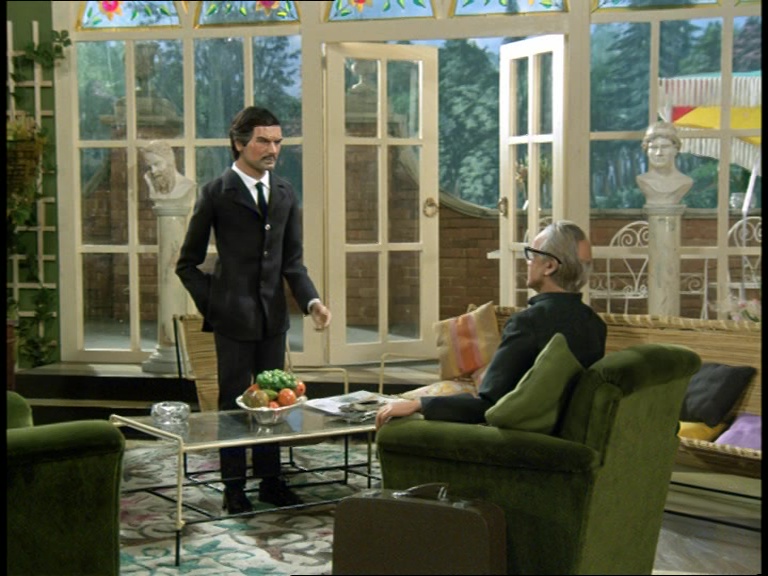
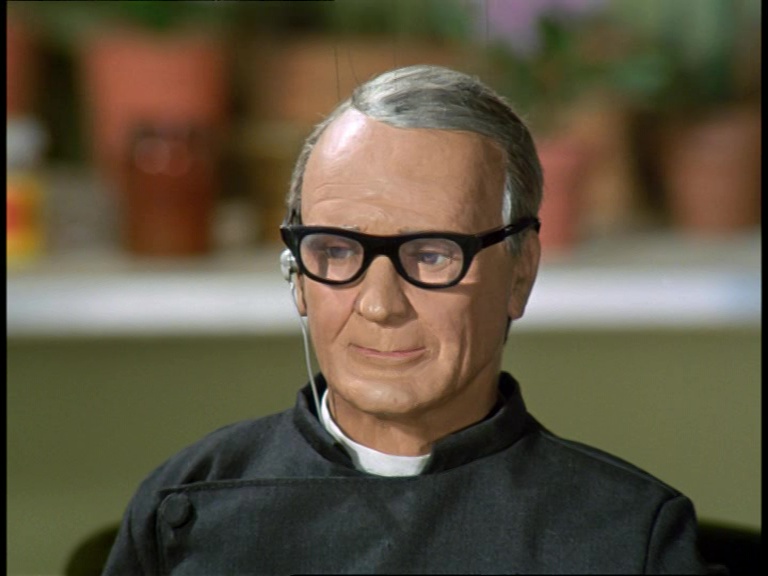

What follows is a slightly odd scene in Sir Humphrey’s lounge. His interest in botany is noted for later (sort of). But Father Unwin has forgotten to come up with any decent flimsy pretext for coming to chat with the smooth-talking Sir Humphrey. Instead, he defaults to the usual business of blaming the Bishop, and then speaking gobbledy-gook to disguise his instructions to Matthew. Sir Humphrey seems amused rather than annoyed with the time-wasting clergyman, even though this guy has just shown up at his house unannounced to talk about seemingly nothing at all. As a result, the conversation is polite but short. The Unwinese is a clever way to convey instructions in secret, and as a result actually serves a decent function in the episode – or at least about as decent as one might expect from such a bizarre gimmick.
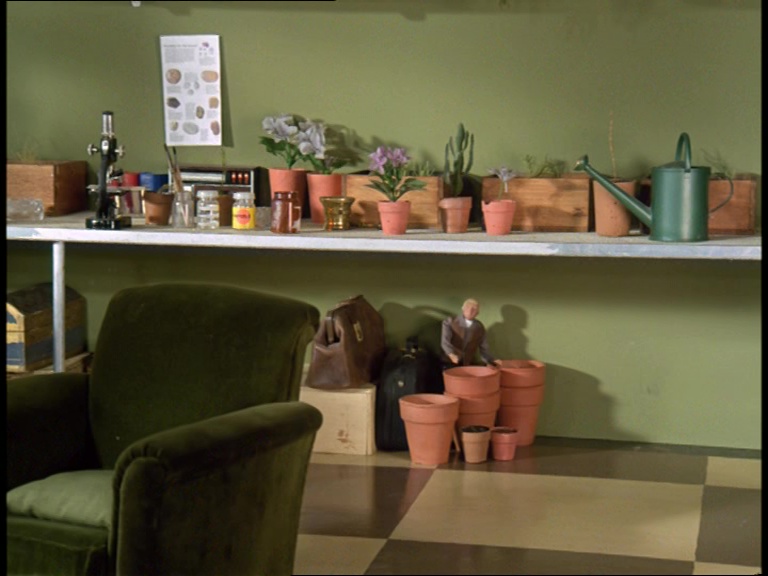
Meanwhile, in plain sight of just about anyone with working eyeballs, we have this… thing. Yes, despite the whole format of the series being constructed around puppets that are one-third life-size interacting with full-sized humans, some scenes necessitate a small version of Matthew which is one-ninth life-size in order to interact with the Supermarionation sets which couldn’t otherwise be built at full size. The result is a static doll of Matthew with barely any facial features that stands like a haunted plastic goblin in the plant pots. I detest it. The director, Brian Heard, could have settled for showing Matthew in close-up, but no, he just had to do the unthinkable and put the puppet-sized Unwin and the mini-mini-sized Matthew in the same shot. The very format of the series, and Stanley Unwin’s participation in it, is constructed around not having to do that. It should have been the live-action Unwin and the puppet-sized Matthew in the same shot. That’s the whole flippin’ shtick of The Secret Service.
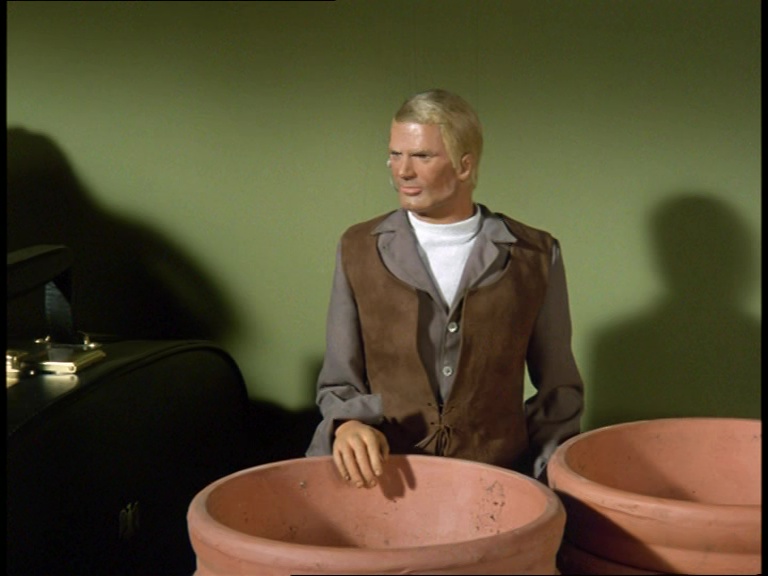
Somehow, hidden in amongst his plant pots, Sir Humphrey possess the suitcase belonging to the Ambassador of Dreisenberg from the first episode.
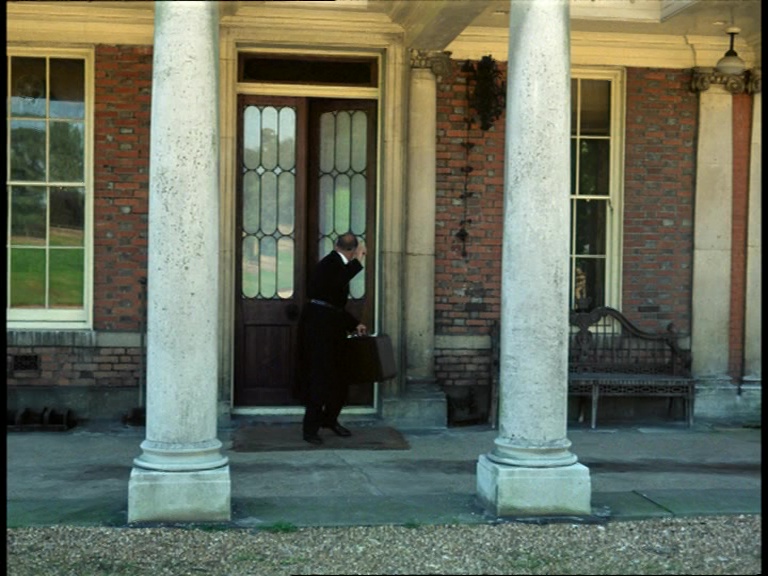
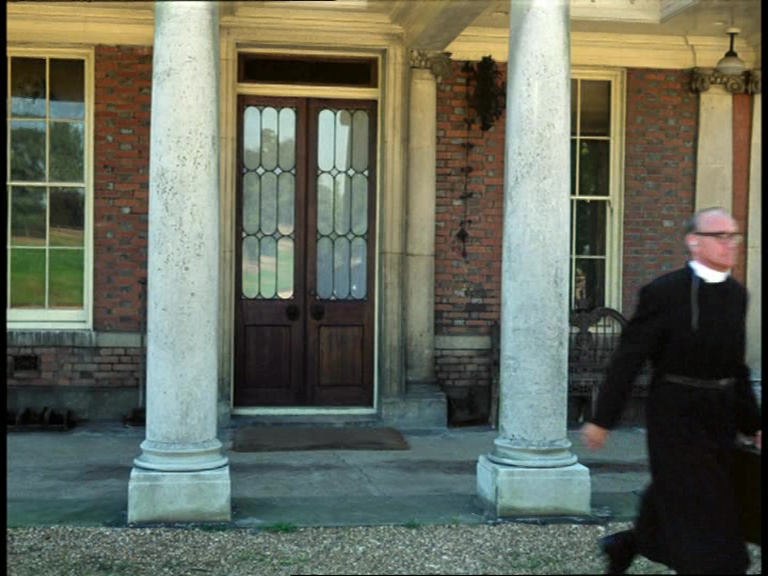
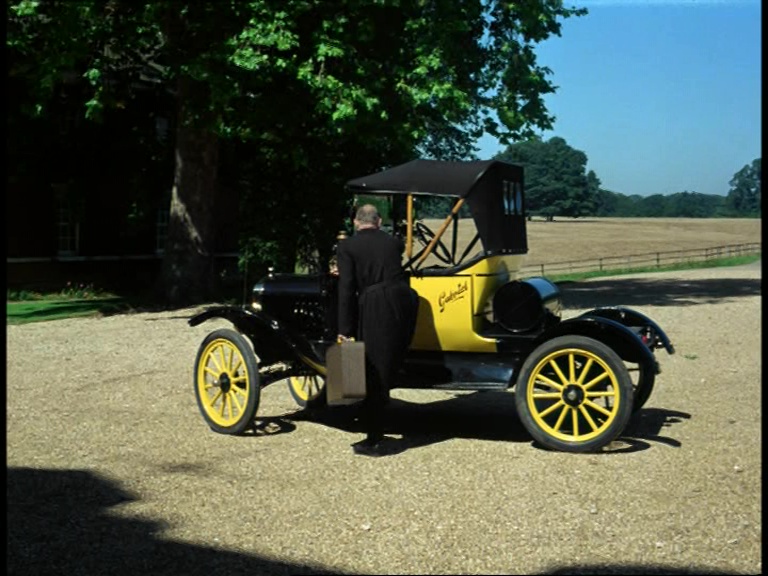
Stanley Unwin does what I can only describe as “silly old vicar” acting as he hurries out of the house. Then he resumes his standard-issue “look a bit like an expressionless puppet” performance as he walks back towards Gabriel and climbs aboard.
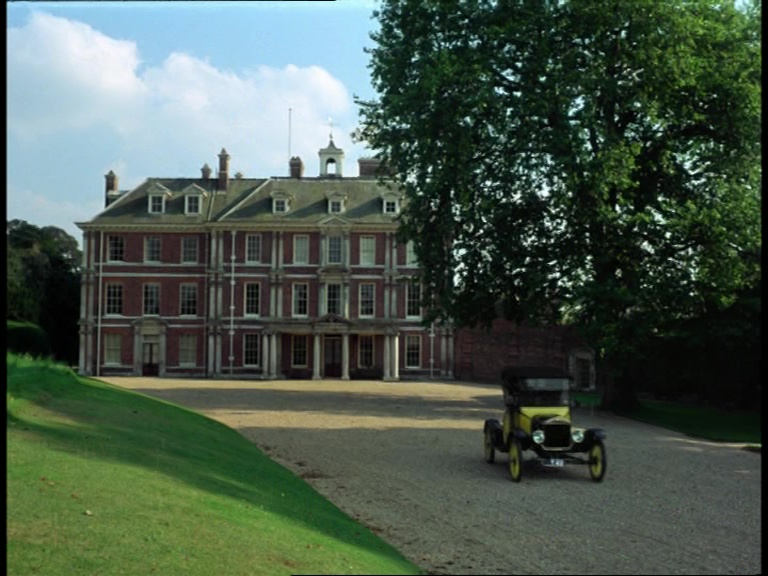


As Gabriel leaves the grand setting of Hall Barn behind, Unwin checks in with Matthew who has once again been abandoned in a giant house to do some covert surveillance and general tomfoolery. I hope he remembered to pack some lunch.
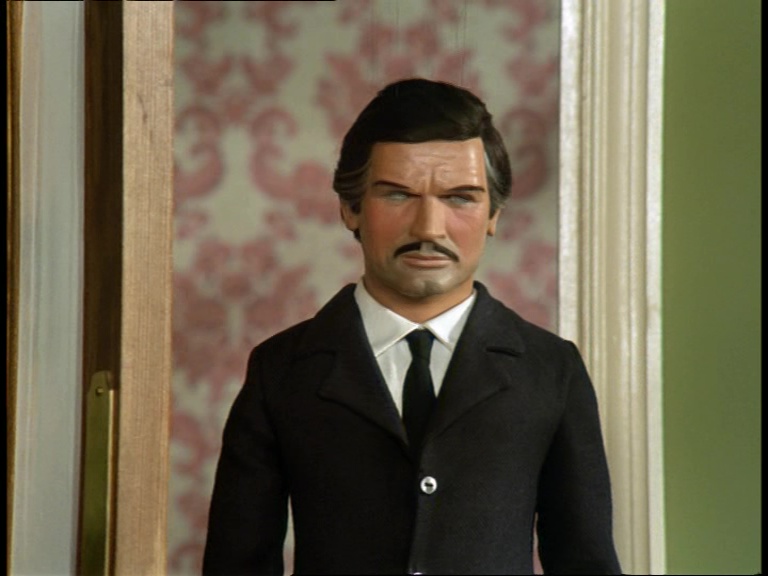
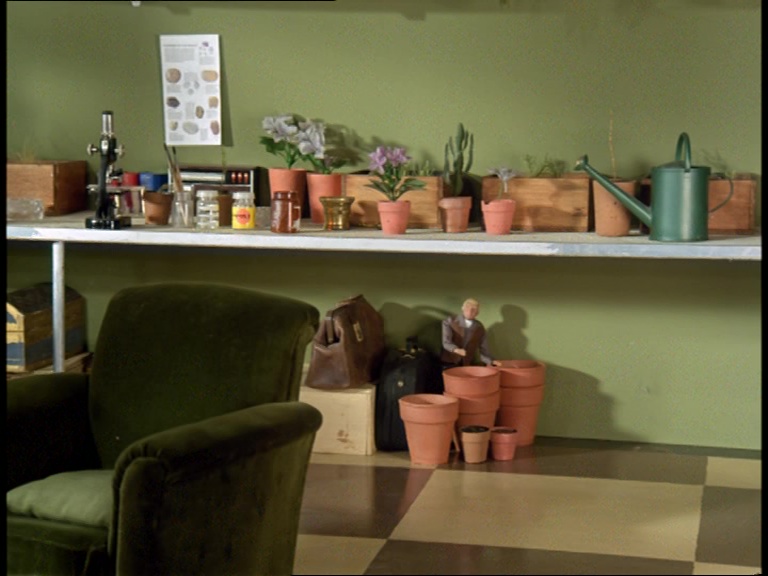
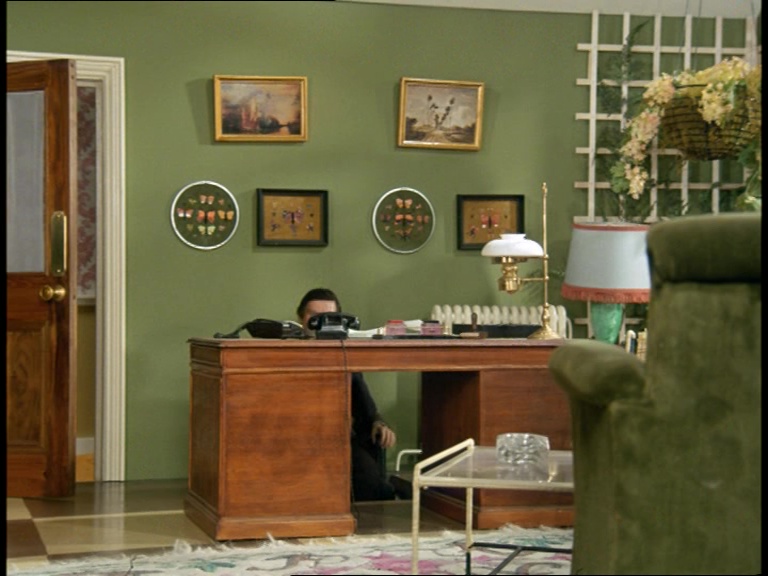
Despite looking straight at him, Sir Humphrey somehow fails to spot Matthew standing in the plant pots. Again, I really don’t think the mini-mini faceless Matthew goblin doll is a good addition to the scene. Still, at least Matthew doesn’t have to wait long for things to get interesting because Sir Humphrey immediately climbs into his chair which descends into the floor… another very, very, very Thunderbirds move.
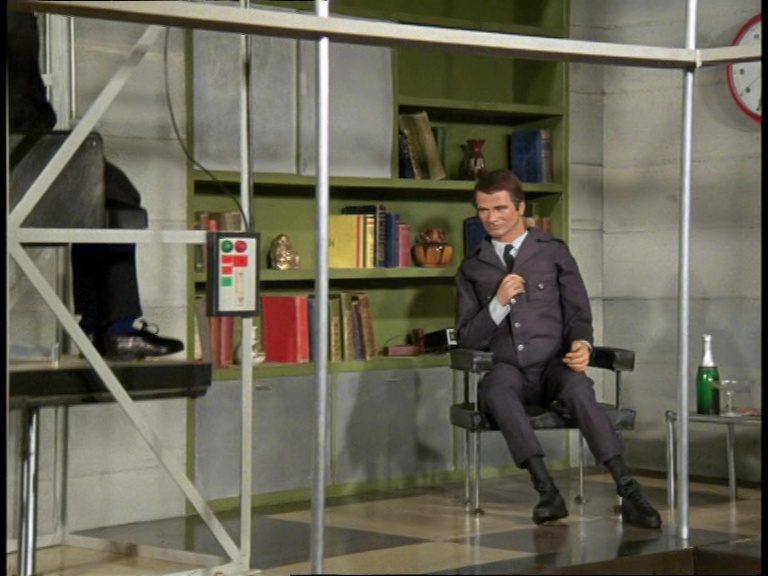
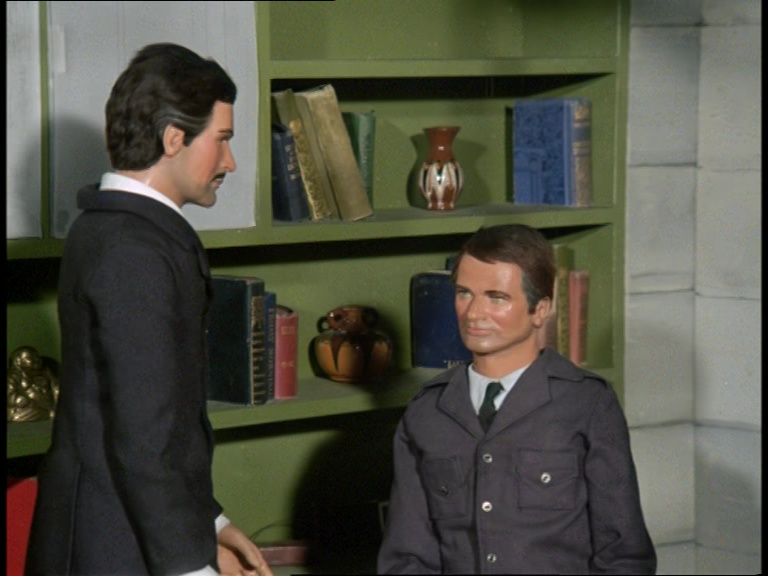
The chair arrives in the underground chamber where Grey has made himself comfortable between a bookshelf and a bottle of champagne. On the wall is the red clock borrowed from the desalination plants in A Question of Miracles, which was also seen last week on Masden’s wall in The Feathered Spies.
We learn that Sir Humphrey is aiming to get Grey out of the country tomorrow morning. He doesn’t reveal his plan yet, nor are his motivations made clear, but we do know that he considers himself above suspicion because of his status… which we also don’t know anything about. It’s a lovely idea having a prominent figure house a convict in a secret underground lair beneath his big country house, but a higher-level of character development probably would have helped to make Sir Humphrey a more engaging central figure to the story.
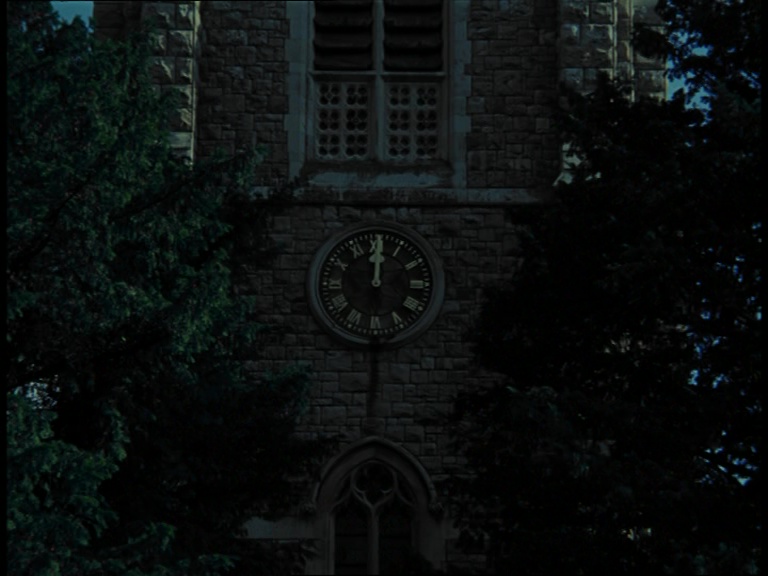

It’s midnight and Father Unwin is once again fast asleep while Matthew does all the hard work. The beats of this entire bloomin’ script seem to be borrowing from A Case For The Bishop.
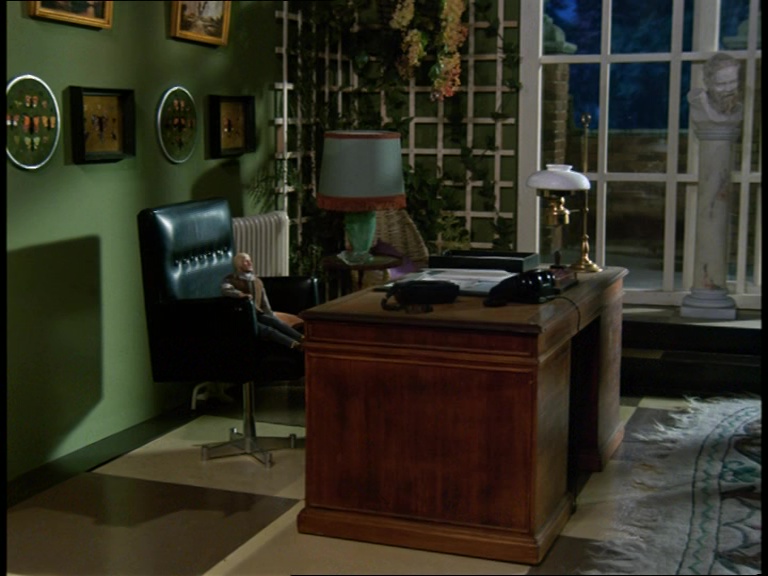
The mini-mini faceless Matthew goblin doll has found its way into Sir Humphrey’s special chair. In an attempt to make it look alive, the goblin doll twitches slightly. Yuck.
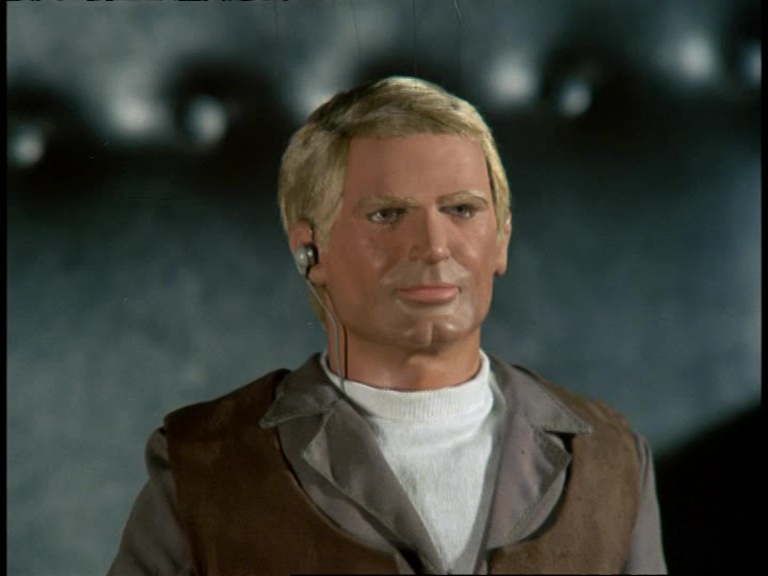
Matthew begins his descent and we’re shown the regular puppet in close-up just to remind us all who that goblin doll is actually supposed to be.
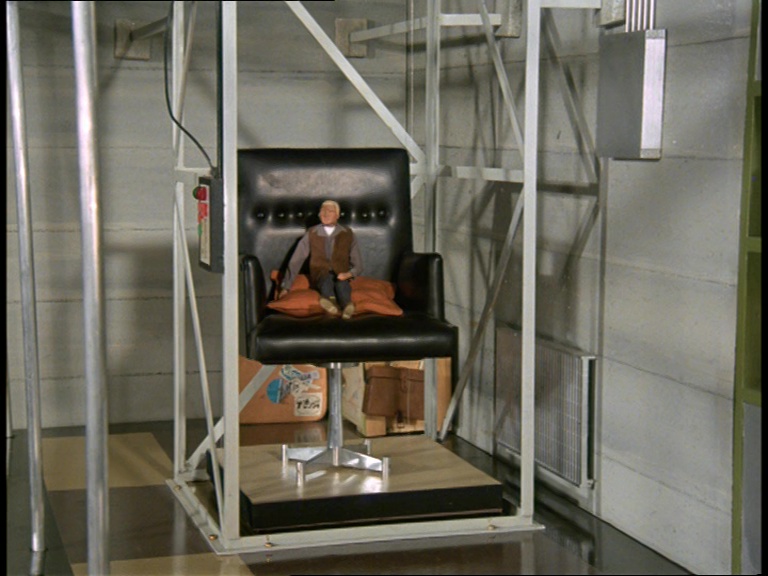
The goblin doll arrives in the underground chamber, ready to bite the ankles of those who dare to cross him.
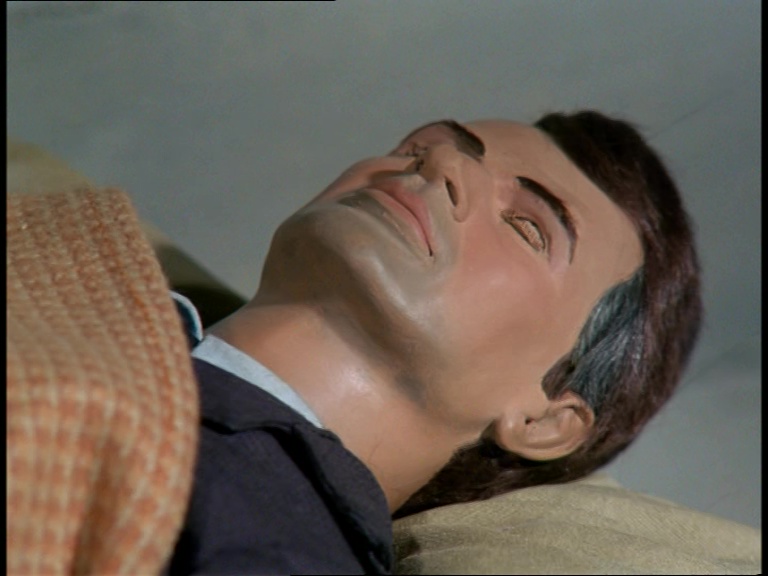

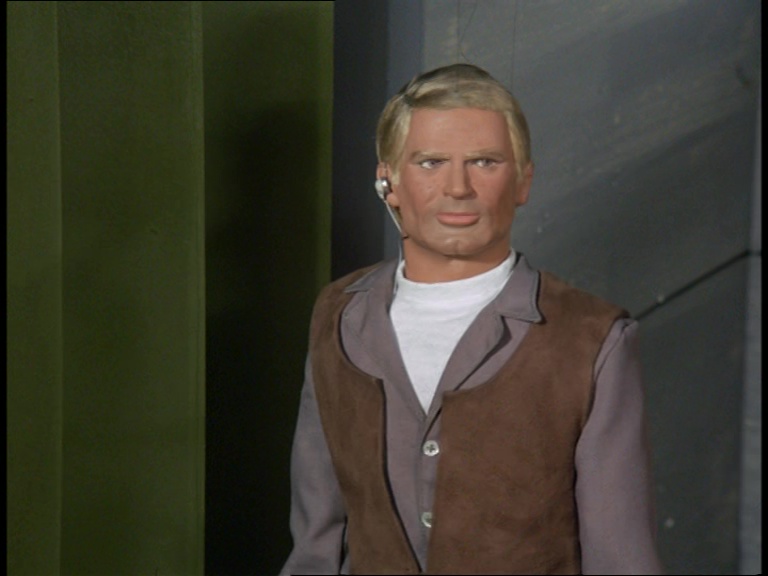
Grey is fast asleep. This particular puppet was one of the few stock revamp puppets to have alternative facial expressions sculpted including his blinker head, seen here, and his frowner head seen in the Joe 90 episode, Double Agent. Matthew quietly explores the chamber which, all things considered, is a nice gaff for an escaped convict. I wonder if Sir Humphrey rents the place out to other criminals on Airbnb.
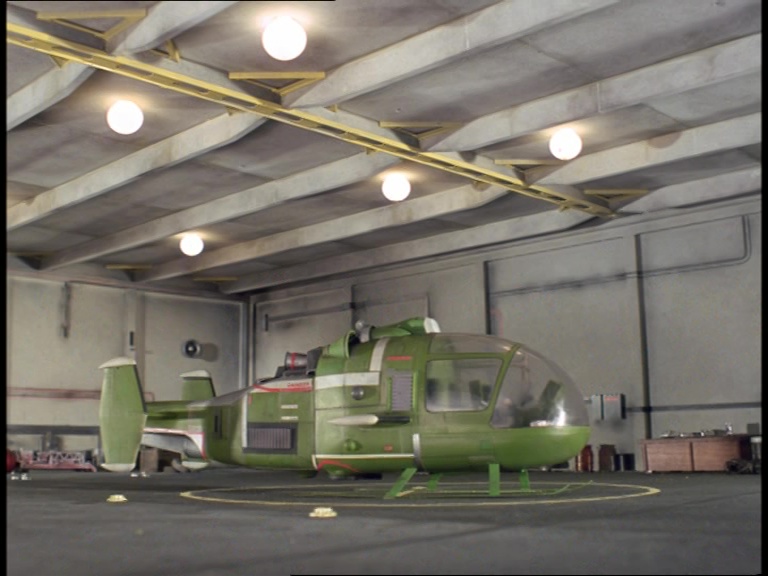
Matthew spots the helijet parked neatly in the underground hangar. It’s a really nice bit of kit.
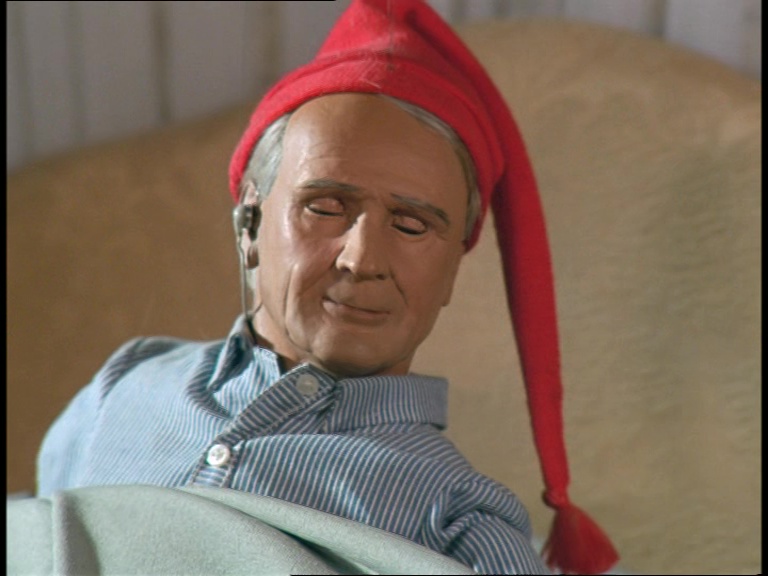

Unwin has to wake up and actually do some work as Matthew reports his findings. A little more Unwinese slips out, as scripted, while the disoriented vicar regains consciousness. The word “helicopter” is used throughout the dialogue to describe the helijet which I guess is fine but it is technically inaccurate. Yes, apparently this is a hill I’m prepared to die on.
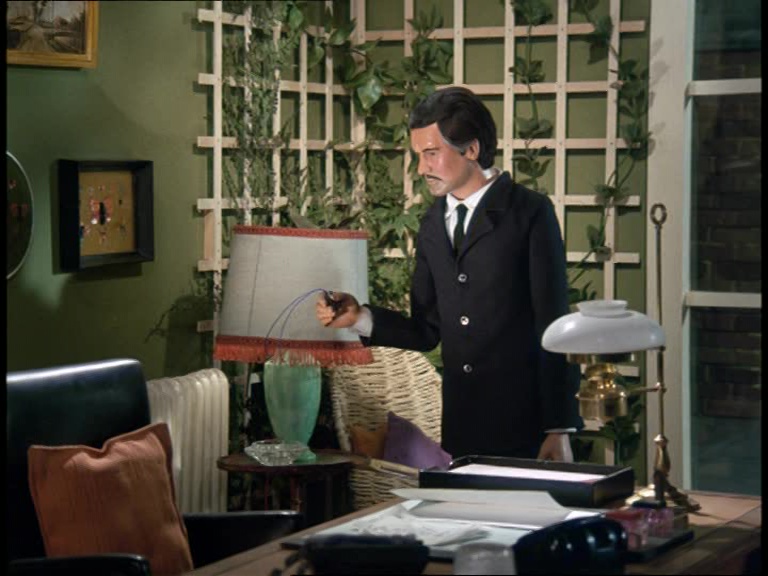
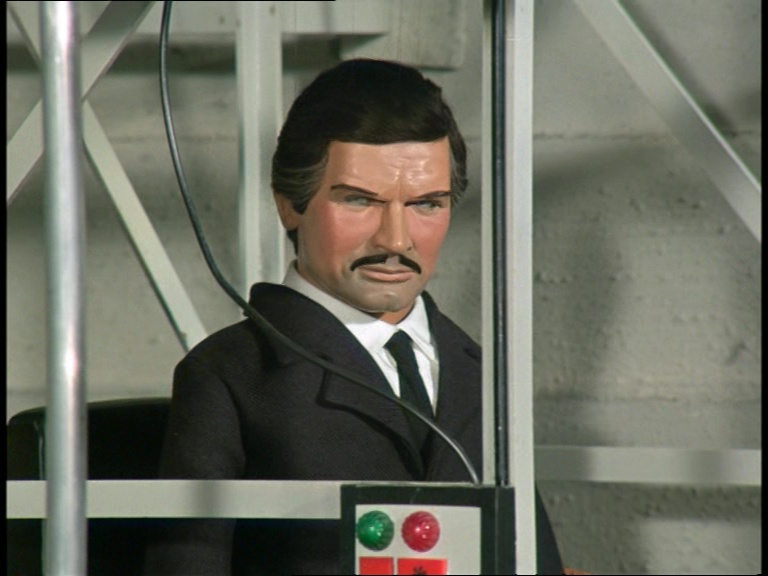
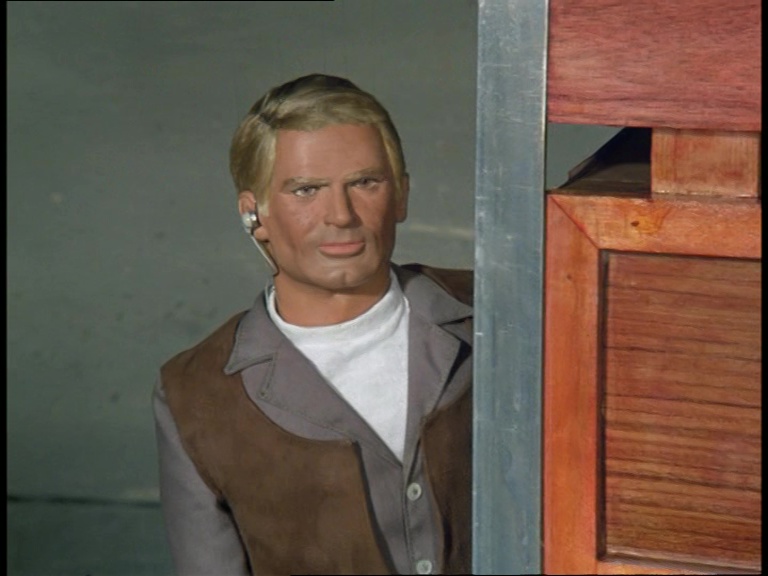
Just as Matthew runs out of new information to share with Father Unwin, Sir Humphrey arrives from upstairs to update Grey on the next part of the escape plan. Matthew hides behind a desk, which is a considerably better hiding place than the plant pot he was standing in earlier.
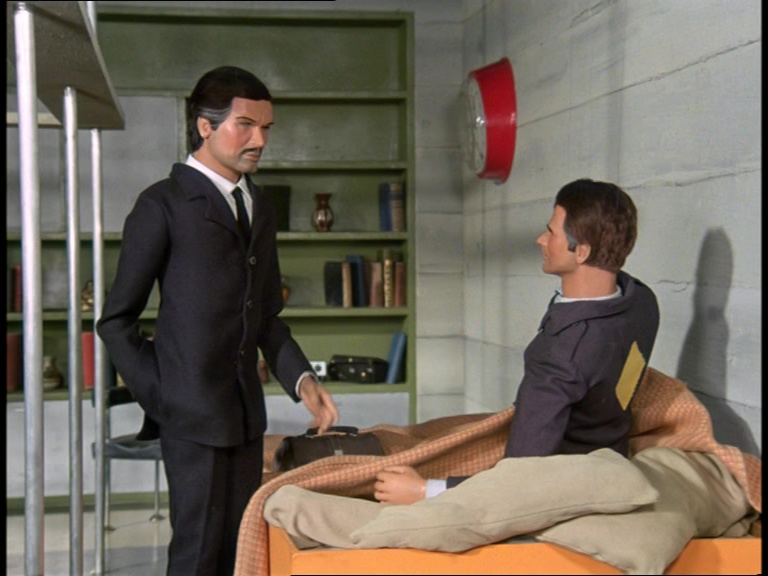
Grey, who is still inexplicably wearing his prison uniform, gets woken up. Sir Humphrey explains that they’ll leave at 5:30 am by helicopter (*cough* helijet) which will then take Grey to a car which will then take Grey to a launch which will then take Grey to a submarine. It’s like a bloomin’ Top Gear race this.
Apparently such a deluxe service is costing Grey the princely sum of £1,000,000. That’s about £13,000,000 in the hellscape we call 2023. I guess that’s supposed to be the motivator for Sir Humphrey. That doesn’t make a whole lot of sense considering how rich he must be already. There must be some other reason why Sir Humphrey wants to orchestrate Grey’s escape. Unless, of course, Sir Humphrey provides this service to convicts all the time and that’s how he made his fortune in the first place. That would explain why he’s only interested in cold hard cash, and why he has all these ludicrous facilities buried under his house seemingly made for the specific purpose of hiding criminals. Then again, considering how easily British Intelligence managed to track Grey and the helijet to Sir Humphrey’s estate it seems probable that Sir Humphrey would have already been found out for any previous jailbreaks he might have organised. Basically, Sir Humphrey is either a very thorough amateur, or he’s a professional at this whole “blow up a prison and hide a convict under my tennis court” game who just happened to get found out on this occasion.
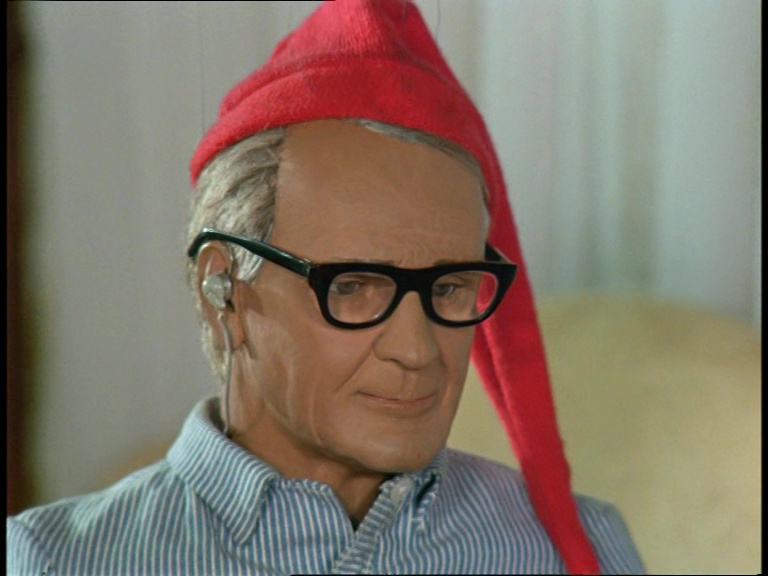
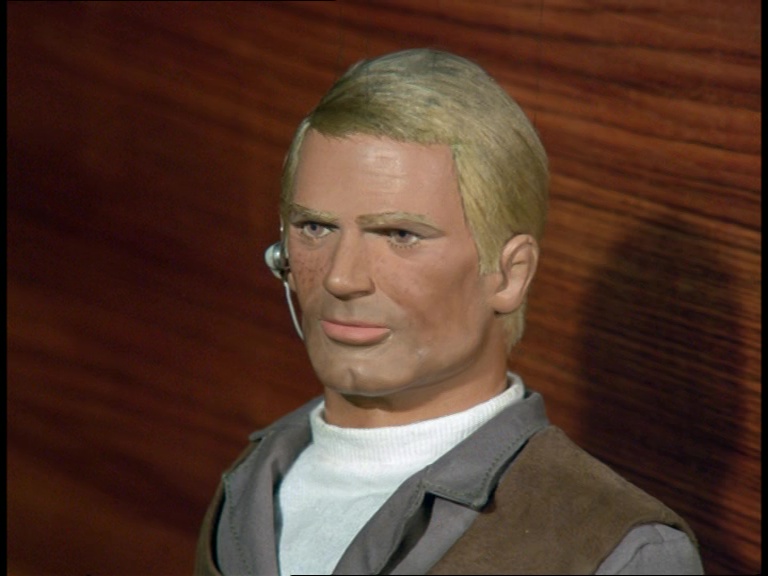
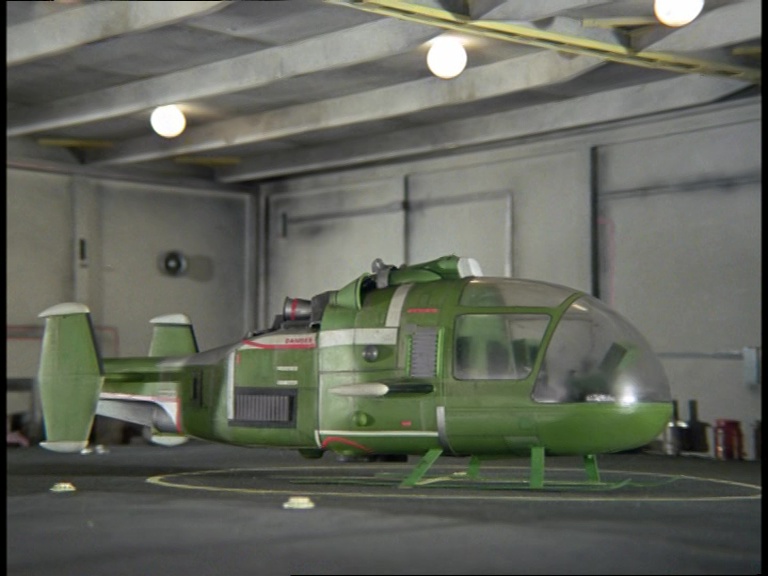
Just to finish up the first half of the episode with a bit of tension before the commercial break, Matthew declares that he’ll be on the helicopter when it flies out in the morning. A brief moment in the original script that was removed suggested “Matthew pops his head up from a convenient and if possible amusing hiding place in the console.” I guess the production team couldn’t find anything remotely amusing about a console and just decided to leave that bit out of the episode.
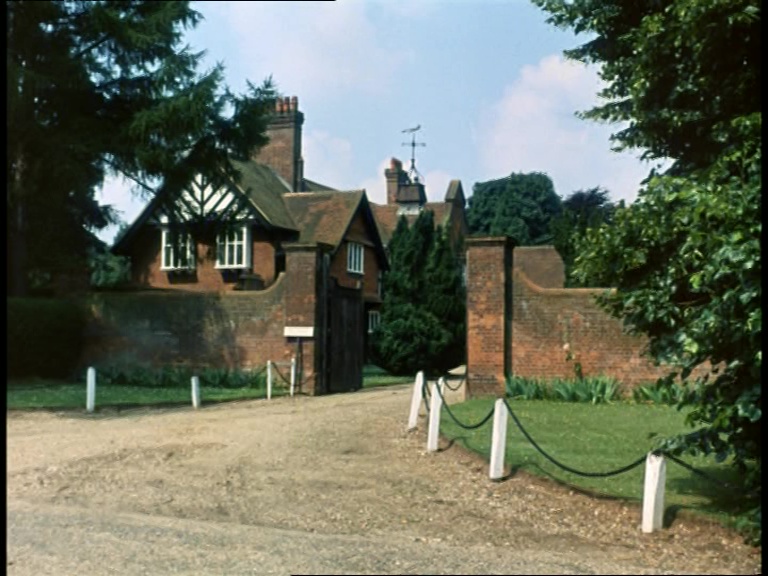
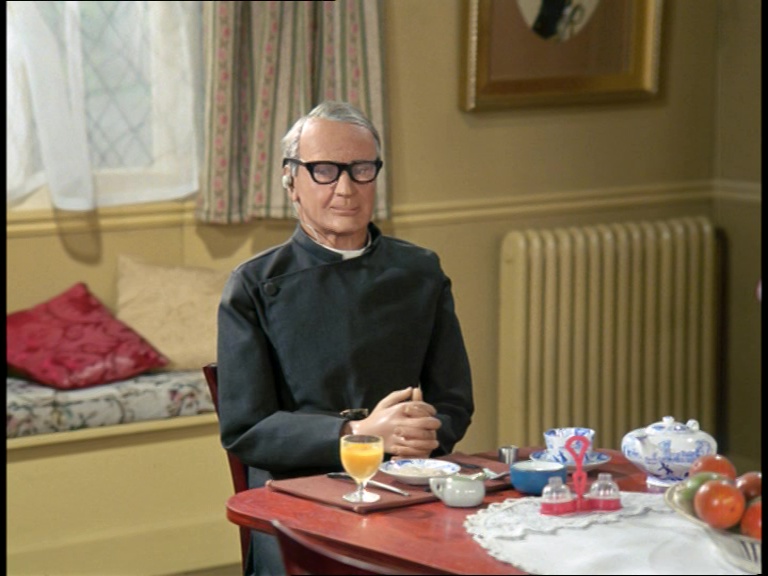
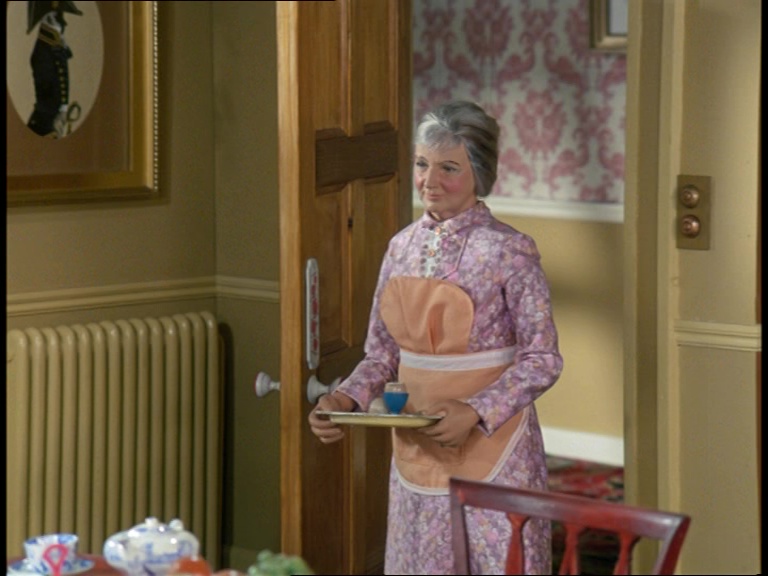
After the commercial break, it’s 5:30 the next morning, despite the fact that the stock footage of the Vicarage looks like midday. It may be stupidly early in the morning, but Father Unwin is waiting at the breakfast table for Mrs Appleby to bring his boiled egg. Yes, at some point between midnight and right now, Father Unwin must have woken up his housekeeper and insisted she be dressed by 5:30 and ready with his breakfast. I don’t know about you, but if I were Mrs Appleby I’d tell him where to shove his boiled egg.
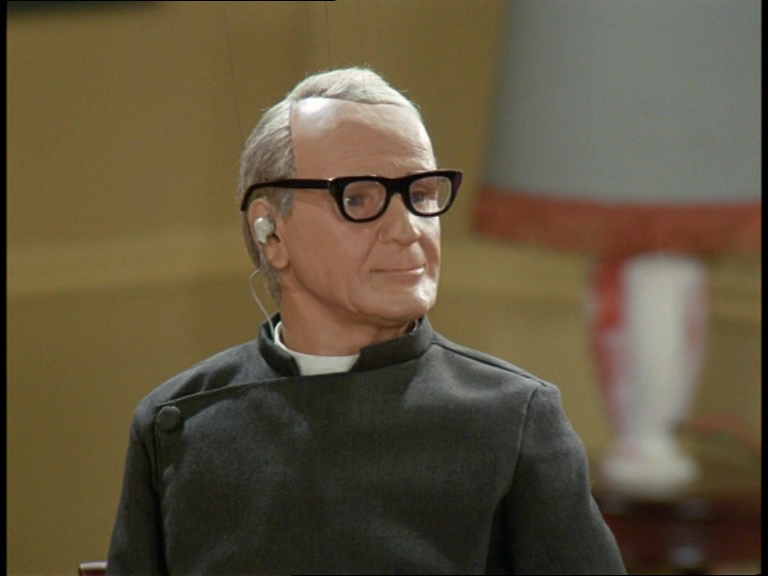
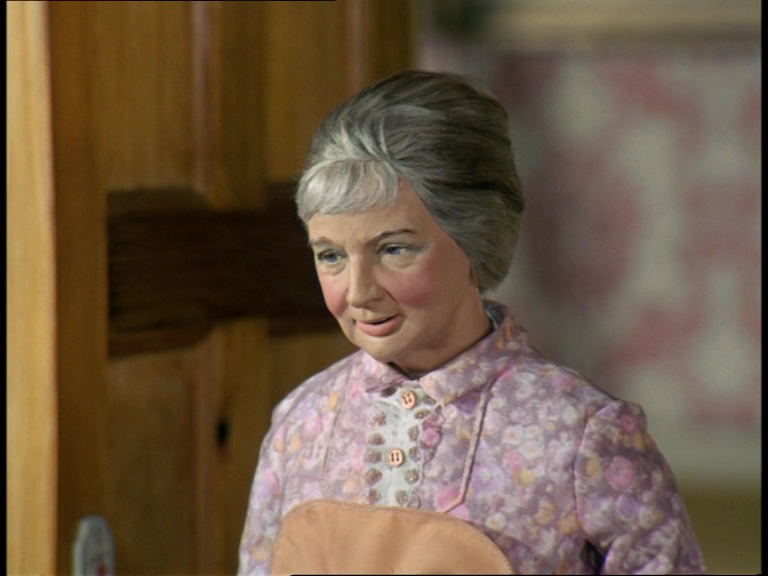
Mrs Appleby takes the opportunity to take a dig at Matthew’s work ethic, and suspects that his empty bed is a sign that the lad is up to no good. So hang on, we’re supposed to believe that Matthew’s gardening duties are so immense that he actually has to live at the vicarage full-time? And presumably Mrs Appleby lives there too? Is it safe to say that Mr Appleby is no longer around? It’s a funny old living situation that those three find themselves in and it makes it even more baffling that Mrs Appleby isn’t a member of BISHOP herself, seeing as she’s around Father Unwin and Matthew 24/7. How the heck has she failed to figure out what those two get up to? I guess that’s ultimately the point of Mrs Appleby’s character – to be an oblivious comedy housekeeper – but it’s more than a little limited in terms of characterisation, especially as the only woman we’ve seen so far in four entire episodes.
As for what Mrs Appleby reckons Matthew gets up to late at night away from the Vicarage, I’m sure I don’t need to pound your imaginations too hard with the facts of life. Of course, Mrs Appleby would never imply anything crude, especially as she still thinks Father Unwin can converse directly with the heavens and wants to keep her cushy job boiling eggs at the crack of dawn.
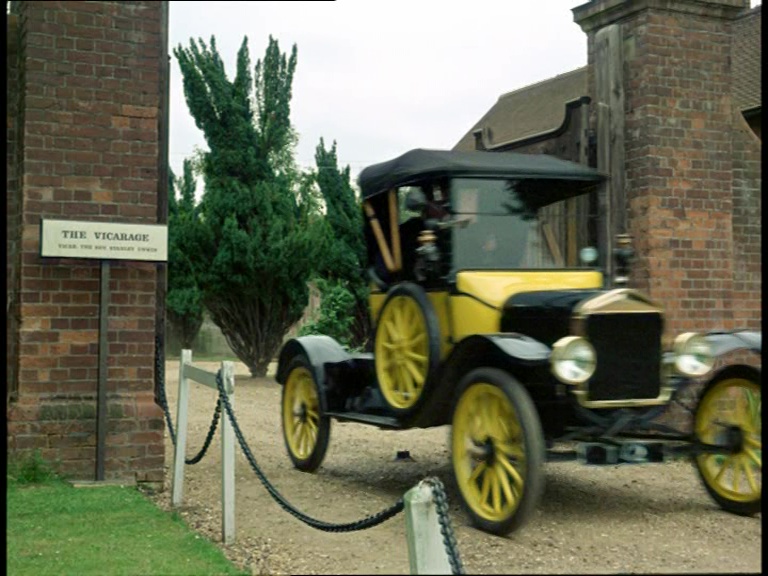
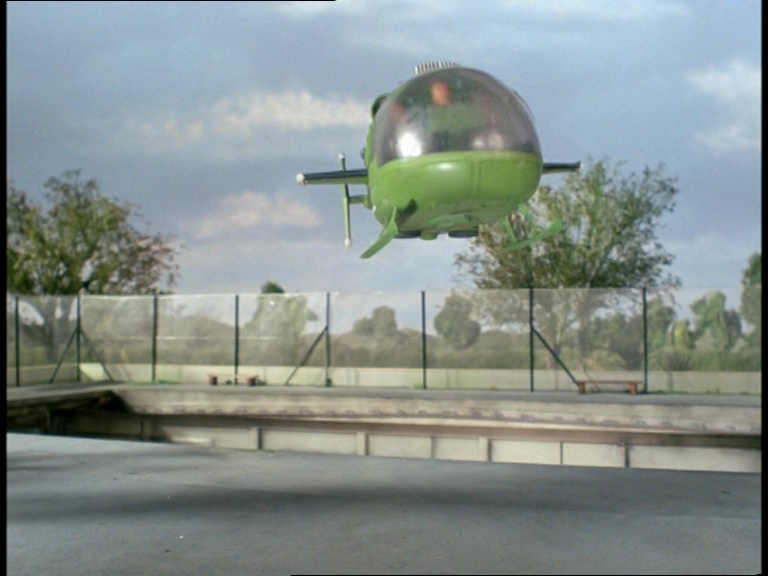
And so, as the helijet sets off, so too does Father Unwin, leaving his boiled egg behind. I’m sure Mrs Appleby is thrilled. Also, yes, that is a new shot of Gabriel leaving the Vicarage – bringing the total number for the series up to five… if you happen to be keeping count.
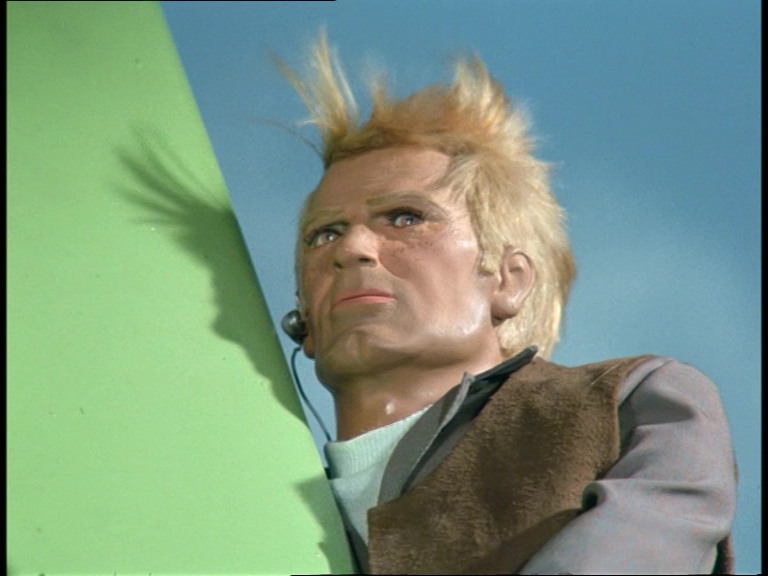
In yet another moment likely inspired by the first episode, Matthew clings to the aircraft for dear life while it’s in-flight but is a cool enough guy to just sort of deal with it. The script originally specified that, “Matthew is strapped by his belt to an undercarriage strut,” which probably isn’t too dissimilar to where Mrs Appleby thinks he’s been all night.
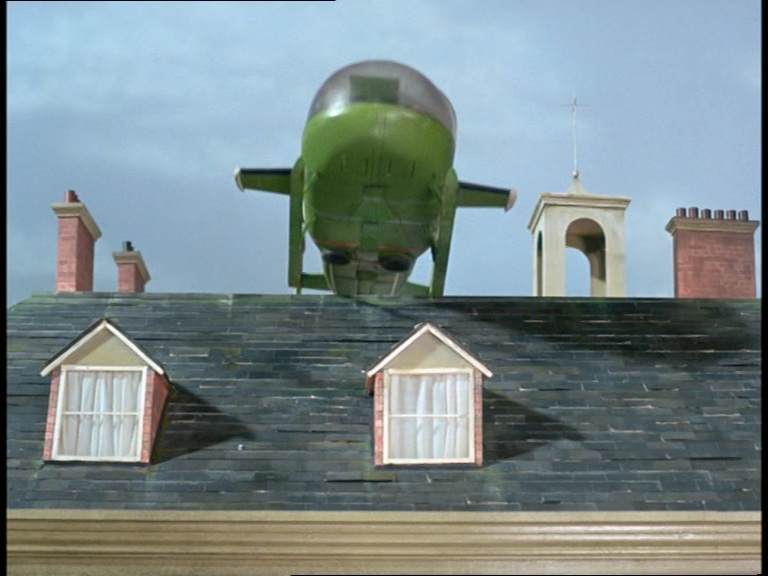
The daylight gives us an opportunity to admire the detail in the roof tiles on the model of Hall Barn. Look at all that green muck.
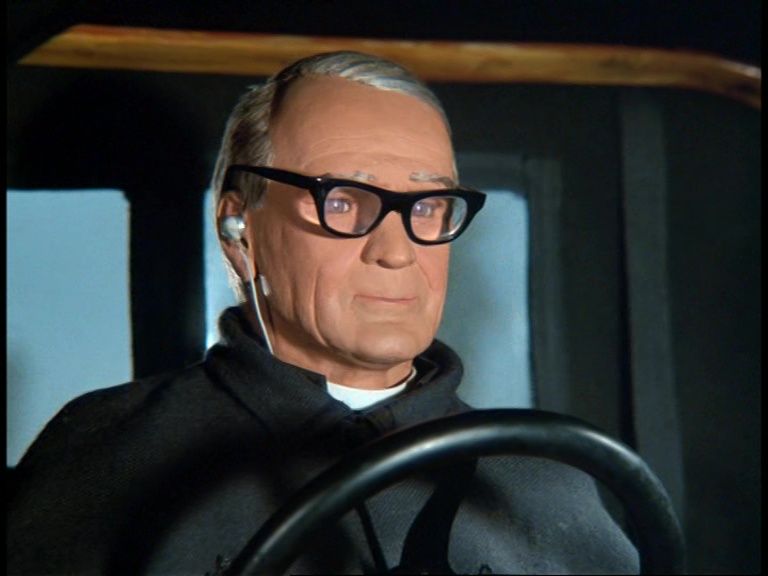
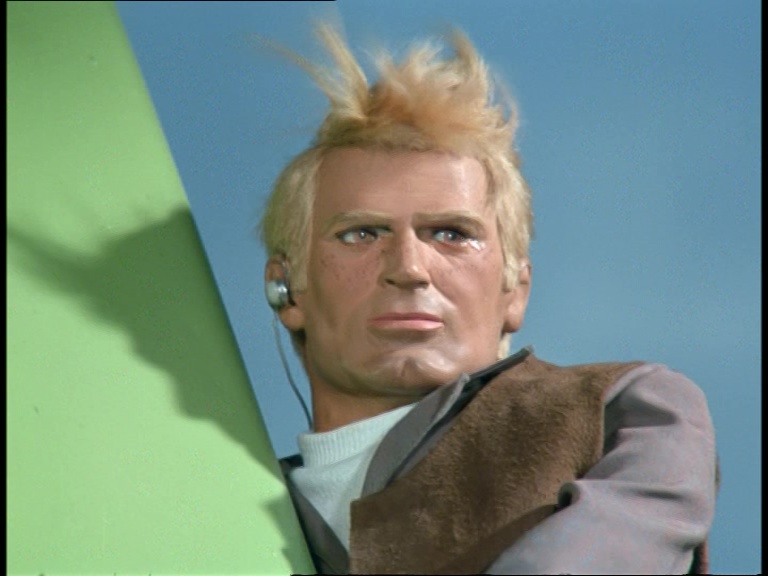
Father Unwin reports that he’s heading south from Chertsey while Matthew is travelling northeast from Guildford. Check out the speed with which Matthew is able to identify Guildford Cathedral. I guess Matthew is just a man who knows his churches. Pat Dunlop was clearly studying a map quite carefully when planning this dialogue out because Unwin is due to catch sight of the helijet from the Portsmouth Road (the A3 to simple folk like you and me), south of Esher. This episode is basically a who’s who of not-particularly-important towns in the south of England.
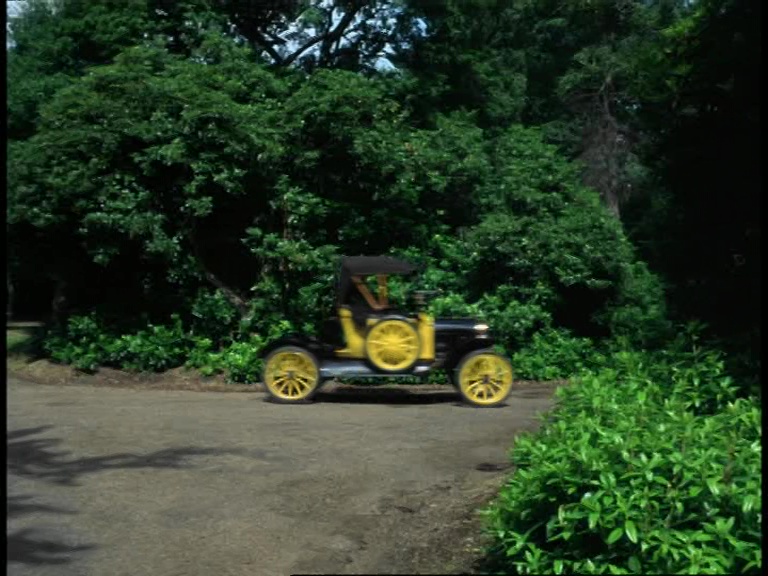
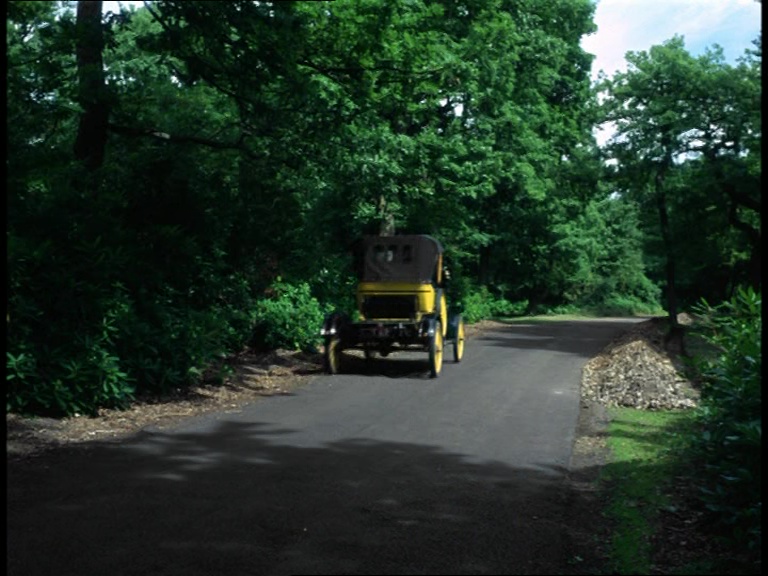
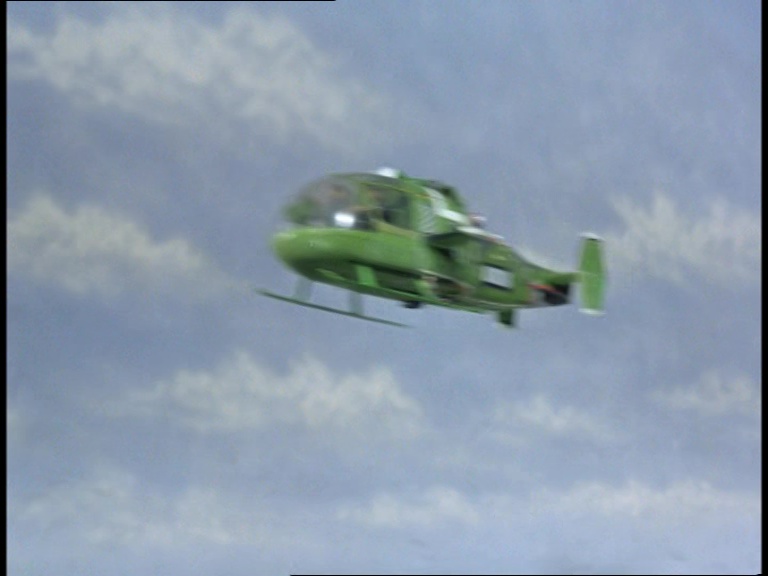

The Model T tears down various lanes around the Burnham aream which don’t look very much like the A3 to me. I’m going to be very picky here and highlight that ideally, the helijet should have flown through shot going from left to right, instead of right to left. That way it would have travelled in the same direction as Gabriel does on-screen, and also as indicated by their north-easterly heading. It’s a fairly minor indictment so I’ll let it slide like the chill, easy-going guy I so obviously aspire to be.
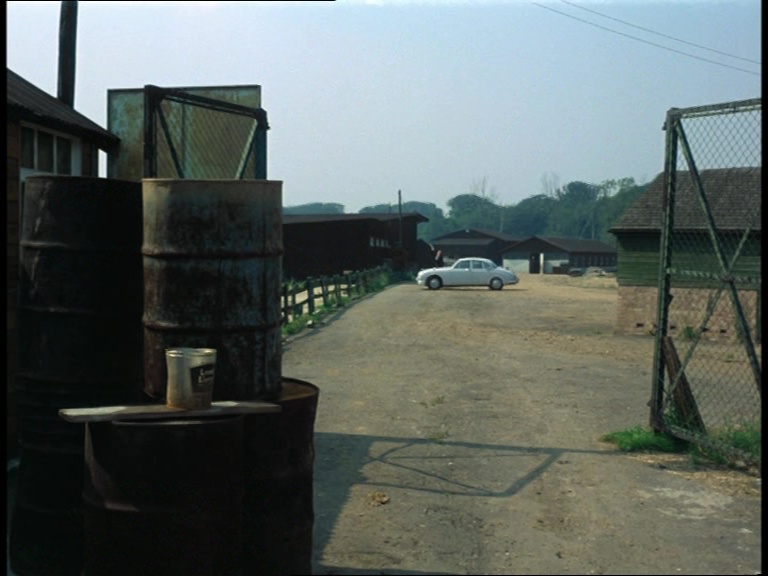


A man with a Jag is waving down the helijet as Father Unwin arrives. The location is believed to be St. Hubert’s Home Farm in Gerrard’s Cross, but since this is a more industrial setting, the area has changed considerably since 1968.
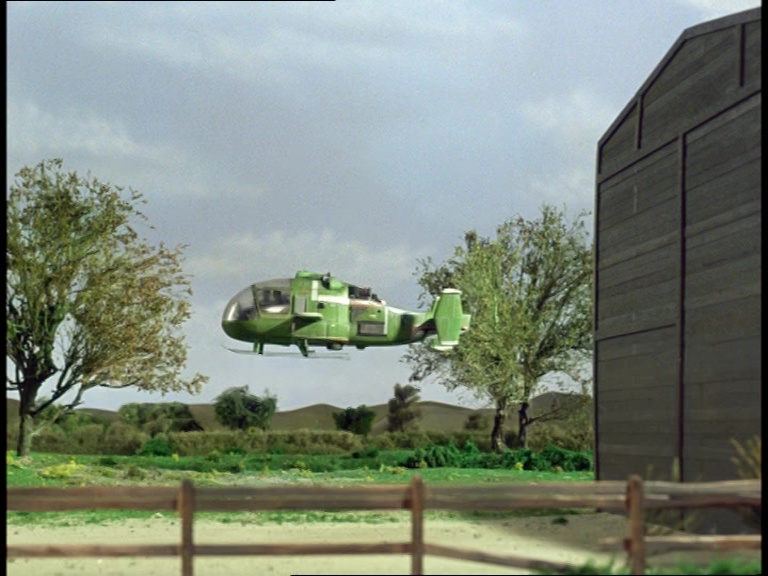
The helijet touches down on a very nice little model set. Had the budget stretched to it, I imagine the original intention was for the production to use a real helicopter for shots like this with all the drama of rotors spinning and trees and grass blowing everywhere.
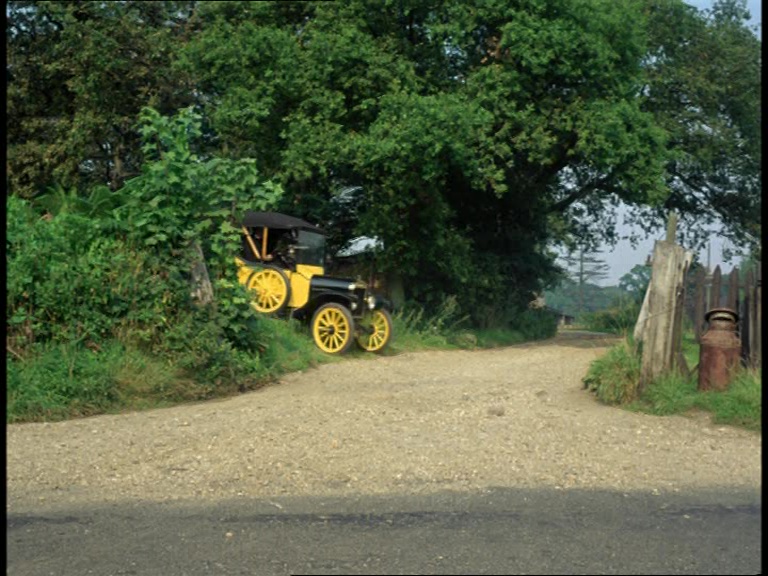
Meanwhile, Father Unwin employs that classic undercover technique of backing his bright yellow car into a hedge. The vintage car enthusiasts are screaming right now at all the rough handling. It’s unclear whether the footage has been reversed, or whether the Model T is actually backing up that fast – according to Wikipedia, the car’s reverse gear is genuinely more powerful than the forward gears, so it’s entirely possible.
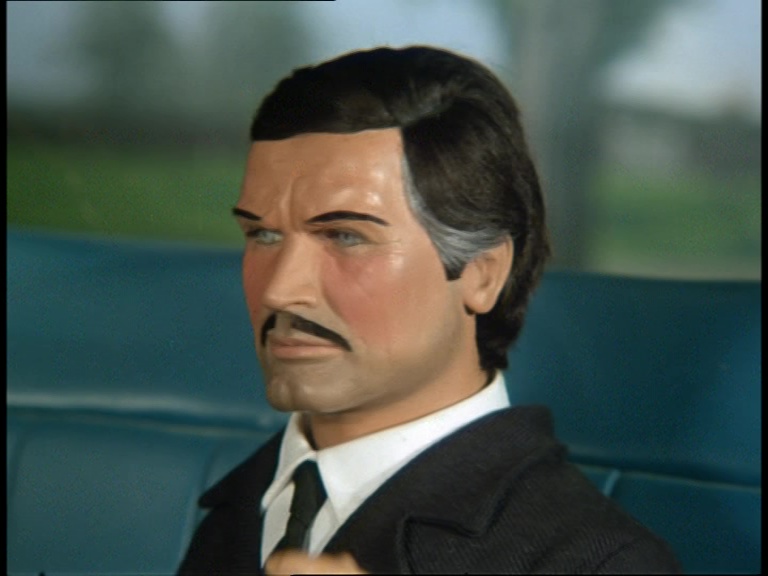


With far more aplomb than is strictly necessary, the Jag exits the farmyard with Sir Humphrey and Grey in the backseat, followed promptly by Gabriel. The Jag in question is another Jaguar Mk. 2, similar to the one driven by De Groot last week in The Feathered Spies but it’s a different colour and carries a different number plate. Someone who knows more about cars than me can probably highlight the specific variations in the models if there are any. As per Reg Hill’s Mercedes turning up in The Feathered Spies last week, it’s safe to say the Jaguar probably belonged to a member of the Century 21 team, particularly as it appears again later in the series as a police car in School For Spies.
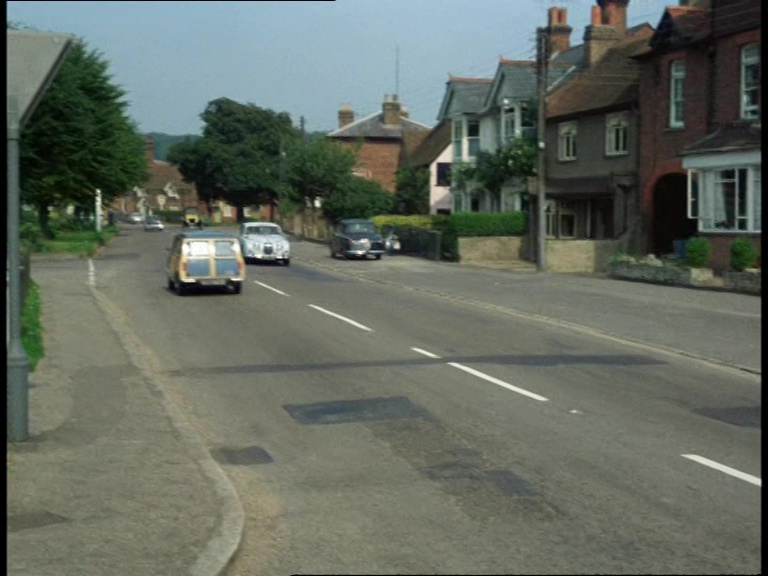


Clinging to the back of the car, Matthew enters the thrilling world of Buckinghamshire and Berkshire’s suburban jungles. The first shot has them driving through the village of Wooburn Green, just past the war memorial and what is now Brook House nursing home. The shot looking back at Gabriel is further up the road at the junction of Wycombe Lane and School Road, although the area has been heavily redeveloped in recent years. Then, suddenly, we’re looking at a bus stop in the slightly less picturesque Northern Road in Slough.
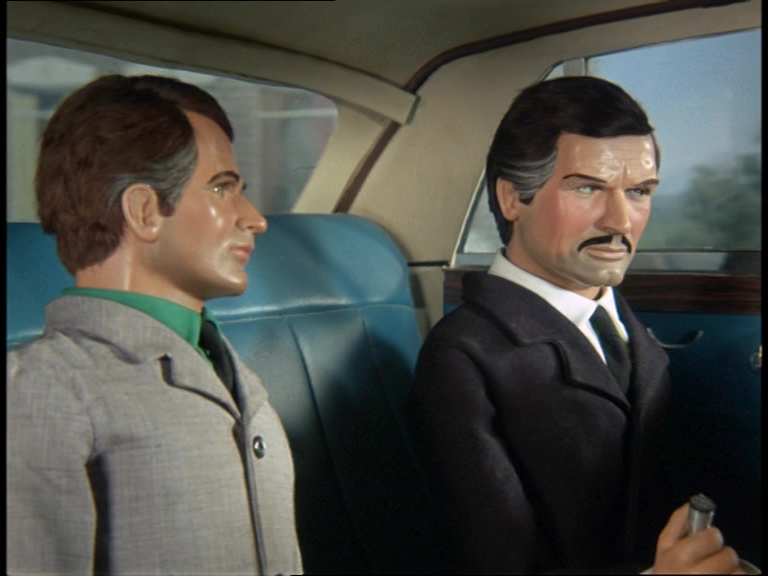
This is the point at which the finished episode starts to divert from the original script quite a bit. When Sir Humphrey says, “I’ll just check contacts,” what follows in Pat Dunlop’s script is a sequence of radio calls with the various people involved with the operation – Motor Vessel B4 and Submarine Z 34. Stock footage of a submarine would have followed, presumably lifted from Joe 90 as per the sub shot used in A Question of Miracles. The dialogue would have revealed the final rendezvous position as three miles due north of Sheerness Lighthouse (located on Chapman Sands, Canvey Island, I think). Then, Sir Humphrey spots the car following behind, and the driver remarks that with a top speed of 45 mph, it’s unlikely the Model T will be able to keep up with them but he’ll try to lose it just in case. Gabriel would have indeed failed to match the Jag’s high speed through the suburban streets.
All this business would have served to make the whole episode feel like it was building to something quite big what with the tension of a submarine waiting, Sir Humphrey aware that Gabriel is following, and Unwin struggling to keep up.
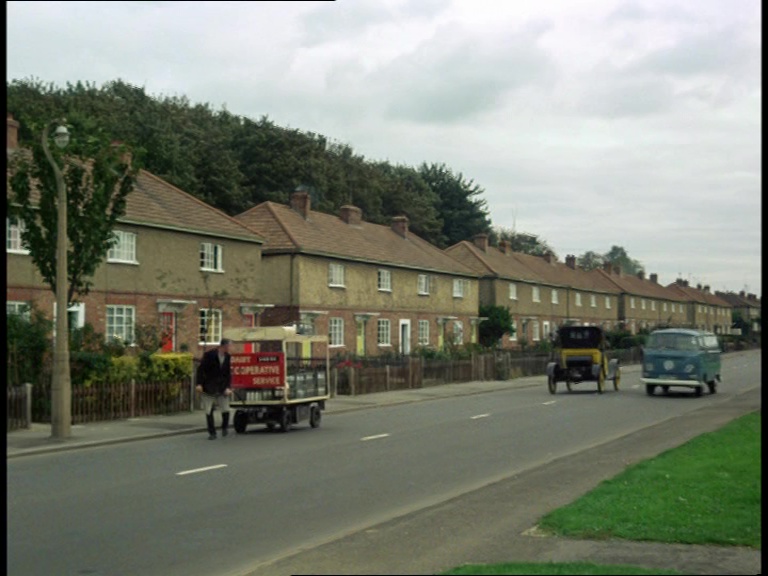
Instead, here’s Gabriel back on Northern Road successfully dodging a milkman, and the absolute beauty of a VW T2 panel van. Ditching the exciting action and replacing it with what seems like a very quaint scene, particularly to modern viewers.
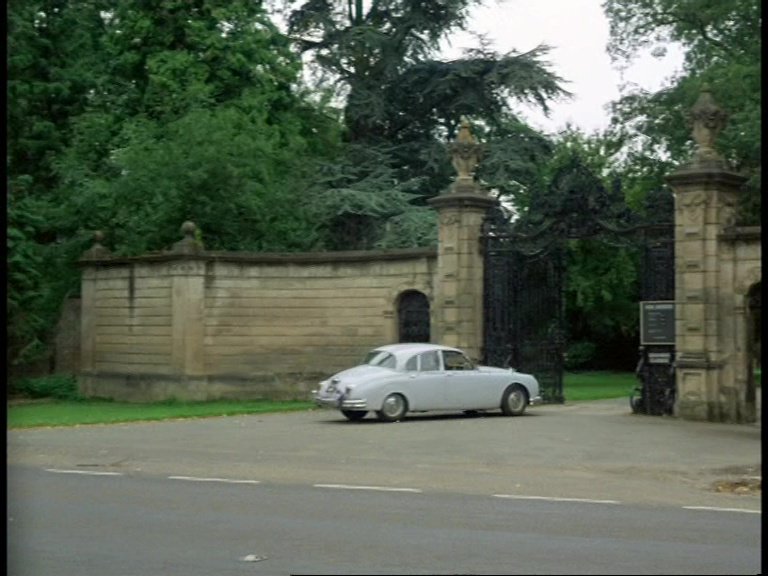
Matthew informs Unwin (and viewers at home) that they’re entering Kew Gardens. While it’s not a million miles away from the real thing, I have to tell you that this ain’t the entrance to Kew Gardens. It’s actually the gates of Cliveden House in Berkshire, known to some Anderson fans as the home of Lady Penelope Creighton-Ward in the 2004 Thunderbirds movie.


Father Unwin keenly reminds us of Sir Humphrey’s interest in botany as if that somehow has a part to play in the plot. Matthew looks like a man who’s been up for 24 hours, hasn’t eaten, and has spent the past couple of hours hanging on to an aircraft and a car – oh wait, he is that man…

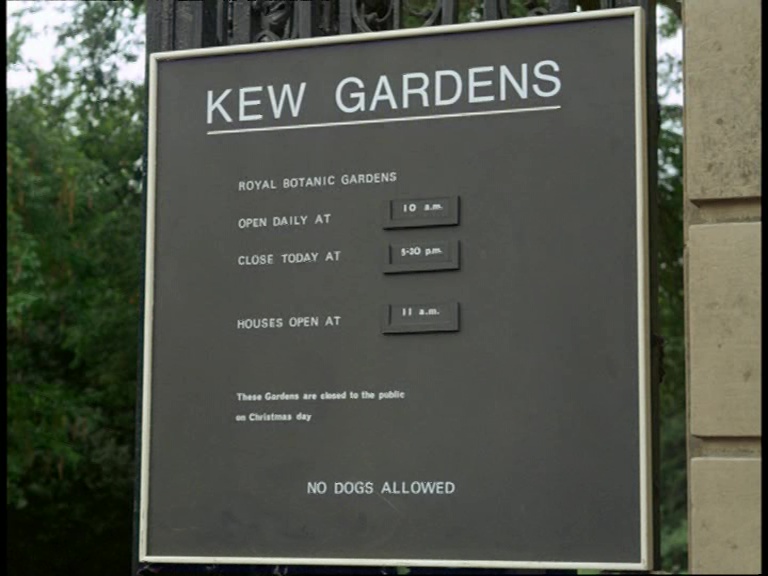
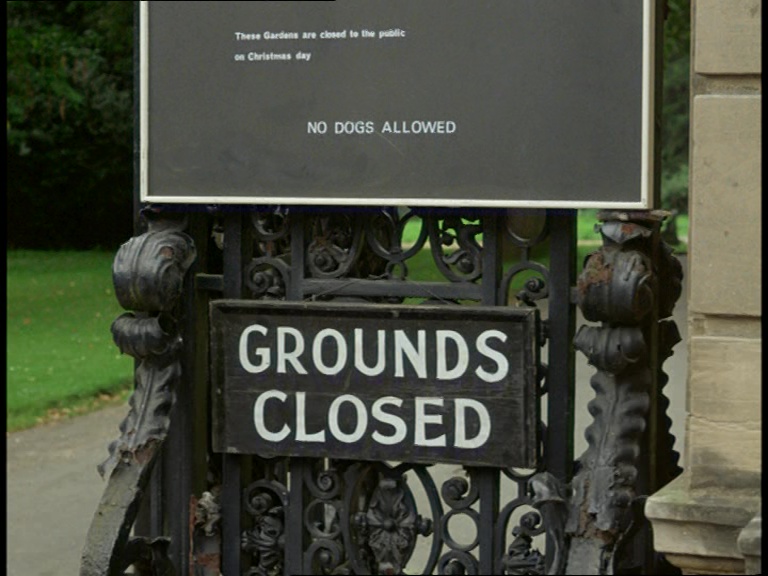
It’s not in the script, but probably just to sell us on the fact this is supposed to be Kew Gardens, Father Unwin studies an uninspiring sign telling us this is Kew Gardens and that it’s closed right now… even though the gates are very much open and nobody seems to have any trouble getting inside.

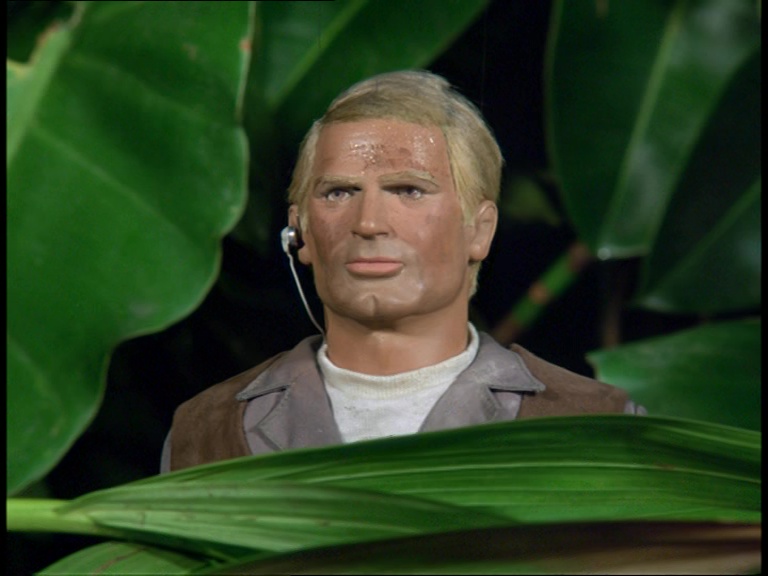
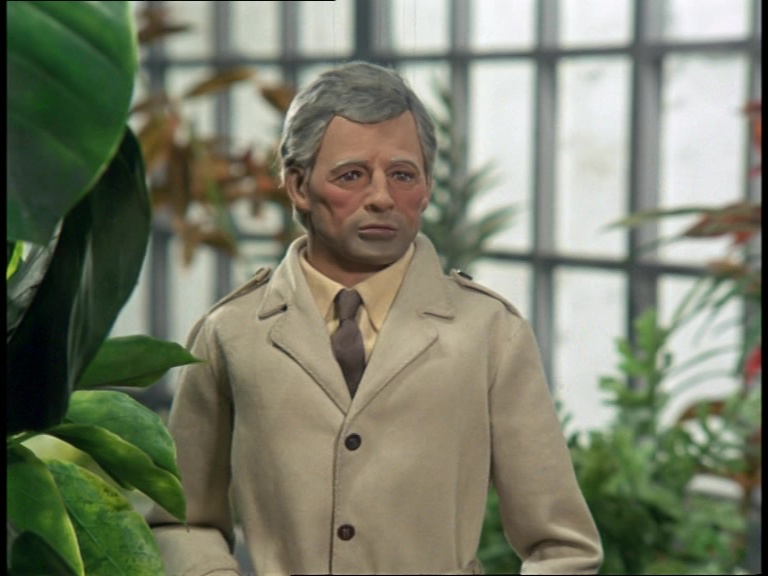
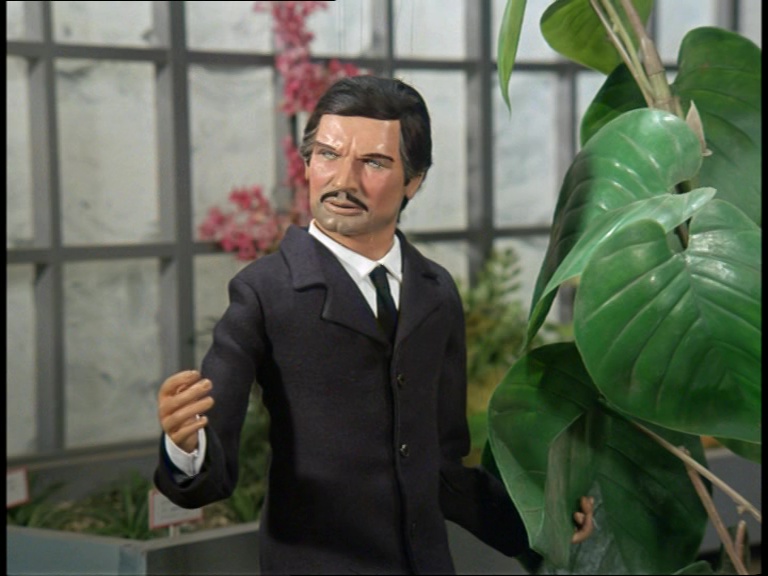
Compared to the real thing it may be a little underwhelming, but I say that this puppet set does a decent job of capturing the essence of Temperate House in Kew Gardens. Although without the grand scale of the real thing it does also look a bit like any old garden centre. Matthew watches from the foliage as Sir Humphrey hands Grey over to an old geezer in a trench coat. The code word is suitably plant-themed. Again, I guess this is all somewhat linked to Sir Humphrey’s interest in botany but it’s still not a particularly strong theme. He’s fondling a leaf so I suppose that must mean he’s fairly keen on plants.
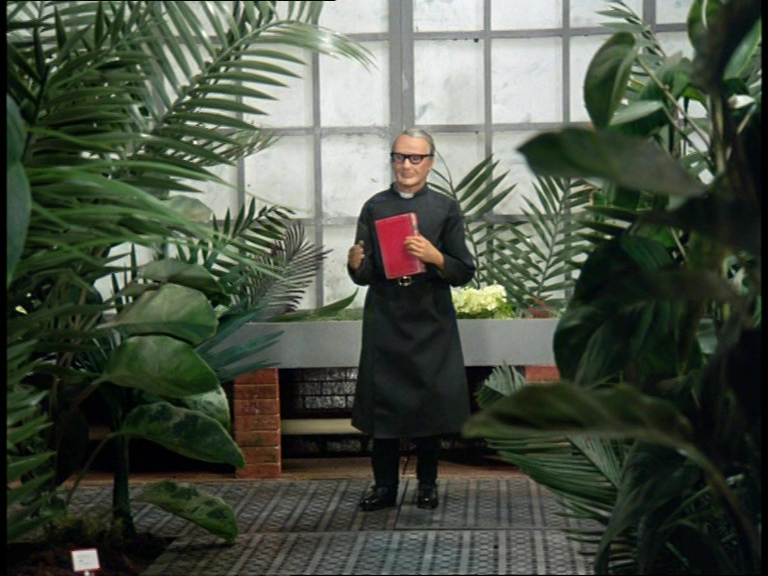
Father Unwin confronts Sir Humphrey in his usual well-meaning but stern manner. He’s got his red book with him, but this isn’t an edition of This Is Your Life.
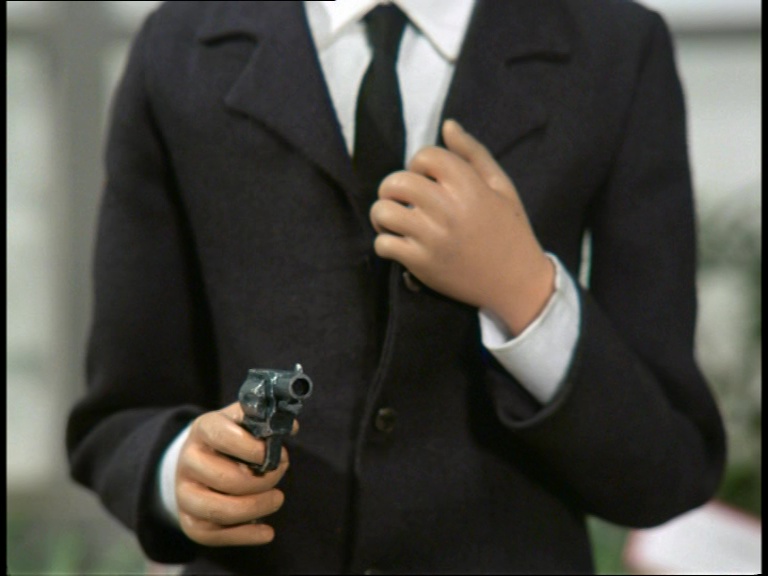
Fed up with Unwin’s nonsense, Sir Humphrey threatens to shoot the vicar. Nice bloke.
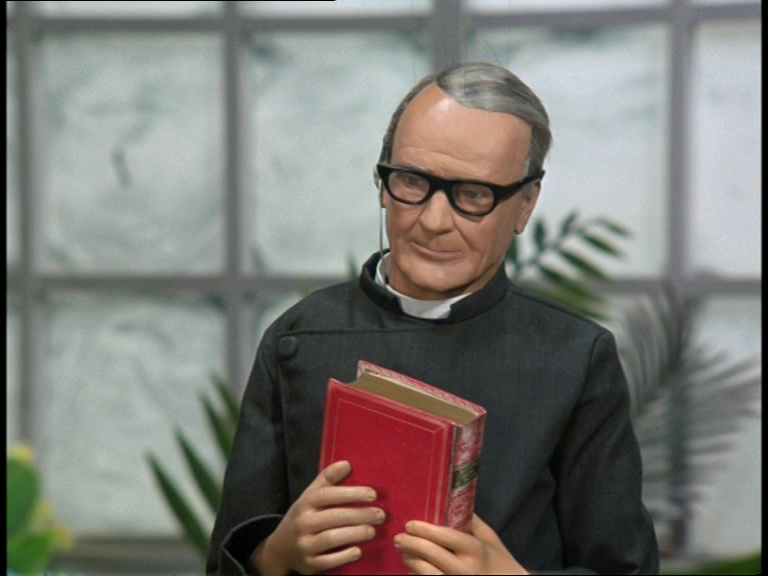
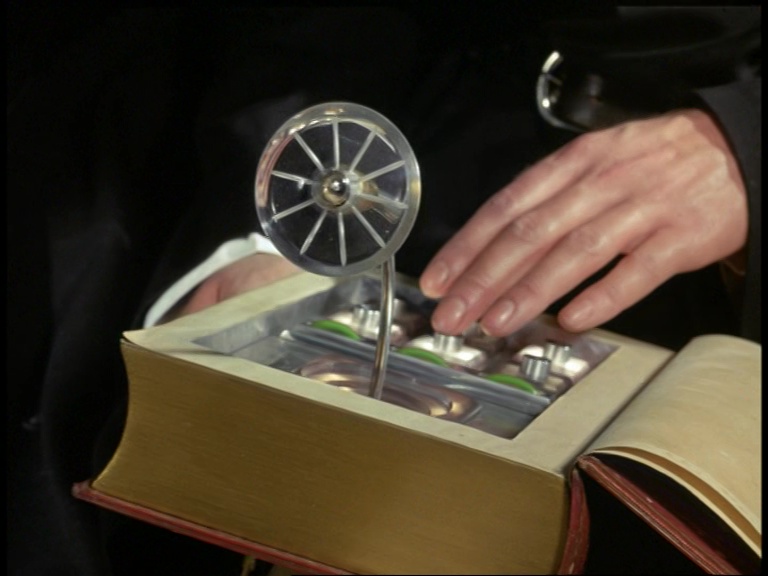

In the original script, Unwin requests permission to pray before he is “despatched” and therefore pulls out his red book accordingly. Instead, the final episode just has him go ahead and open up the Minimiser without any pretence at all, and then shrinks Sir Humphrey straight away. Yet again, this is all feeling very similar to A Case For The Bishop.


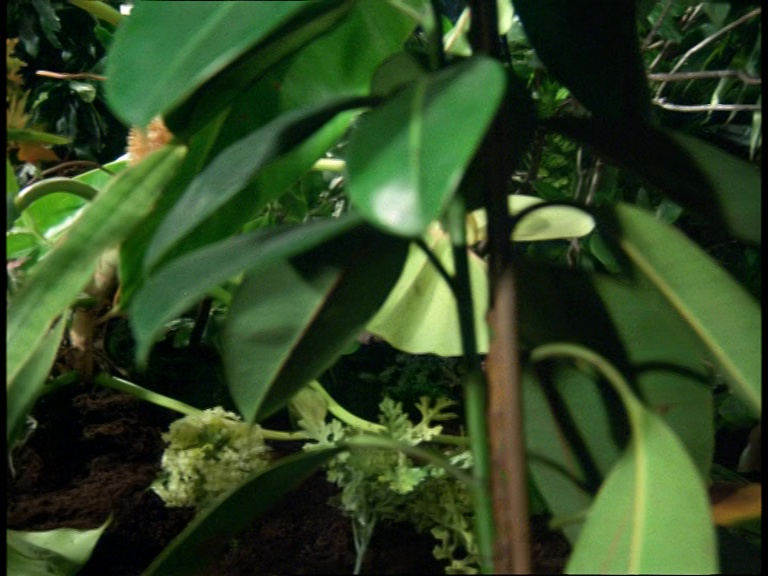
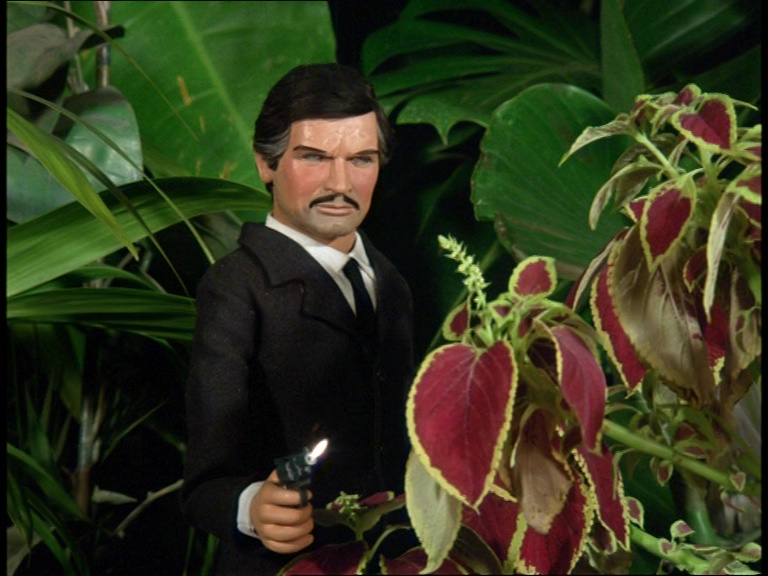
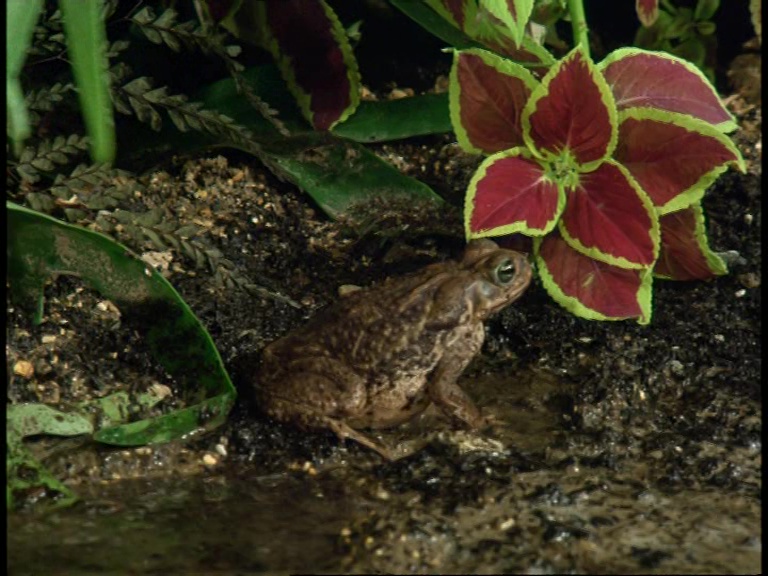
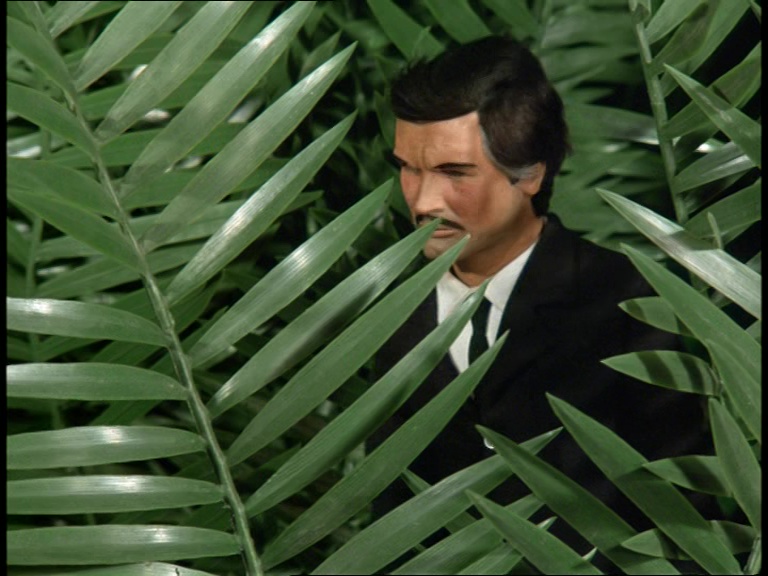
The sequence which follows is vastly different on-screen compared to how it was originally scripted. The script details a big, ambitious gunfight between Matthew and Sir Humphrey in what is essentially a jungle setting. Matthew would have lost his footing and fallen in some water, and then pulled himself out via a creeper while Sir Humphrey gains the upper hand and changes position. Matthew finds himself precariously hanging above a flower conveniently labeled “Amazonian Pitcher Plant – Carniverous Flora.” That’s an animal-eating plant to common folk like you and me. Sir Humphrey approaches Matthew at point blank range but his gun fails. He pulls out a knife as Matthew slips and his leg is swallowed by the hungry flower. Fortunately, Father Unwin is there to kill the plant, cut Matthew free from its jaws, and pop him back on the ground to fight another day. Matthew shoots at Sir Humphrey but misses, driving the botanist up into a tree where Unwin can see him. With a quick zap from the Minimiser, Sir Humphrey is brought back to normal size and tangled up in creepers and branches, thoroughly beaten.
If you think I made all that up then strap yourself in because there’s genuinely more to this. As they drive home, Matthew asks Father Unwin whether Grey got away. I’ll answer that with an extract from the script.
CUT TO:
260 EXT. AT SEA – DAY
A motor launch is circling. A submarine surfaces.
Suddenly a pair of E Boat type vessels appear. They roar up to the site of the rendezvous.
The submarine hastily dives again leaving the launch covered from either side by the guns of the E Boats.
Then, the episode would have finished up at the Vicarage as it does in the finished show.
Instead of all that incredible, heart-stopping, mind-numbing action, what we actually get amounts to Matthew taunting Sir Humphrey while the man runs around shooting at leaves and a fat toad. It ends once everyone gets tired basically.

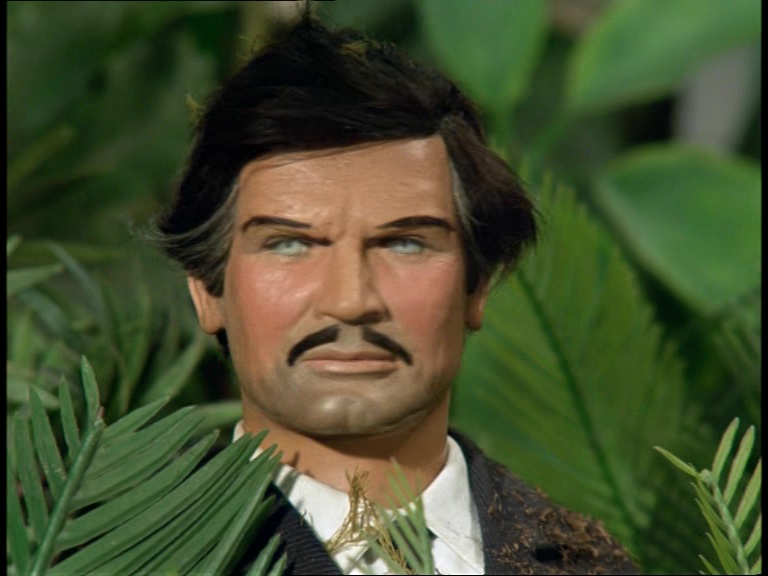
Matthew proudly declares that Sir Humphrey really has been cut down to size… oh ha ha.
Look, I’m not an idiot, obviously Pat Dunlop’s original climax to the episode was way too ambitious. Matthew nearly getting eaten by a plant would have probably looked comically awful. In fact, we can get a glimpse of what it might have looked like from this publicity photograph.
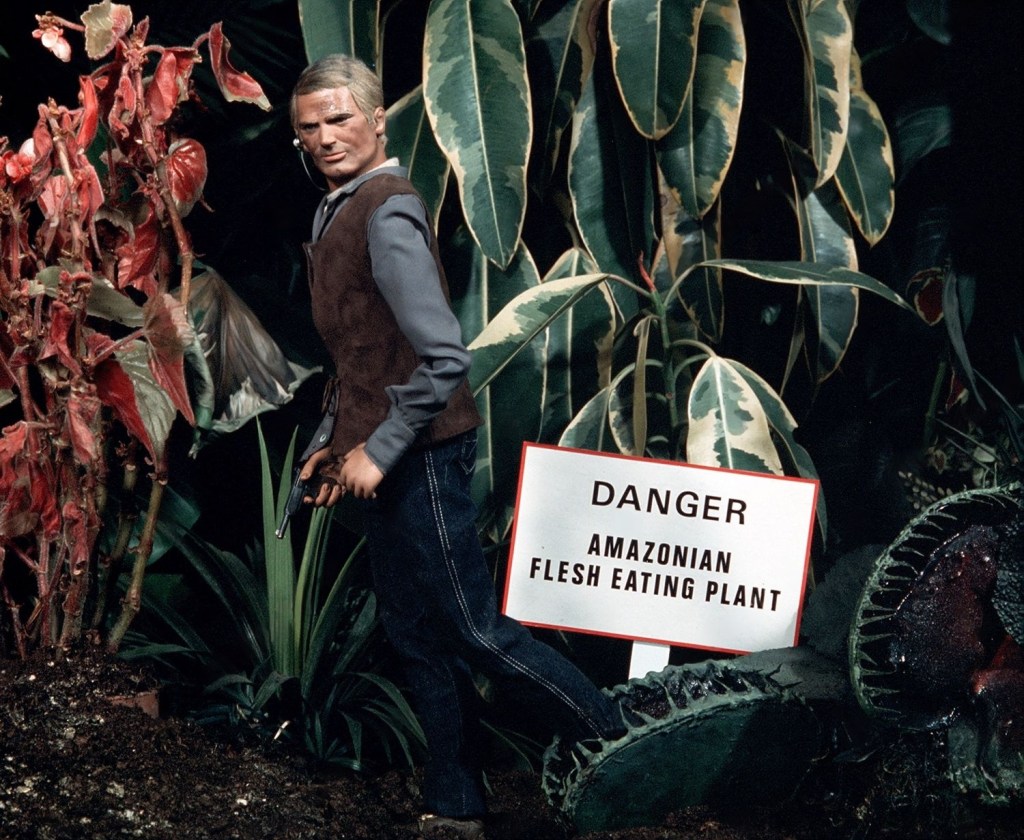
It’s not as impressive as the script made it sound, but this tantalising image is all we have to suggest that maybe some attempt was made to film the ambitious sequence. Could the whole thing have been shot but been deemed unsatisfactory? Could the team have abandoned it partway through? Or was this photograph purely staged for publicity purposes, inspired by the original script? Whatever, happened, we don’t have anything particularly resembling what Dunlop described in the finished episode. It could have been one of the most memorable sequences in Supermarionation history, whereas a few POV shots of some big plants, a single toad hopping around, and the voice of Matthew trying to sound threatening, doesn’t pack that much of a punch for me. It means the whole story just sort of ends without anything exciting happening. Sir Humphrey simply gets scared enough to stop aimlessly running around.
Meanwhile, Unwin simply tells us that Grey is waiting in a police car outside. We don’t even get to see his comeuppance. Again, maybe an enormous stand off between the launch and two E Boats was a bit beyond The Secret Service‘s budget, but compared to what the likes of Thunderbirds brought to our screens, it’s pretty clear that Century 21 were not feeling in any way ambitious when they re-wrote this ending. What we see is basically the bare minimum to get us across the finishing line and that just doesn’t sit well with me. The spirit of Supermarionation should be about anything being possible without the confines of real actors and settings. Sure, budget is a factor but the climax of To Catch A Spy that we ended up getting feels hampered not just by money but by a severe lack of creativity. We can only guess at the circumstances surrounding all of this. Tony Barwick, David Lane, Reg Hill, Brian Heard and probably a few others all likely had something to do with the changes that were made. Some may have fought to keep the original scenes as scripted, while others may have at least wanted to prioritise some moments of action over others. Ultimately, I’m not entirely sure who won the battle but I’m very sad that we lost such an epic duel in the jungles of Kew Gardens.
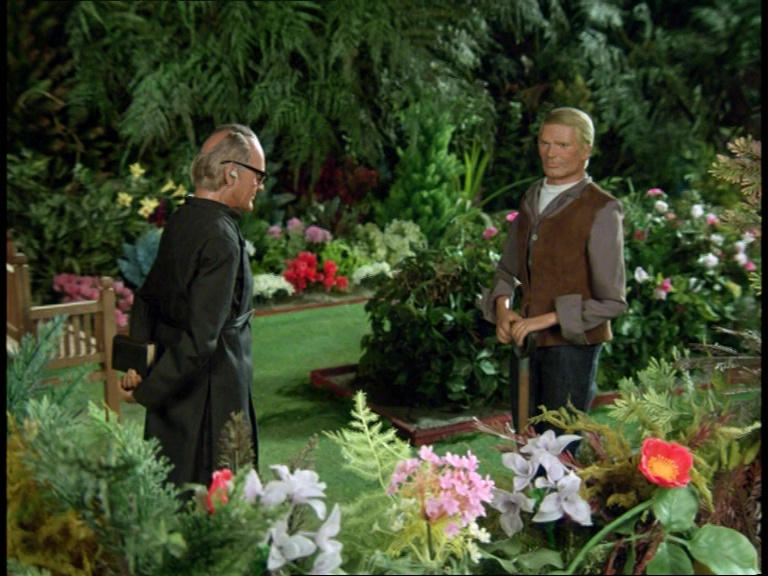
Perhaps the most bizarre thing about all of this is the fact that the final exchange between Matthew and Father Unwin back in the garden of the Vicarage is completely unchanged between the original script and the finished episode. Matthew’s reluctance to plant snapdragons because of their “hungry look” makes so much more sense with the knowledge that Matthew nearly lost his leg to a flesh-eating plant. Instead, we all have to just give a collective “huh?” as the end credits roll.
One more curiosity is the very end of Pat Dunlop’s script which reads: CUT TO: SERMON AND END TITLES. Apparently the writer was still under the impression that every episode of The Secret Service ended with a sermon as per a A Case For the Bishop and the original script for A Question of Miracles, but he didn’t actually commit to writing the sermon himself for some reason…
With all that said and done, it’s quite difficult to reflect on To Catch A Spy without being inherently disappointed about the ending we could have had versus the one we actually got. Much of the episode is still excellent. The special effects department seem to be back on form with their helijet contributions to the episode. The opening sequence at the prison is truly one of the best scenes in the entire series. Sir Humphrey’s underground hangar beneath his fancy house is a classic Anderson-esque idea. Father Unwin and Matthew get a decent amount to do while Sir Humphrey is a villain with lots of authority. The episode unfortunately just runs out of steam when it gets to the end, a feeling I’ve had about it even before I learned of Pat Dunlop’s intended finale. The story just hits a brick wall as soon as Grey is handed over at Kew Gardens and that could have been avoided even if time, budget, and ambition were an issue, as I believe they were. If I had to put a positive spin on anything, it would be the fact that whatever problems the Century 21 team saw with the original script, they worked through it and got to the other side. This group of talented professionals got their heads down and managed to deliver a finished product which amounted to half an hour of television which was still something quite unique and special. Sometimes “done” is better than “perfect”, and sometimes “done” is a bloomin’ tough achievement in itself.
Now, if you’ll excuse me, I have a train to catch…
Next Time

References
Filmed In Supermarionation Stephen La Rivière
Avengerland
Anthony McKay
The Hall Barn Estate
Sue Abbey
‘A SPRAT TO CATCH A MACKEREL’: MEANING AND ORIGIN
Pascal Tréguer
The History of ITV – Part 7
Teletronic
More from Security Hazard

Thunderbirds (2004)
Thunderbirds is a 2004 film adaptation of the classic 1960’s puppet television series, only without the puppets (and it’s not a television series either, obviously).…
Keep reading
The Secret Service – 3. The Feathered Spies
Now then, this is where things start to get interesting. In my opinion, The Feathered Spies is The Secret Service starting to find its own…
Keep reading

The Investigator – Part 1
“This is the voice of Lew Grade, from a galaxy a million lightyears away – we have observed the cancellation of the The Secret Service…
Keep reading
The Secret Service © ITV PLC/ ITC Entertainment Ltd
 Security Hazard
Not a bad episode, this is a lot more to note in regards to throwbacks to Thunderbirds, etc than I noticed.
It is nice to see a few returns of the Captain Scarlet puppets as well and the overall plot in this one is good, but Matthew’s mention of snapdragons is somewhat pointless when you consider that scene with that plant in it was cut.
LikeLike
I remember this episode well for the tennis court / helijet landing bay. Not exactly a swimming pool…. It is entertains enough though and the story is comparable what ITC were producing at the time with the likes of the Champions and Randall and Hopkirk (Deceased).
As well as the other TV series and films mentioned, Hall Barn also features in the Magnum, p.i. Season six episode ‘Deja Vu’, which was filmed on location in England in March 1985. It serves as the Higgins family estate.
LikeLike