
Sometimes, it really doesn’t have to be that complicated. One tried and tested story formula. One memorable villain. One surprise twist. A core group of main characters that we have a reason to root for. High stakes that translate easily for the audience. Television viewers like what they like, and today’s episode of Space Precinct, The Snake, sets itself the simple task of delivering exactly that.
Category Archives: Reviews
Space Precinct – 4. Flash
And we’re back to the hot mess. I was hoping that the production may have immediately learned some lessons from Enforcer about balancing the series’ tone, action, and characterisation. Flash demonstrates that a show can’t change overnight. It’s not surprising that Flash was one of the earlier episodes buried at the end of the Space Precinct broadcast run so it wouldn’t be noticed. It’s not exactly a flagship episode.
Space Precinct – 3. Enforcer

The first two episodes of Space Precinct are something of a trial that you just have to get through. They present a directionless series still very much finding its feet. My reviews of Double Duty and Protect and Survive both called out the dramatic shifts in tone that occur from scene to scene, and the wild swings throughout each story from one subplot to the other. It was a shotgun approach to trying lots of different stuff to see what worked and what didn’t work. Ordinarily, that’s what a pilot would be for, but seeing as Space Precinct had already gone through 8 years of development (including two vastly different pilots), I can understand why they got straight on with it and just let the first two episodes explode into the chaotic messes they turned out to be. But now we’re at episode 3, Enforcer, and the writing team has realised that trying to cram as much stuff into each episode as possible probably isn’t the best way to craft compelling stories. Enforcer is a tighter, much more focused story which happily confines some main cast members to supporting roles for a week, creates some juicy guest characters full of potential, and probably gave the production a chance to breathe and build upon the aspects of the show that were beginning to work.
Space Precinct – 2. Protect and Survive
You’ll recall from last week’s lengthy essay on the matter that Space Precinct never had an actual, proper, bonafide first episode. The script that was written to serve this function, Demeter City, was never filmed. This ill-fated introductory story was written by Paul Mayhew-Archer, who also penned the episode we’re reviewing today, Protect and Survive. So, this isn’t even the first Space Precinct script written by this particular writer, and therefore it makes no effort to introduce the characters and settings. Nevertheless, Protect and Survive was the first episode of the series to be broadcast in the US and the UK. Weird, huh?
Space Precinct – 1. Double Duty
If there’s one thing that’s going to put you off even attempting to watch Space Precinct, it’s the fact that it doesn’t have a proper first episode to hang its police cap on. Double Duty was the first script to enter production because it was one of the least ambitious on the slate at the time, and the complex production of Space Precinct (still known as Space Police at that point!) needed time to warm up. Obviously the 1986 pilot film Space Police: Star Laws doesn’t count as a first episode because it barely shares any elements at all with the series it became. Gavin Scott’s 1992 pilot script The Max Factor evolved the concept established in Star Laws but that also went unfilmed.
UFO ‘Shadow Play’ and Space: 1999 ‘The Armageddon Engine’ by James Swallow
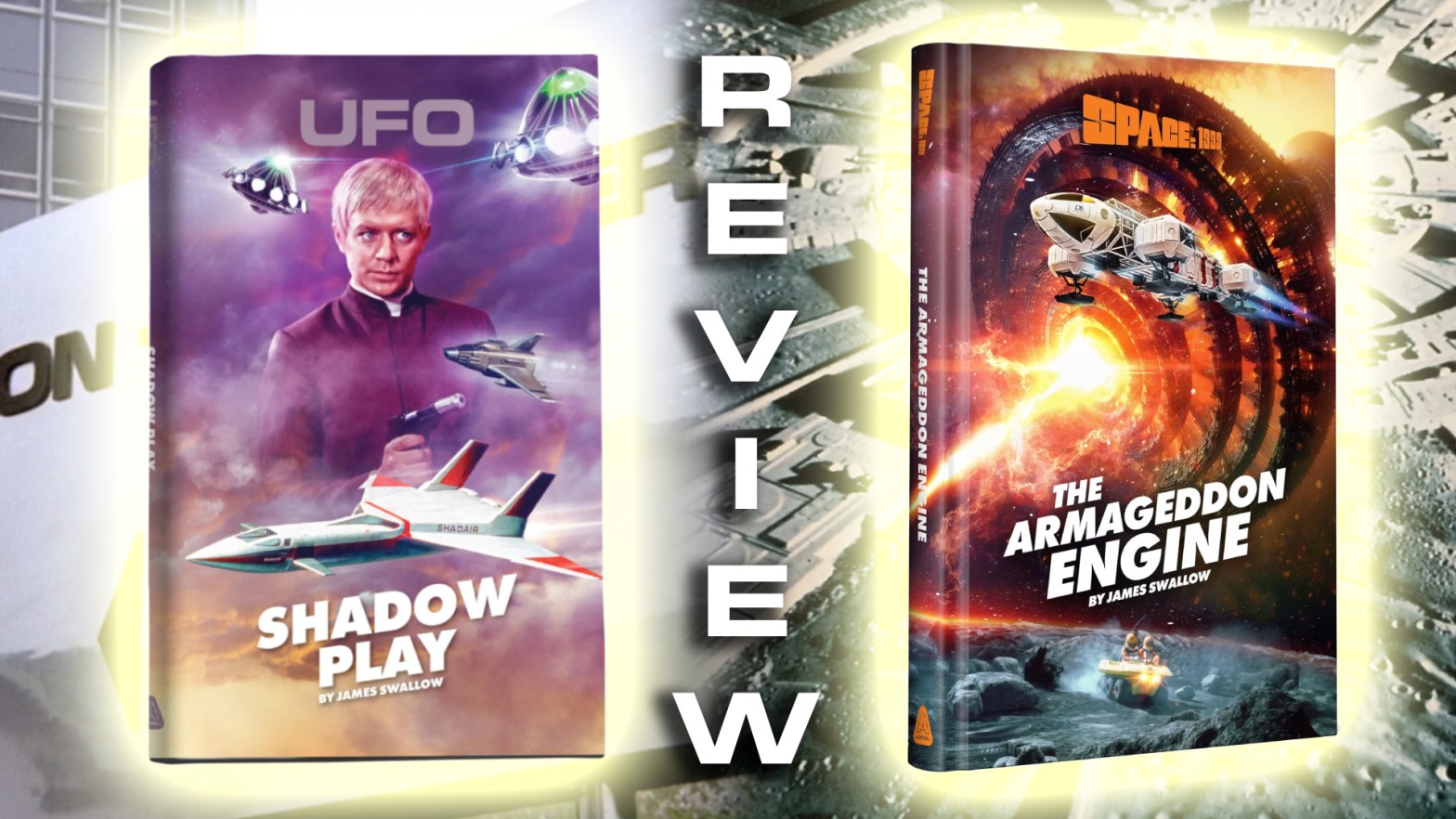
James Swallow’s new novellas, UFO: Shadow Play and Space: 1999: The Armageddon Engine, are an absolute treat for anyone who loves the detailed, high-stakes drama of the live-action Anderson canon. Swallow demonstrates how to immerse the reader in these worlds, capturing every inch of SHADO HQ and Moonbase Alpha with such vividness that they feel more real than ever before. You can practically hear the hum of the technology and feel the weight of the pressure building as both stories unfold.
The Day After Tomorrow: Into Infinity REVIEW

Appreciating the timeline surrounding The Day After Tomorrow: Into Infinity and its inherent ties with Space: 1999 make for some interesting food for thought. The first season of Space: 1999 was shot between November 1973 and February 1975. It was a long and expensive shoot, the fruits of which would not be screened until September 1975. ITC more desperately than ever wanted to make its money back from a US network sale. The fate of the series, and seemingly Gerry’s future prospects would be measured on its American reception. Always looking forward and keen to improve, Anderson already knew that some changes to Space: 1999’s format were needed for the second season even before the first had been transmitted. He requested that script writer Johnny Byrne conduct an analysis of the first season to find its strengths and weaknesses.
The Secret Service – 13. More Haste Less Speed
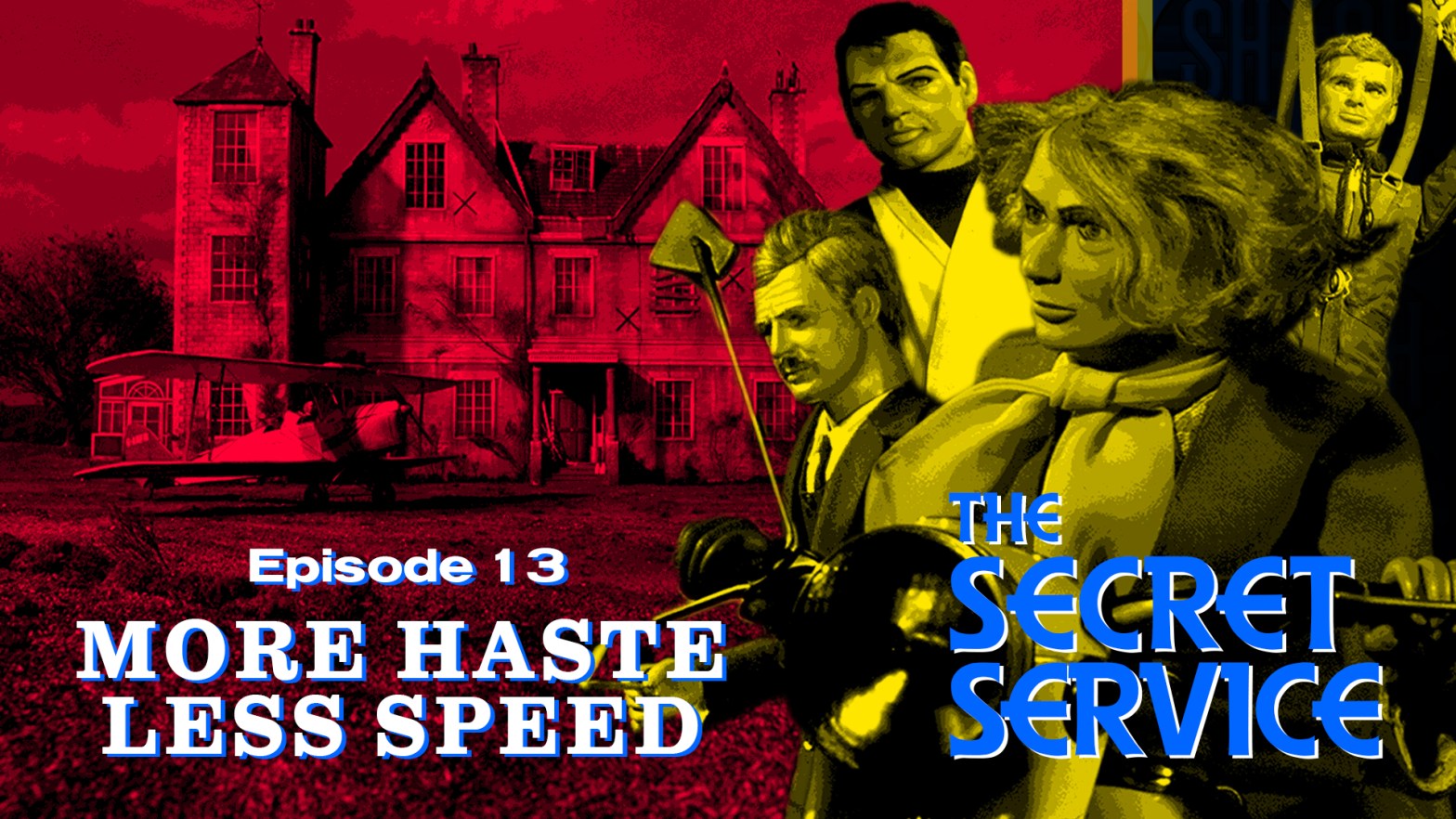
This is the big one. Not just the finale of The Secret Service but the end of an amazing decade for the crew of Century 21 Films in Slough perfecting the techniques of Supermarionation filmmaking. Once this episode was in the can, the puppet stages on Stirling Road closed for good on January 24th 1969 … until Thunderbirds returned to the trading estate in 2015 for the production of three episodes to celebrate its 50th anniversary, but that’s another story.
The Secret Service – 12. May-Day, May-Day!
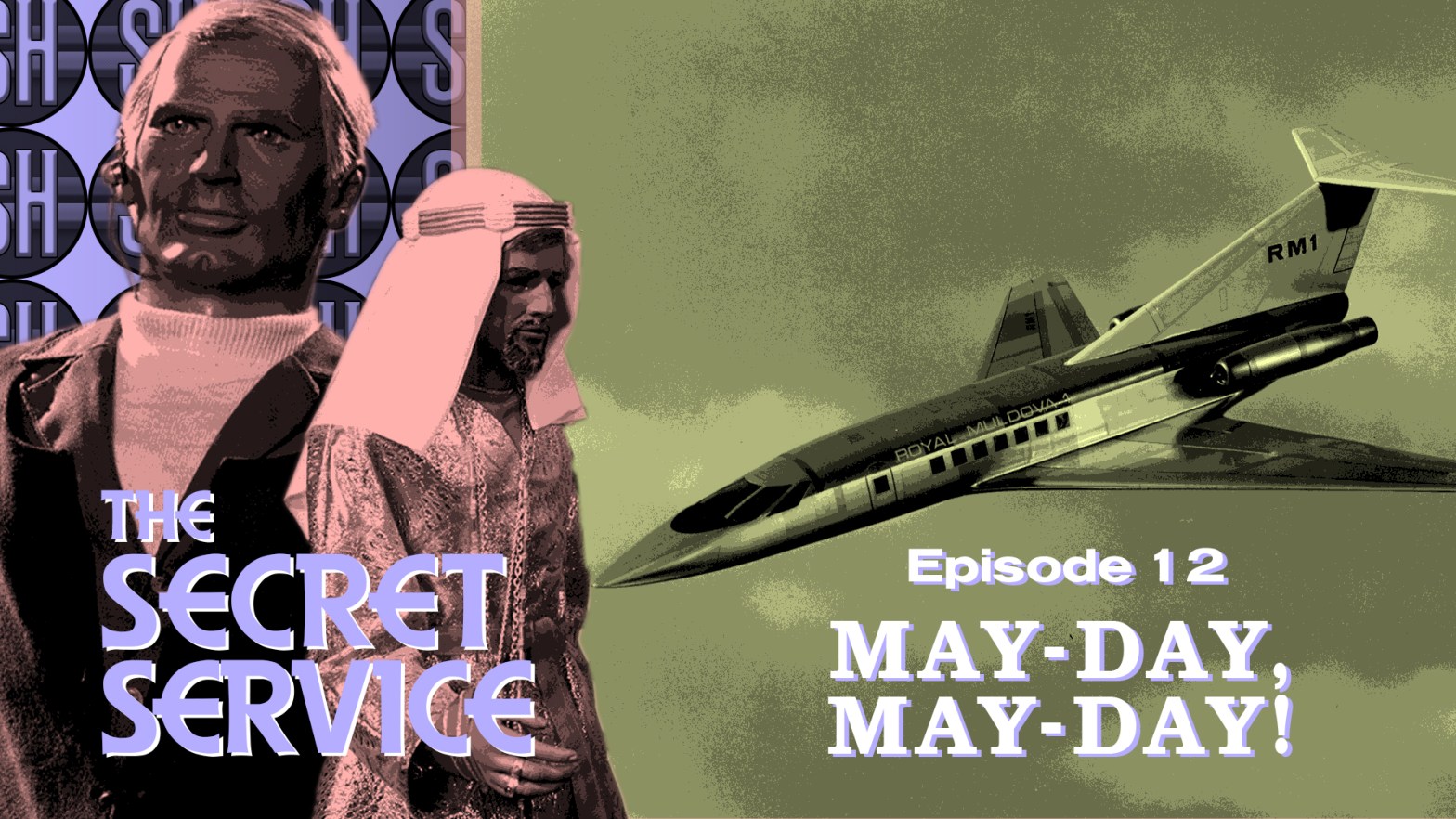
There’s a quite a bit to like about May-Day, May-Day!, and yet this is always the episode of The Secret Service I have the hardest time remembering anything about. That could be because it’s sandwiched between what are arguably two of the series’ standout episodes, School For Spies and More Haste, Less Speed. Or, it could be because the story is quite a run-of-the-mill assassination plot. Or, it could be that I’m getting forgetful in my old age.
The Secret Service – 11. School For Spies
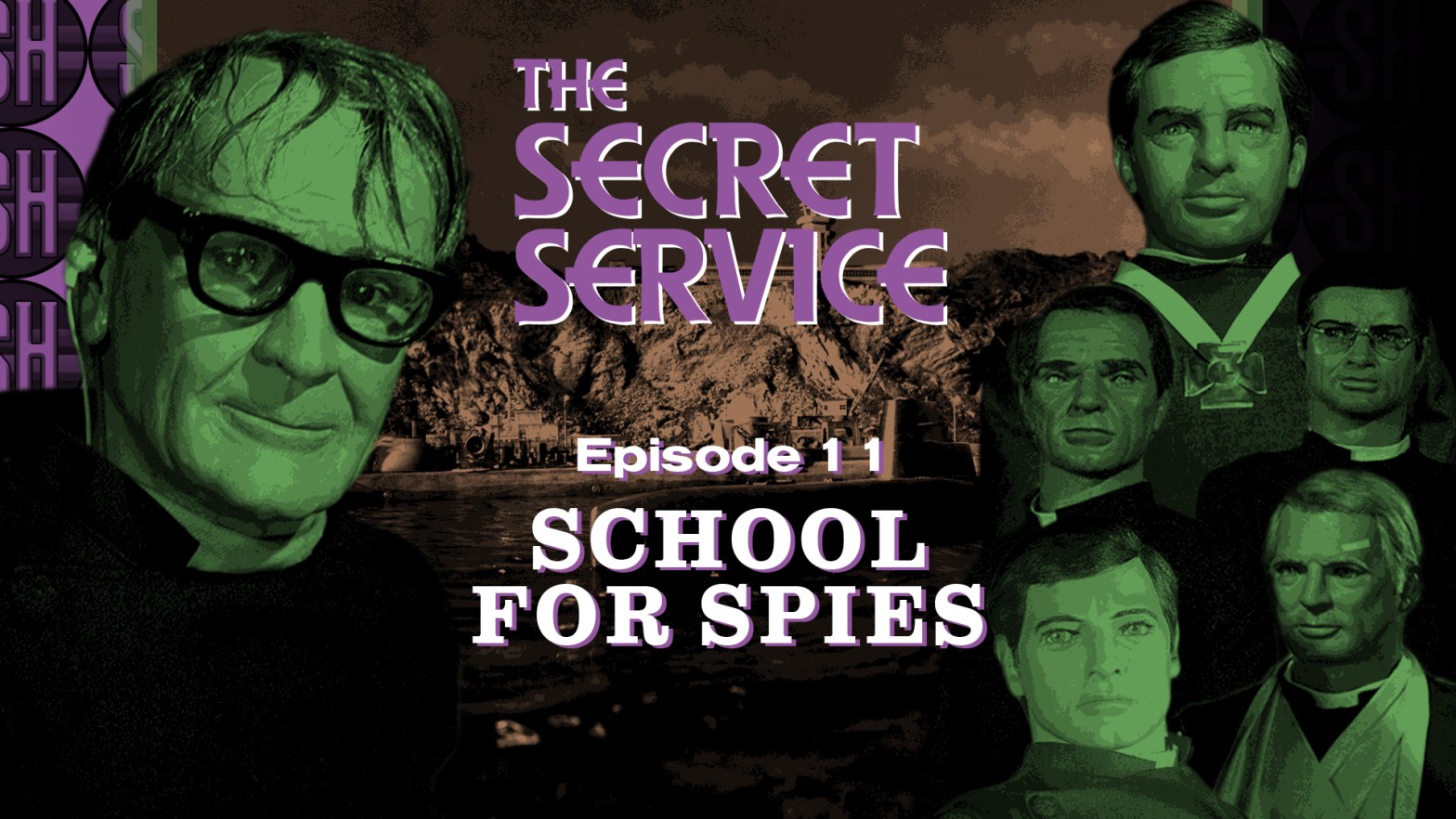
On paper, School For Spies is an episode with no downsides. Father Unwin is up against a gang of crooks who also happen to be using the priesthood as their cover for sabotaging military equipment. One man of the cloth fighting many. It’s an intriguing dynamic. A version of BISHOP that works for the forces of evil. What could be juicier than that?! The head honcho is known as the Archdeacon for goodness sake! Talk about drama. So why was I left with a slight feeling of disappointment when the credits rolled on School For Spies? More precisely, why did I finish the episode feeling like I didn’t quite get it?
 Security Hazard